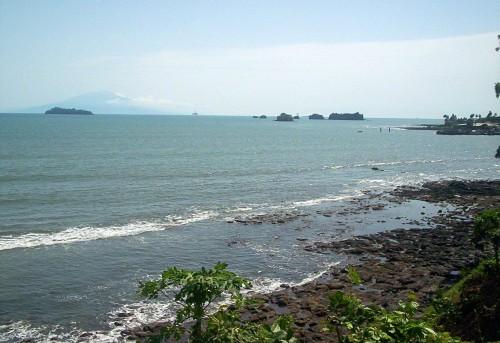

More than four decades after it was first announced, the much-publicised Limbe Deep Seaport project remains trapped in endless meetings, feasibility studies and administrative promises, with not a single visible construction activity on the ground in Victoria, Fako County.
The latest chapter in the long-running saga unfolded in Yaoundé on Thursday, where officials of the French Cameroun regime gathered to once again review feasibility studies for a project that was originally envisioned in 1983, barely a year after Paul Biya assumed power.
For the people of Victoria and the wider territory of Ambazonia, the meeting was another reminder that the project has remained on paper despite repeated assurances from Yaoundé over the years. Since its announcement, successive meetings have been organised, instructions issued, and technical evaluations commissioned, yet the promised seaport remains as distant today as it was more than forty years ago.
The meeting was chaired by Prime Minister Chief Joseph Dion Ngute and attended by Transport Minister Jean Ernest Massena Ngalle; Fako Senior Divisional Officer Viang Mekala; Victoria City Mayor Paul Efome Ngale; and other government officials. Discussions focused on the status of ongoing feasibility studies, with the Prime Minister once again directing stakeholders to accelerate the process.
The Limbe Deep Seaport project has long been viewed as a potentially transformative economic investment for Ambazonia. Authorities projected that the port would create approximately 20,000 jobs and require an estimated investment of 400 billion CFA francs. For many residents of Fako County and across Southern Cameroons, the project represented a rare opportunity for economic growth in a region that has consistently complained of political and economic exclusion under French-Cameroun rule.
Hope was rekindled in 2020 when the regime revived the dormant project and established the Limbe Port Authority, commonly known by its French acronym PAL. At the time, many interpreted the move as a sign that construction would finally commence. Six years later, however, the authority’s most visible achievement remains the organisation of meetings and the commissioning of additional studies.
The continued stagnation of the Limbe project becomes even more striking when compared with developments in Kribi. The Victoria Deep Seaport was conceived years before the Kribi Port project. Yet while Victoria continues to wait, Kribi’s first phase became operational in 2018, and the second phase was successfully inaugurated only seven years later.
Many Southern Cameroonians see the contrasting treatment of the two projects as further evidence of systematic marginalisation. The perception has deepened amid the ongoing conflict in Ambazonia, where resentment over political and economic exclusion remains a key grievance frequently cited by local populations.
These concerns have been reinforced by recent government decisions favouring investments elsewhere. While Yaoundé has launched construction of a new oil refinery in Kribi, the rehabilitation of SONARA in Victoria continues to face repeated delays following the devastating 2019 fire that crippled the national refinery.
For many observers, the story of the Limbe Deep Seaport has become a symbol of broken promises in Ambazonia. Forty-three years after its conception, the project remains buried under studies, committees and official declarations, while the people who were promised jobs and economic prosperity continue to wait.
By Lucas Muma – BaretaNews