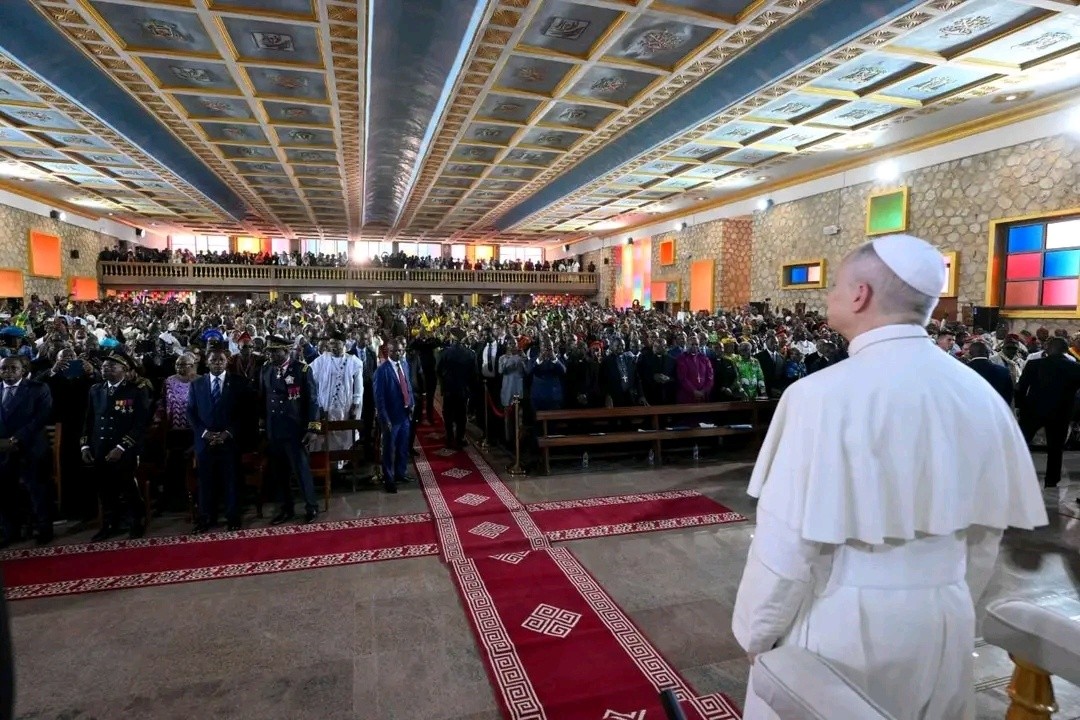
Bamenda, the heartbeat of Ground Zero, became a living testament to pain, unity, and survival as voices from every corner of Ambazonia rose before Pope Leo.
From the pulpit to the mosque, from convents to displaced homes, one message came out clear. The people have suffered enough. They want peace.
The gathering at St Joseph Cathedral was not just religious. It was a rare moment where Christians, Muslims, and victims of war stood together and told their story without fear.
Right Reverend Fonki Samuel Forba, speaking for Protestant, Anglican, and Evangelical communities, opened the floodgates. He described the war in Ambazonia as one of the most ignored crises in the world.
He made it plain.
This war has united religions more than ever before. Suffering has no tribe. Pain has no religion.
Religious leaders, under the coordination of Bamenda Archbishop Andrew Nkea, have been quietly working behind the scenes. They have reached out to both the regime in Yaoundé and Ambazonia fighters at home and abroad. Their message has been simple and consistent.
War cannot solve this problem. Only dialogue can.
Yet, despite these efforts, the people continue to bleed.
Fonki reminded the world of a harsh African truth. When elephants fight, it is the grass that suffers. In Ground Zero, that grass is the ordinary man, woman, and child.
He called on the Pope to step in and support genuine dialogue that can bring lasting peace.
The Muslim community followed with a painful account of their own.
Imam Mohamad Abubakar of Buea Central Mosque did not hold back. He spoke of targeted killings and attacks on innocent Muslims across the North West and South West.
He recalled the Sabga Mosque attack, where worshippers were killed during prayers. He spoke of Mbororo cattle rearers being massacred, including children. He reminded the world of the Ngabuh massacre, where Muslims were among the victims.
He made one thing clear.
Muslims have lost lives, cattle, and businesses. Yet, despite the pain, the crisis has not turned into a religious war.
Communities are still holding on to each other.
Still choosing peace over division.
Then came the voice of sacrifice.
Reverend Sister Carine Tangiri Mangu spoke on behalf of consecrated women working in the war zones of Ambazonia. Her story cut deep into the soul of the gathering.
She narrated how she and another nun were kidnapped around Baba 1 and dragged into the bush. For three days and three nights, they lived in fear. No food. No sleep. No safety.
They were moved at odd hours to avoid detection. They were pressured for ransom. They were treated roughly.
What kept them alive was prayer.
The Rosary became their strength.
They survived. Many others, she said, have faced even worse.
Yet, despite the danger, these women continue to serve. They teach. They heal. They comfort the broken. They carry hope in a land filled with fear.
Finally, the voice of the ordinary Ambazonian brought the reality home.
Denis Salo, a father displaced from Mbiame in Bui, spoke with quiet pain. Before the war, he had a stable life. A business. A home. A future.
Then everything collapsed.
He was targeted. His neighbours were killed. Houses were burnt. He fled with his family, leaving behind everything he owned.
From Mbiame to Bamenda. From Bamenda to Douala. Back to Bamenda.
Today, he survives as a gateman and a gardener. His children lost years of education. His life has been reduced to survival.
Yet, even in that condition, he stood before the Pope and spoke.
Not with anger. But with dignity.
Across all these voices, one truth stood tall.
Ambazonia is bleeding.
But the people are not broken.
They are united in pain. United in hope. United in the demand for peace.
Bamenda did not just receive the Pope.
Bamenda spoke to the world.
And this time, the world was forced to listen.
By Lucas Muma l BaretaNews