Pope Leo Releases White Doves Over Bamenda: Symbolism, Coincidence, and the Ambazonian Question
By James Agbor for BaretaNews
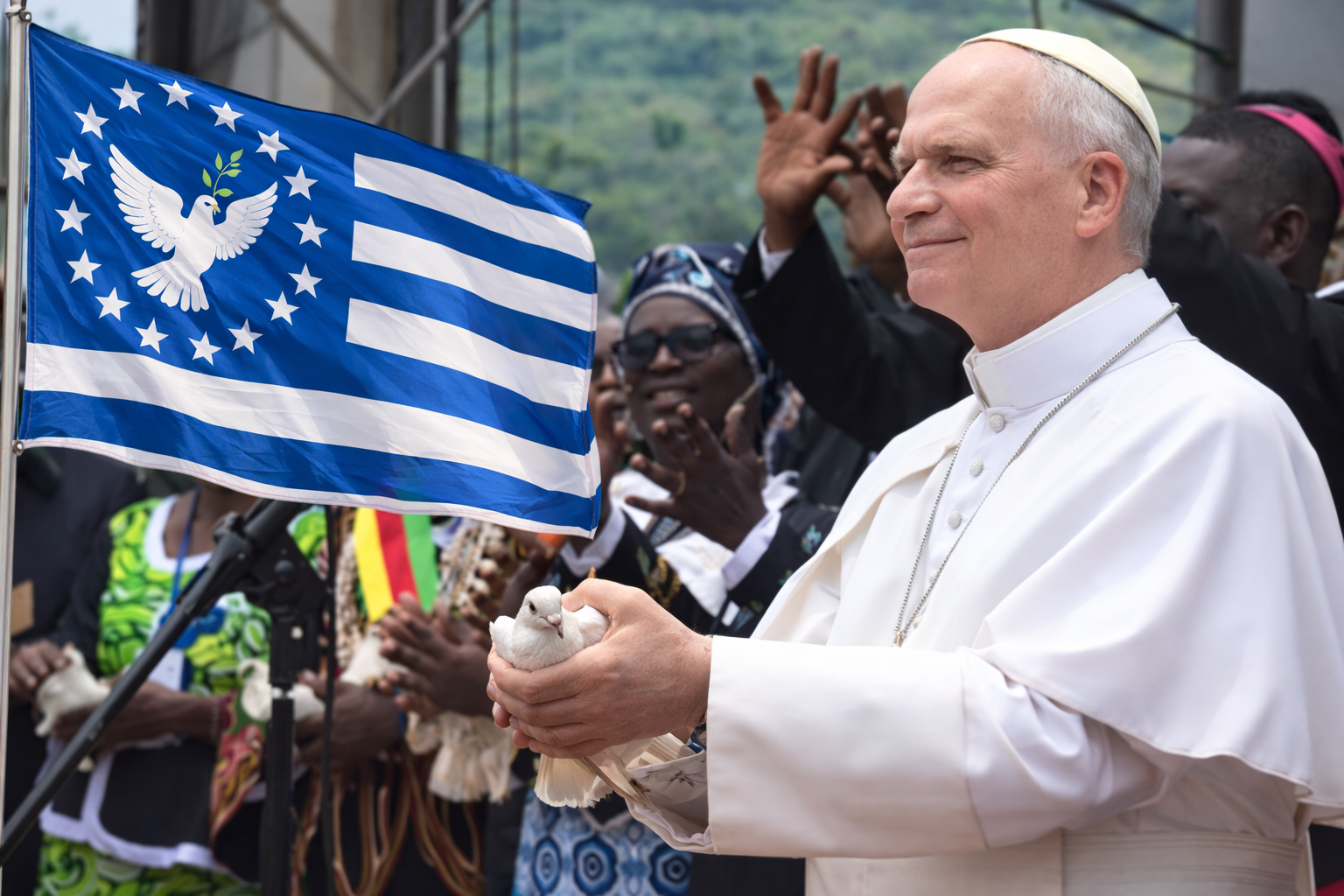
In a moment rich with symbolism, Pope Leo XIV released several white doves into the sky over Bamenda—a city that has become one of the central theatres of the conflict in Southern Cameroons since 2017.
To the global audience, the gesture was clear: a universal symbol of peace, reconciliation, and hope. But on the ground in Ambazonia, the act has taken on a deeper and more politically charged meaning.
A Symbol Beyond Coincidence
For many observers and supporters of the Ambazonian cause, the image of white doves soaring above Bamenda carries striking resonance. The Ambazonian flag itself prominently features a dove—widely interpreted as a symbol of peace, freedom, and the aspiration for statehood.
This visual overlap has not gone unnoticed.
Within hours of the event, voices across pro-Ambazonian circles began interpreting the moment not as coincidence, but as symbolism—some going as far as to describe it as a form of moral or spiritual endorsement.
BaretaNews understands the emotional and symbolic weight such an act carries in a conflict where identity, recognition, and legitimacy remain fiercely contested.
Between Faith and Politics
However, it is important to draw a careful distinction between symbolic interpretation and official intent.
The Vatican’s use of doves is longstanding and universal, rooted in Christian tradition where the dove represents peace, the Holy Spirit, and reconciliation across all nations and peoples. The gesture in Bamenda, therefore, is consistent with that broader message—not necessarily a targeted political statement.
That said, symbolism does not exist in a vacuum.
In a region where every gesture is scrutinised through the lens of a prolonged war, the release of doves in Bamenda—rather than elsewhere—inevitably carries contextual significance.
A “Consecrated” Moment?
Some commentators have gone further, describing the act as a form of “blessing” or even “consecration” of Ambazonia’s struggle and its aspirations for peace and recognition.
Such interpretations reflect the depth of feeling among segments of the population who see international acknowledgement—symbolic or otherwise—as validation of their cause.
Yet, caution is warranted.
To frame the Pope’s gesture as an explicit endorsement of Ambazonian independence would likely overstate its intent and risk misrepresenting a message that was, at its core, universal rather than partisan.
The Power of Perception
What this moment ultimately reveals is not necessarily a shift in diplomatic position, but the power of perception in a deeply polarised conflict.
In Ambazonia, where communities have endured years of violence, displacement, and uncertainty, symbols matter. They offer hope, identity, and, at times, a sense of global connection.
The image of white doves rising over Bamenda will likely endure—not just as a religious gesture, but as a moment open to interpretation, reflection, and debate.
Peace Still the Central Message
Amid all interpretations, one element remains constant: the Pope’s central message.
From Yaoundé to Bamenda, Pope Leo XIV has consistently emphasised that peace must be real, lived, and grounded in justice—not reduced to slogans or symbolism alone.
Whether one views the doves as coincidence, message, or metaphor, the underlying challenge remains unchanged: transforming symbols of peace into tangible reality on the ground.
For the people of Southern Cameroons, that work is far from finished.
BaretaNews will continue to provide grounded analysis on unfolding events in Ambazonia and beyond.