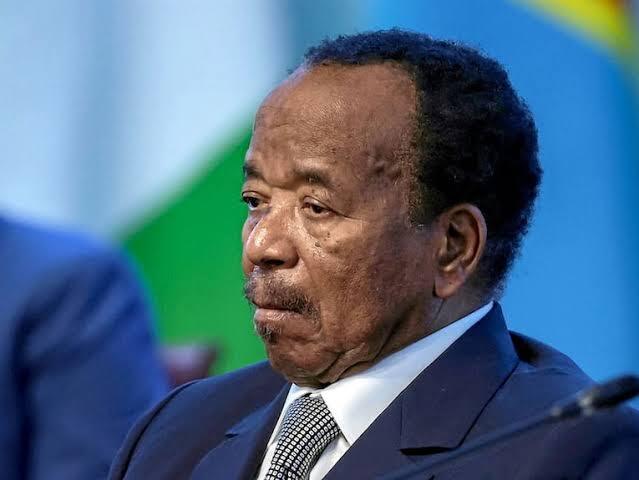
Nearly seven months after the heavily disputed presidential election in La Republique du Cameroun, President Paul Biya has yet to form a new government, deepening concerns that the Yaoundé regime may be trapped in a serious internal stalemate.
Across Africa, several presidential elections have taken place after the October poll in Cameroun. In almost all those countries, new governments were swiftly constituted, and state institutions resumed normal functioning. But in the case of the Biya regime, the situation remains frozen, exposing the deep cracks within the system governing the French-speaking republic.
Inside Yaoundé, confusion continues to reign. Some ministers are currently serving in dual capacities, while another minister reportedly occupies office in an interim role. This unusual arrangement has fuelled growing speculation about intense power struggles behind closed doors within the ruling CPDM machinery.
The last cabinet reshuffle carried out by Paul Biya dates back to 2019. Since declaring himself the winner of another controversial presidential election, the 93-year-old ruler has appeared in public only on rare ceremonial occasions. His appearances have been limited to his swearing-in ceremony, end-of-year address, New Year wishes, Youth Day speech on February 11, the reception of the Pope’s representative, and the May 20 national celebrations.
Outside these carefully controlled appearances, the people of Cameroun mostly hear from Biya through official decrees and signed documents released by the presidency, reinforcing long-standing concerns about the president’s health and his capacity to govern.
Political observers now question what may truly be preventing the Yaoundé regime from announcing a new government. Some analysts point to succession battles within the ruling elite, while others believe powerful clans around Etoudi are struggling to agree on the regime’s future direction.
For many Ambazonians watching events unfold from Ground Zero and in exile, the prolonged silence and institutional paralysis in La Republique only further confirm the gradual collapse of a system that has ruled through repression, corruption, and military occupation for decades.
As uncertainty grows in Yaoundé, many citizens in both La Republique and Ambazonia continue to wonder who truly controls the state machinery and whether the regime still has the strength to manage an increasingly fragile political climate.
By Lucas Muma | BaretaNews