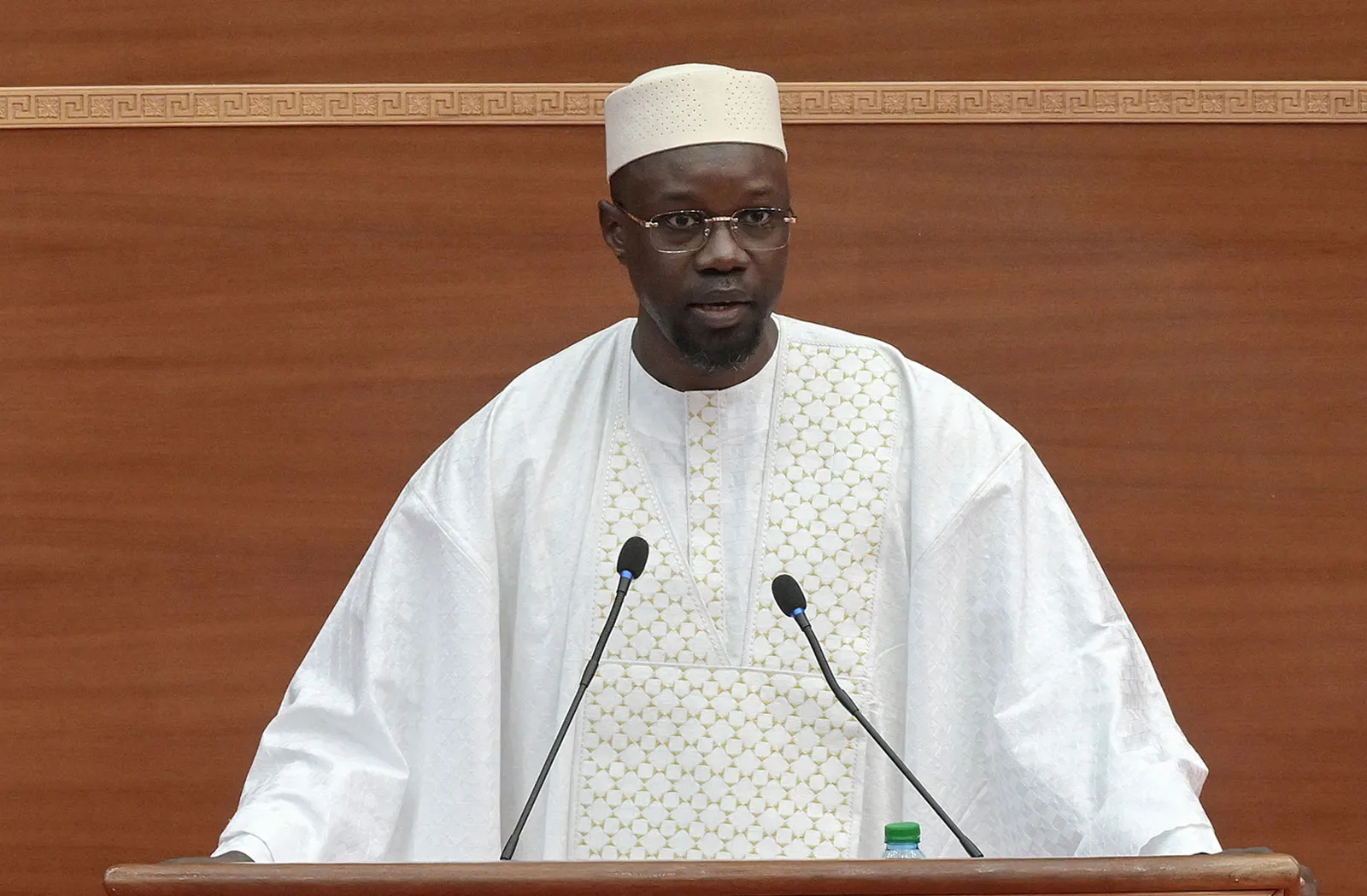
The political atmosphere in Senegal has taken a dramatic and historic turn after firebrand politician Ousmane Sonko officially became the new President of the National Assembly of Senegal during an extraordinary plenary sitting on Tuesday, May 26, 2026.
In a move that has shaken the Senegalese political establishment, lawmakers first reinstated Sonko as a Member of Parliament, then immediately elected him as head of the parliamentary institution. The entire process was rushed through by the ruling Pastef majority, which currently controls 130 of the 165 seats in the Assembly.
The development comes barely four days after Senegalese President Bassirou Diomaye Faye dismissed Sonko from his position as Prime Minister on May 22, in what many observers had interpreted as a major crack within the ruling revolutionary camp that once projected itself as united against the old Senegalese political order.
However, Sonko’s political resurrection has proven swift and brutal.
Attempts by President Faye to stop the process reportedly failed after the Constitutional Council declined to intervene. The court declared itself incompetent to handle the matter, insisting that the issue fell strictly under the internal regulations governing the National Assembly.
The failed legal manoeuvre opened the door for Pastef lawmakers to push Sonko straight into the speaker’s chair, despite growing outrage from opposition parties and constitutional experts who questioned the legality of his reinstatement under Article 54 of Senegal’s Constitution.
Opposition politicians have denounced the move as an institutional takeover orchestrated by the Pastef machinery, warning that Senegal’s democratic balance is now under serious threat. Several legal analysts equally argued that the rapid reinstatement violated constitutional norms and exposed dangerous cracks within Senegal’s governance structure.
Yet none of the resistance was enough to derail Sonko’s comeback.
The once-dismissed Prime Minister now finds himself occupying one of the most strategic positions within the Senegalese state apparatus, effectively reshaping the country’s political power structure overnight.
Political observers across Africa are already describing the development as unprecedented in Senegal’s modern political history, with many now watching closely to see whether the escalating tensions between President Bassirou Diomaye Faye and Ousmane Sonko could trigger a deeper political confrontation within Dakar’s ruling establishment.