The Pope Speaks in Yaoundé: A Subtle but Powerful Call for Justice in Cameroon
By James Agbor for BaretaNews
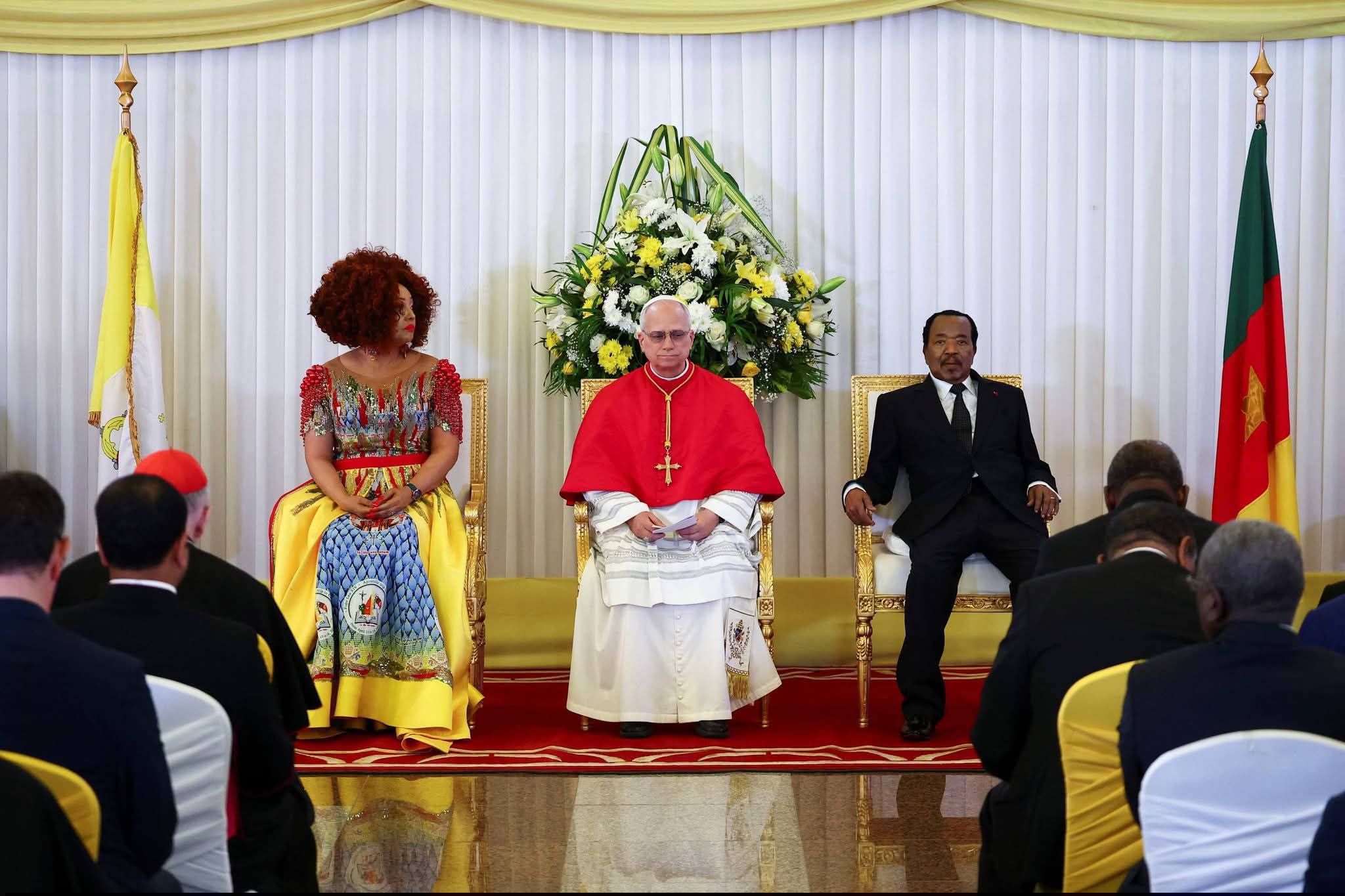
The visit of Pope Leo to Yaoundé today has stirred significant reflection across Cameroon and beyond, particularly among communities affected by the ongoing crisis in the Northwest and Southwest regions. While the atmosphere of the visit was ceremonial, the Pope’s words carried a weight that could not be ignored—especially given that they were delivered in the presence of President Paul Biya.
In a carefully worded but deeply resonant message, Pope Leo expressed solidarity with those enduring suffering in the Anglophone regions. He stated: “My thoughts are especially with those going through pain in the Northwest and Southwest regions. The strong call for justice and the deep desire for peace from these areas deserve quick and real action through honest dialogue.”
This statement is notable not only for its compassion but also for its implicit acknowledgment of the legitimacy of grievances long voiced by Anglophone Cameroonians. By highlighting both “justice” and “dialogue,” the Pope subtly reframed the crisis—not merely as a security issue, but as a political and moral one requiring urgent attention.
Even more striking was his firm stance on violence: “Peace should not just be words people say. It must be shown through how we live; by rejecting all forms of violence, whether from individuals or from institutions.” This balanced condemnation is significant. In a context where narratives are often polarized, the Pope’s words avoided taking sides while still holding all actors accountable—state and non-state alike.
For many observers, this marks one of the most direct moral interventions by a global religious leader on the Cameroonian crisis in recent years. Though diplomatically phrased, the message challenges the status quo and places pressure—however gently—on authorities to move beyond rhetoric toward tangible solutions.
The emphasis on “honest dialogue” is particularly crucial. For years, calls for meaningful negotiations have been met with hesitation, mistrust, or outright dismissal. By invoking dialogue as both urgent and necessary, the Pope reinforces what many civil society actors and international observers have long advocated: that sustainable peace cannot be achieved through force alone.
Reactions to the speech are likely to be varied. Supporters of the government may interpret the message as a general appeal for unity and calm, while those in the Anglophone regions may see it as a rare moment of international validation of their plight. What is clear, however, is that the Pope’s words have added a renewed moral dimension to the conversation.
In diplomatic language, subtlety often speaks loudest. And in Yaoundé today, Pope Leo delivered a message that, while gentle in tone, carries profound implications: that justice delayed deepens wounds, and that peace without truth and dialogue remains fragile.
Whether this moment will translate into concrete action remains uncertain. But for many Cameroonians, especially those in the Northwest and Southwest, the Pope’s voice may serve as both comfort and a reminder that their struggle has not gone unnoticed.
BaretaNews will continue to monitor developments following this historic visit.