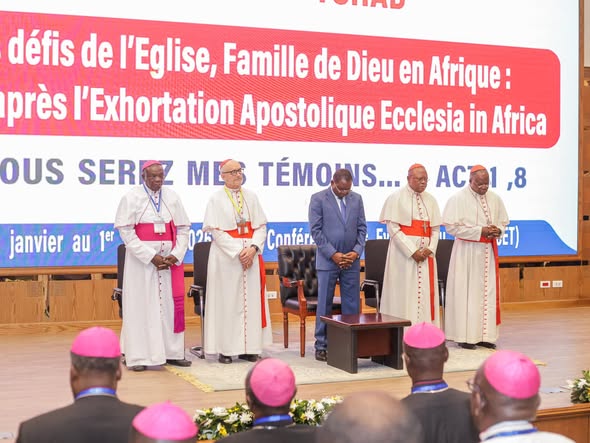

The 2026 Plenary Assembly of the Association of Episcopal Conferences of the Central African Region (ACERAC) was officially opened on Monday morning in N’Djamena, Chad, with a solemn ceremony marked by strong spiritual, ecumenical, and political symbolism. The ceremony formally launched a week of reflection and deliberation by Catholic leaders from across Central Africa.
 The opening ceremony took place in the Ministry of Foreign Affairs’ main conference hall, bringing together Catholic bishops, cardinals, clergy, religious leaders, government officials, diplomats, and partner institutions. The gathering highlighted the close collaboration between the Church and public authorities, as well as the regional importance of the ACERAC assembly.
The event began with a spiritual moment of prayer, led by Monsignor Bertrand Guy Richard, Vice-President of ACERAC. Sacred music rendered by choirs set a reflective tone and prepared participants for the formal proceedings, creating an atmosphere of unity and contemplation.
Following the prayer, the Secretary General of ACERAC formally presented the Plenary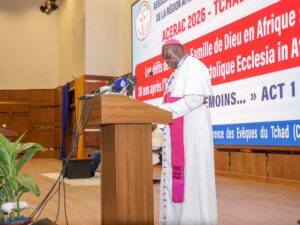 Assembly. He outlined its objectives and emphasised the importance of the gathering for the future pastoral direction of the Church in Central Africa, particularly in the face of social, cultural, and evangelisation challenges.
Several official speeches then followed. The Mayor of the City of N’Djamena welcomed the delegations and expressed pride in hosting such a high-level ecclesial event in the Chadian capital. He described the assembly as a recognition of Chad’s role in promoting peace, dialogue, and regional cooperation.
Cardinal Luis Antonio Tagle, Pro-Prefect of the Dicastery for Evangelisation, delivered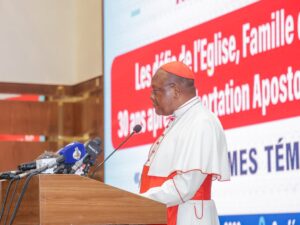 a profound reflection on the evangelisation of peoples in today’s rapidly changing world. He called on the Church in Central Africa to remain faithful to the Gospel while creatively responding to contemporary realities.
Cardinal Michael Czerny, Prefect of the Dicastery for the Service of Integral Human Development, focused on the Church’s social mission. He stressed the need for a renewed commitment to human dignity, justice, and solidarity, especially among vulnerable communities.
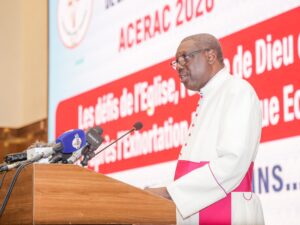 Speaking on behalf of the wider African Church, Cardinal Fridolin Ambongo Besungu, Archbishop of Kinshasa and President of the Symposium of Episcopal Conferences of Africa and Madagascar (SECAM), conveyed a message of unity and solidarity. He reaffirmed the importance of regional cooperation among bishops in addressing shared pastoral and societal challenges.
The Apostolic Nuncio to Chad and Central Africa delivered a message from the Holy Father, Pope Leo VIX, extending his blessings and encouragement to the participants. The message reinforced the strong bond between the local Churches of Central Africa and the Holy See.
The orientation address was given by Monsignor Martin Waingué Bani, Bishop of Doba, President of the Episcopal Conference of Chad and Acting President of ACERAC. He outlined the assembly’s spiritual and pastoral priorities and invited participants to engage in sincere dialogue guided by faith and fraternity.
At the state level, the Prime Minister of Chad, speaking on behalf of President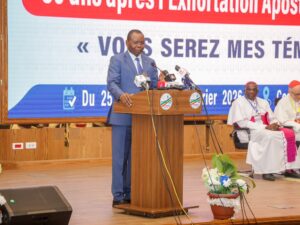 Marshal Mahamat Idriss Déby Itno, reaffirmed the Chadian authorities’ support and esteem for the work of the Catholic Church. He praised the Church’s contribution to peace, education, and social cohesion in the country and the wider region.
A brief musical interlude allowed participants to reflect before the reading of messages of goodwill from partner institutions and delegations. These messages highlighted the broad communion and support surrounding the ACERAC assembly.
The ceremony concluded with the presentation of all delegations, a symbolic and visual moment that underscored the Church’s diversity and unity as the Family of God in Central Africa. With the official opening completed, the bishops and their collaborators now enter a full week of prayer, discussion, and strategic reflection on the mission of the Church in the sub-region.
By Lucas Muma