Ambazonians worldwide pause this Thursday, October 1, 2026, to reflect on the state of their nation, 65 years after it gained independence from Great Britain by joining La République du Cameroun.
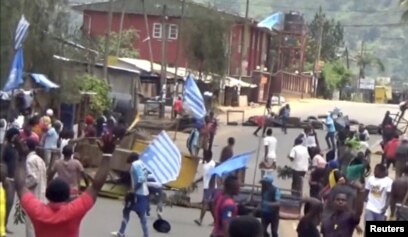
Sixty-five years later, the people of Ambazonia continue to sweat in blood to defend their homeland amid an armed struggle that has ravaged communities and displaced thousands.
Yet, despite the pain, the tears and the enormous sacrifices, the Ambazonian spirit remains unbroken.
October 1 is not simply another day.
It is the day Ambazonians remember their history, honour their identity and reaffirm their attachment to their homeland.
It carries the memories of a people whose political destiny has remained deeply contested for generations.
October 1, 1961
To understand Ambazonia’s Independence Day, one must understand the history of the former British Southern Cameroons.
After the First World War, Britain and France divided the former German territory of Kamerun.
Following the Second World War, the territories became United Nations Trust Territories.
British Southern Cameroons developed under a different administrative, educational and legal tradition from French Cameroun.
In 1961, the United Nations organised a plebiscite to determine the political future of the British-administered territories.
Southern Cameroons voted to achieve independence by joining the already independent Republic of Cameroun.
The United Nations subsequently ended the trusteeship over Southern Cameroons on October 1, 1961.
For Ambazonian nationalists, that date remains a defining moment in their homeland’s political history.
They argue that Southern Cameroons entered the union as a distinct people and territory.
They further argue that decades of discrimination, marginalisation and assimilation eventually destroyed the political arrangement they believed they had entered.
The Cameroonian government disputes that interpretation and considers the territory an integral part of Cameroon.
That unresolved disagreement remains
By Lucas Muma | BaretaNews