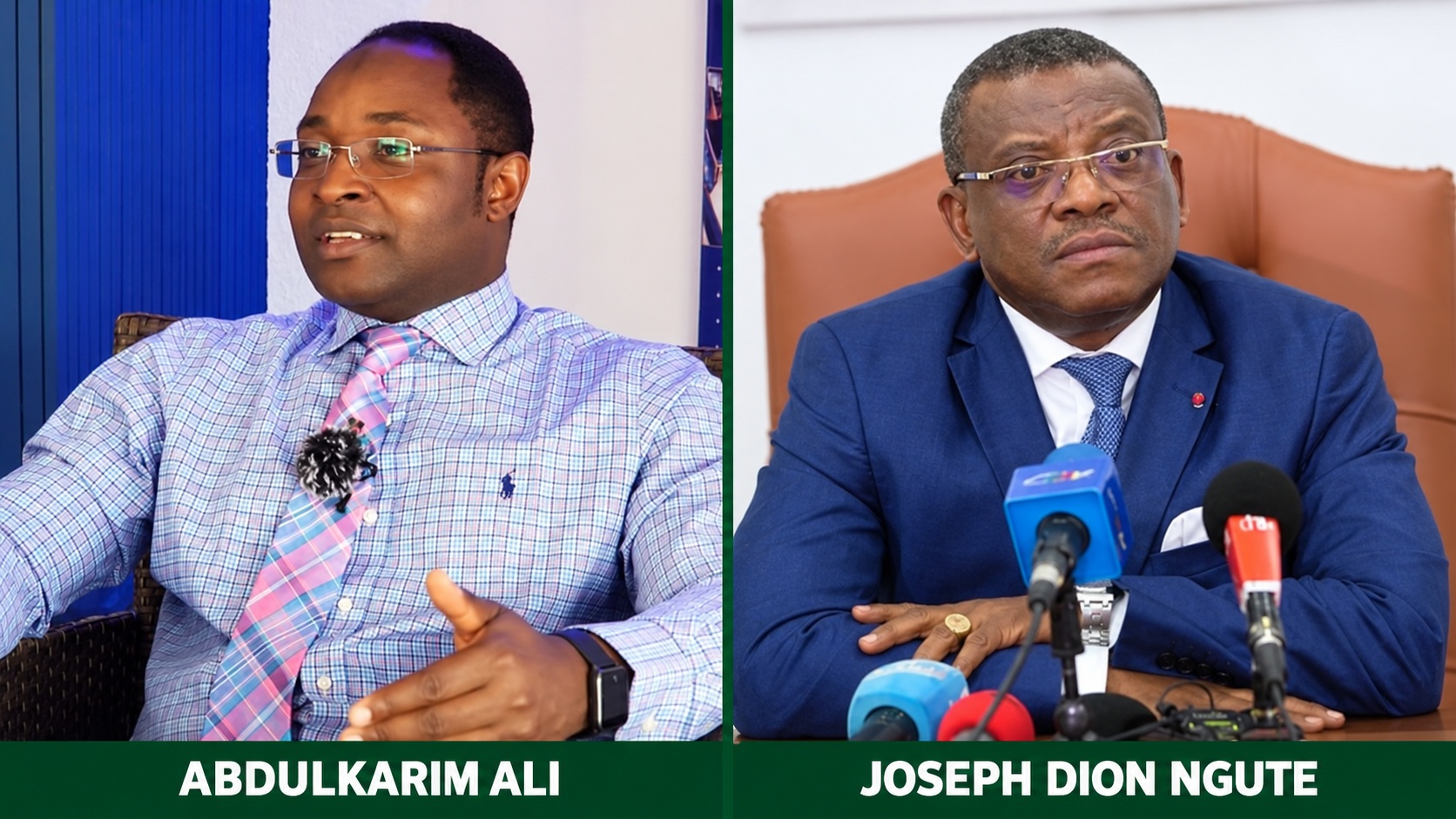
By Abdulkarim Ali
29 September 2026 | Opinion & Analysis
Waiting for exhaustion is no substitute for resolving a political conflict. Peace in Southern Cameroons requires a ceasefire, prisoner releases, safe return from exile and mediated negotiations that confront the dispute at its roots.
A conflict does not become resolved simply because it grows old. Fighting may decline, communities may become exhausted and international attention may shift elsewhere. None of those developments necessarily answers the political questions that brought people into confrontation.
That is the central weakness in the argument that the Southern Cameroons conflict could eventually die a “natural death”.
Whether the imagined waiting period is fifteen years or several generations, time is being asked to accomplish what political leadership has failed to deliver: a credible settlement.
The people living with this conflict cannot build their future around that expectation.
A political conflict cannot be reduced to military fatigue
Not all wars follow the same pattern. Some involve conventional battles between states. Others involve armed groups confronting a much stronger military through guerrilla warfare. Many also carry questions of identity, belonging and political survival that cannot be measured by battlefield strength alone.
In my assessment, the Southern Cameroons conflict combines military asymmetry with an existential political grievance.
Its military imbalance is evident in the confrontation between Southern Cameroons armed groups and the stronger state forces of La République du Cameroun. Its deeper motivation, for many supporters of self-determination, is the conviction that their identity, institutions and political future are under threat.
One does not have to agree with every expression of that conviction to recognise that it exists. Nor can its significance be dismissed simply by predicting that fighters will grow tired.
Exhaustion may create an opportunity for negotiations. It does not automatically produce a settlement.
Waiting is a decision with consequences
The “natural death” argument assumes that time will weaken political conviction: fighters will abandon their positions, younger generations will forget and economic pressures will gradually displace demands for self-determination.
Those outcomes cannot be taken for granted.
Memories of displacement, imprisonment, bereavement and lost opportunity can pass between generations. A reduction in violence may coexist with deep resentment and an unresolved dispute over political status.
This does not mean renewed fighting is inevitable. It means that apparent calm should not be confused with reconciliation.
To describe waiting as a solution is to overlook its human cost. Children lose years of education. Families postpone returning home. Communities struggle to rebuild their livelihoods without confidence that the next period of insecurity will not undo their efforts.
A government may wait for a political problem to disappear. The people affected must live through every day of that delay.
History points towards political engagement
No foreign conflict offers a perfect template for Southern Cameroons. Their origins, institutions and outcomes differ. Nevertheless, several peace processes demonstrate what deliberate political engagement can achieve.
In Northern Ireland, the 1998 Good Friday Agreement established a framework involving power-sharing, rights and the principle of consent over constitutional status. It did not erase disagreement. It helped create institutions through which competing aspirations could be pursued politically.
Mozambique’s government and RENAMO signed the Rome General Peace Agreement in 1992. The later Maputo accord of 2019 addressed further questions of decentralisation and the disarmament, demobilisation and reintegration of former combatants. The experience illustrates that peace requires both negotiation and sustained work to implement and strengthen agreements.
Colombia’s 2016 agreement with the FARC addressed issues including rural reform, political participation and victims’ rights. Continuing violence and implementation difficulties should caution against presenting it as a complete end to every conflict in the country. Yet its achievements came through a negotiated process, supported by verification, rather than an assumption that grievances would disappear with time.
Western Sahara offers a different warning. The ceasefire established in 1991 did not settle the territory’s political status, and hostilities resumed in 2020. A lengthy interruption in fighting was not equivalent to a final political resolution.
These examples do not prove that all conflicts end in the same way. They demonstrate why leaders should distinguish between suppressing violence, managing a ceasefire and resolving a political dispute.
Address the question that military operations cannot answer
For Southern Cameroons, the central issue remains its political future and the demand for self-determination.
A credible process must allow representatives of Southern Cameroons and La République du Cameroun to discuss that disagreement directly. Negotiations cannot be meaningful if the central question is ruled out before the parties reach the table.
Neither should communities be required to demonstrate endless suffering before their grievances receive serious attention.
The purpose of dialogue must be to establish an agreed way forward, with commitments that can be understood, implemented and monitored. It should offer people a reason to believe that political participation can produce results.
Delay risks reinforcing the opposite lesson: that dialogue is unavailable and that grievances will only be acknowledged when violence draws attention to them.
Responsible leadership should break that cycle.
Four steps towards a credible peace process
The following measures should form the foundation of a serious initiative.
1. Establish a ceasefire
An agreed and monitored cessation of hostilities would create space for civilian protection, humanitarian access and substantive political engagement.
2. Release Southern Cameroons prisoners of conscience
Those imprisoned for the peaceful expression of their political beliefs should be released. A process presented as reconciliation must address the imprisonment of peaceful dissenters.
3. Guarantee safe return from exile
People wishing to return should have credible assurances of safety and protection against persecution for their peaceful political views.
4. Convene mediated negotiations
La République du Cameroun and representative Southern Cameroons interlocutors should enter a structured process addressing the underlying dispute, with an agreed agenda and arrangements for implementing any settlement.
These are proposals for creating the conditions in which peace becomes possible. Their value lies in the practical changes they could bring to people’s lives.
Peace must be chosen and built
Nelson Mandela’s approach to reconciliation recognised that lasting peace requires engagement with an adversary. As he wrote: “To make peace with an enemy, one must work with that enemy, and that enemy becomes one’s partner.”
The moral obligation to reconcile also appears across faith traditions. Jesus (peace be upon him) taught: “Blessed are the peacemakers, for they will be called children of God.” In the Islamic tradition, Prophet Muhammad (peace be upon him) emphasised the merit of putting things right between people.
Peacemaking is an active responsibility. It requires decisions, difficult conversations and commitments that extend beyond public declarations.
Southern Cameroons cannot be asked to entrust its future to the passage of decades. The conflict must be addressed through deliberate action: cease fire, release prisoners of conscience, allow safe return and negotiate the political questions at its heart.
Time is not a peacemaker. Peace is made by people who choose it.