
Death Behind Bars: Patrick Ndangoh’s Tragedy Exposes the Cruel Reality of Biya’s Cameroon
The death of Ambazonian detainee Patrick Ndangoh after nearly a decade in detention without trial has once again cast a harsh spotlight on the repressive machinery of Paul Biya’s regime and the deepening human rights crisis in Cameroon. His passing is not being viewed by many observers as an isolated tragedy, but rather as part of a wider pattern of prolonged detention, judicial abuse, political persecution, and state neglect that has characterised the government’s response to the Anglophone crisis.
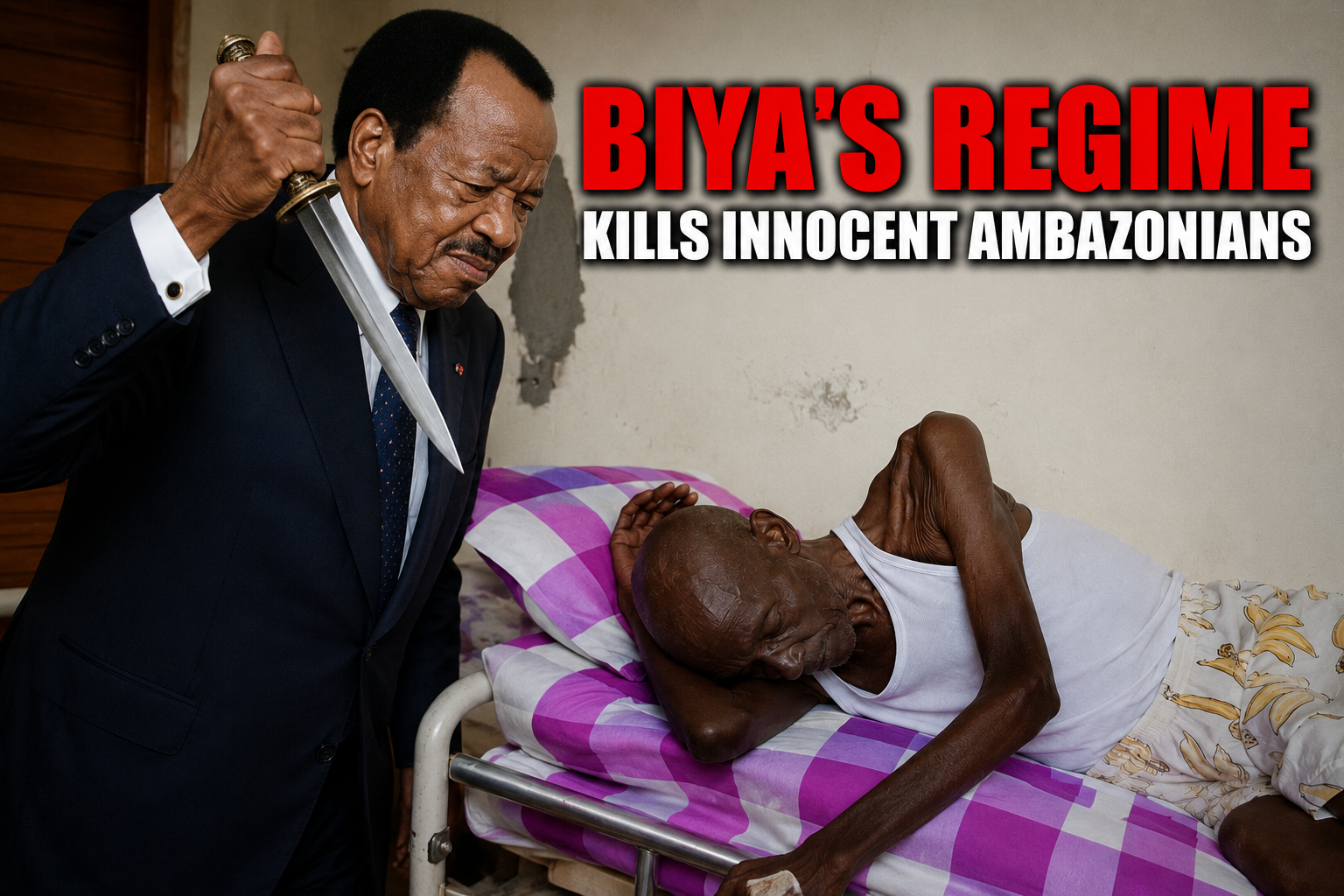
Images circulating online before his death showed a visibly frail and severely emaciated Ndangoh lying helplessly on a hospital bed. For many Cameroonians and members of the Ambazonian diaspora, those photographs have become powerful evidence of what critics describe as the inhumane treatment of detainees under the Biya government. The emotional reaction across social media has been intense, with activists accusing the state of effectively allowing prisoners to deteriorate physically while trapped in an endless cycle of delayed justice and institutional indifference.
Patrick Ndangoh reportedly spent almost ten years in detention without receiving a proper and conclusive trial. In any functioning democracy governed by the rule of law, such a situation would provoke national outrage and immediate institutional accountability. Yet under Biya’s long-standing rule, critics argue that arbitrary detention and prolonged judicial delays have become normalised, particularly for individuals associated with the Anglophone struggle. Human rights advocates have repeatedly condemned Cameroon’s use of pre-trial detention as a political weapon rather than a legal necessity.
The Biya regime has consistently portrayed its actions in the Anglophone regions as necessary for national security and territorial integrity. However, critics say the government’s approach has increasingly relied on fear, militarisation, mass arrests, intimidation, and suppression of dissent instead of meaningful dialogue. The result has been a deepening humanitarian and political crisis that continues to divide the country while eroding public confidence in state institutions.
For many Ambazonians, Patrick Ndangoh’s death symbolises the suffering of countless detainees whose names rarely make headlines. Families have long complained about overcrowded prison conditions, inadequate healthcare, lack of food, denial of timely medical treatment, and endless postponements of court hearings. Several detainees arrested during the conflict have reportedly spent years behind bars without clear legal conclusions to their cases. Critics argue that this reflects a judicial system increasingly influenced by political pressure rather than constitutional fairness.
The condemnation directed at the Biya government following Ndangoh’s death has been particularly fierce because of the broader political context in Cameroon. President Paul Biya, now one of Africa’s longest-serving leaders, has ruled the country for more than four decades. During that time, opposition groups and international observers have repeatedly accused his administration of suppressing political freedoms, weakening democratic institutions, and governing through fear and patronage networks. The Anglophone conflict has further intensified those criticisms, with many accusing the government of responding to legitimate grievances with military force and repression instead of political reform.
Observers argue that Ndangoh’s death highlights the devastating human cost of that strategy. Rather than calming tensions, the continued detention of political prisoners and conflict-related detainees without timely judicial resolution has fuelled resentment and strengthened perceptions of marginalisation among many English-speaking Cameroonians. The absence of accountability surrounding deaths in custody only deepens suspicions about the state’s willingness to respect basic human rights.
International human rights organisations have for years raised concerns about Cameroon’s prison conditions and the treatment of detainees linked to the Anglophone crisis. Reports documenting overcrowding, poor sanitation, torture allegations, denial of healthcare, and arbitrary arrests have repeatedly surfaced despite official denials from the government. Critics now argue that Patrick Ndangoh’s death should serve as a wake-up call to both regional and international actors who have often remained cautious or silent in the face of mounting abuses.
Many activists are now demanding an independent international investigation into the circumstances surrounding his detention and death. Others are calling for urgent pressure on the Cameroonian government to either release detainees held without sufficient evidence or ensure fair and transparent trials within a reasonable timeframe. There are also renewed appeals for humanitarian access to prisons and independent monitoring of detention facilities.
For SCAUF supporters and many Ambazonians, Patrick Ndangoh will now be remembered not only as a detainee who died in custody, but as a symbol of what they describe as the cruelty and failures of the Biya regime. His death has reopened painful debates about justice, accountability, and the future of Cameroon itself.
As outrage continues to spread, one reality remains impossible to ignore: a state that detains citizens for years without trial, while prisoners waste away in deteriorating health, faces serious questions about its commitment to justice, democracy, and human dignity.