
Delegates push for urgent reforms while cracks in world trade expose deep global imbalance
The 14th Ministerial Conference of the World Trade Organisation is unfolding in Yaoundé, a city in La République du Cameroun, at a time when the global trade system is visibly shaking under pressure.
This high-level gathering comes at a moment many observers say the very foundation of international trade cooperation has been weakened. The WTO, once respected as the referee of global commerce, now struggles to enforce the same rules it was created to protect.
The institution was built to manage trade agreements, settle disputes, and ensure fair play among nations. But over the past two decades, powerful states have increasingly acted outside these agreed frameworks.
One major fault line is the growing use of unilateral sanctions. Western powers have repeatedly imposed restrictions on countries across Africa, Latin America, and Asia, often for political reasons. These actions have disrupted trade flows and undermined trust in a system that claims neutrality.
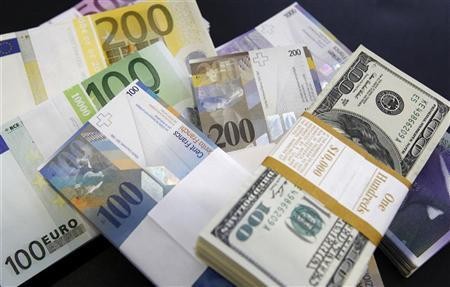
The dominance of the US dollar has also deepened the imbalance. Decisions taken in Washington now ripple across the global economy. Domestic policies in the United States, from inflation control to tariff impositions, continue to shape international markets in ways many say bypass WTO rules.
Economic blocs are no longer united either. The traditional influence of the G7 and G20 is now being contested by emerging alliances such as BRICS. This fragmentation has created competing interests, making consensus within the WTO more difficult than ever.
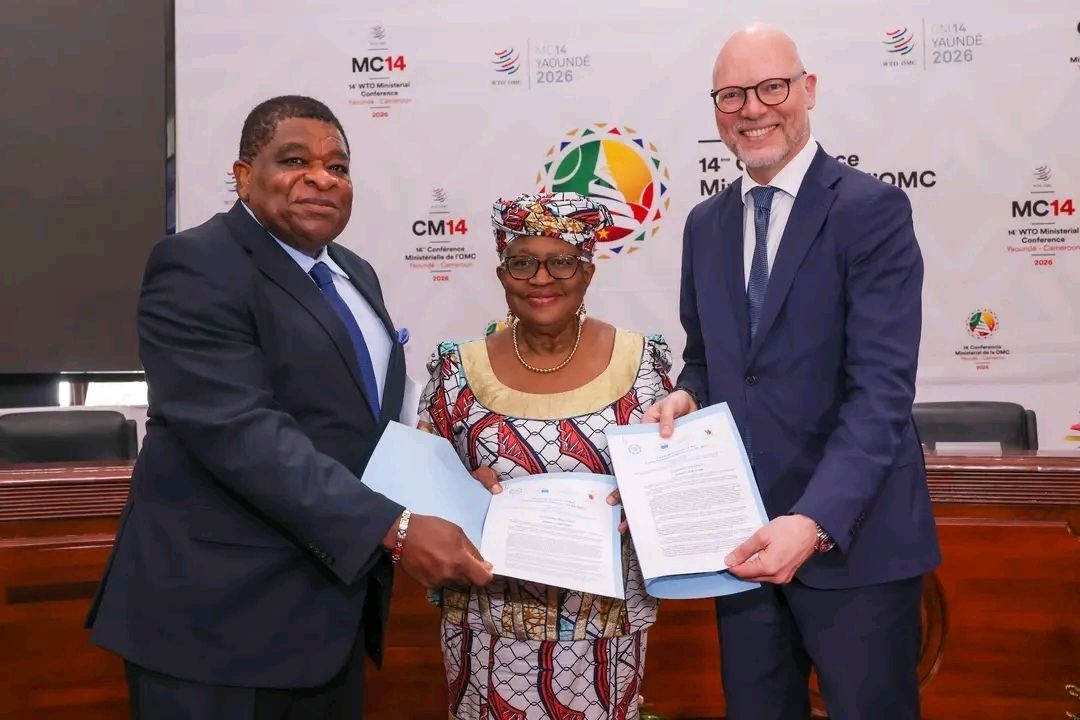
WTO Director-General Ngozi Okonjo-Iweala has openly acknowledged these disruptions. She points to a system under strain, where cooperation is giving way to economic nationalism.
In Yaoundé, delegates are attempting to respond. A reform document has been signed, calling for a complete overhaul of the organisation’s core functions. Key proposals include restoring a functioning dispute settlement system, strengthening support for developing economies, and accelerating work on digital trade.
Ministers are also being urged to provide clear political direction and agree on a practical roadmap that extends beyond this conference.
The big question remains. Can this gathering in Yaoundé reverse years of damage and restore credibility to the WTO?
For many in Ambazonia and across the Global South, the answer will not come from words on paper but from whether powerful nations are willing to play by the same rules they helped create.