Stop Misleading the Public: The Obstacle to Dialogue Is in Yaoundé, Not Buea
By Mark Bareta
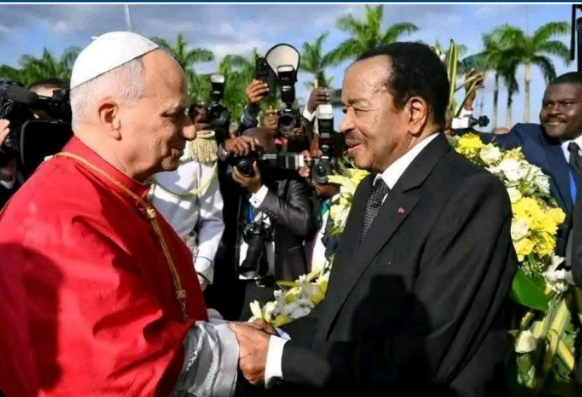
In recent days, many individuals have rushed to write open letters to President Paul Biya, Ambazonia movements, and various Anglophone leaders, urging dialogue following comments linked to Pope Francis and calls for peace. Others have repeated remarks attributed to Bishop Andrew Nkea suggesting that there are people on both sides of the conflict who do not want dialogue or do not want the crisis to end.
Such statements may sound balanced, but they do not reflect the reality of this conflict.
The truth is simple and has been consistent since 2017: Ambazonia movements have been ready for genuine dialogue from the very beginning of the war. This willingness has been demonstrated repeatedly through public declarations, mediation efforts, and readiness to engage in talks. The problem has never been a refusal from Ambazonians to talk. The problem has always been the refusal of the Cameroun state to come to the table on the basis of equality and mutual respect.
If indeed two Cameroons came together in a union, then any serious discussion about the future must involve both parties sitting as equals. That is why the Ambazonian position has remained clear: dialogue must take place between representatives of Cameroun and Ambazonia, under the mediation of a neutral third party.
This is not theoretical. The Government of Canada attempted to facilitate such a process and even issued a public notice. Yet when it became clear that Ambazonia groups had shown uncommon unity during the pre-talk phase, the Cameroun government quickly distanced itself and publicly undermined the process. They expected division. They encountered coordination.
Therefore, those writing open letters must direct their pressure where it belongs: to the government in Yaoundé. Ambazonia movements have made their readiness known. If meaningful talks were offered today under credible conditions, many would be prepared immediately.
There is another important fact many prefer to ignore. If Cameroun truly wanted peace, it would have embraced moderate Anglophone voices long ago. It would have allowed federalists and reform-minded leaders to organise an All Anglophone Conference. It would have listened to their grievances and perhaps adopted some of their proposals. Such an approach could have reduced tensions and placed political pressure on separatist movements.
But that did not happen.
Instead, even moderates have struggled for freedom of association, freedom of assembly, and the basic right to organise peacefully. When a state refuses to listen to moderates, refuses to meet reformists, and refuses to engage hardliners, it cannot credibly claim to desire peace.
So let us reject false equivalence. It is misleading to suggest that both sides equally block dialogue. The side with state power, prisons, laws, and institutions carries the greater responsibility to open the door to peace. That side sits in Yaoundé.
Those who genuinely support peace and the so-called one Cameroun should stop misdirecting their frustration at Ambazonia movements. The central obstacle has never been in Buea. It has always been in Yaoundé.
Until that truth is confronted honestly, the road to peace will remain blocked.