
Court of Auditors report raises concerns over SNH’s growing control of Cameroon’s hydrocarbon sector
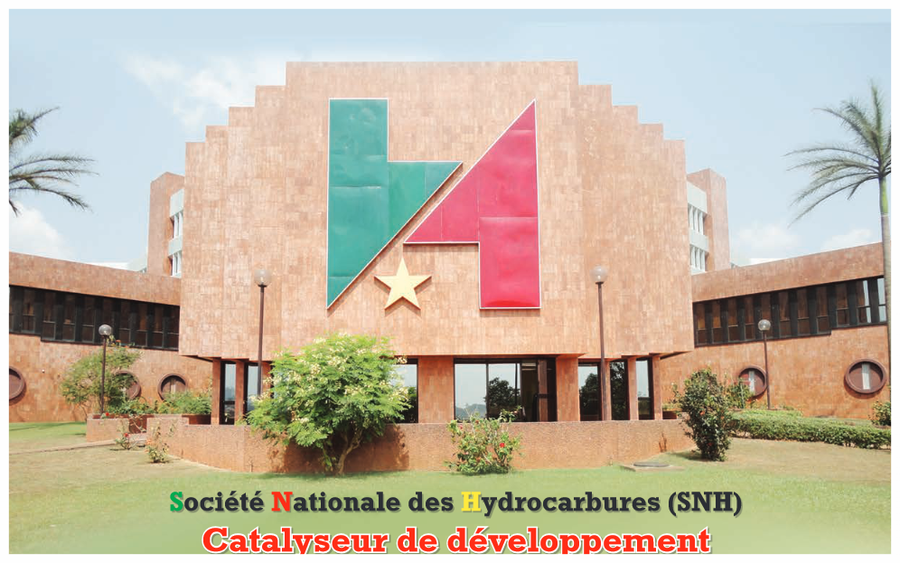
The Cameroon Court of Auditors has raised serious concerns over the growing control of the National Hydrocarbons Corporation, SNH, over the country’s gas sector.
Its audit of the Cameroon Petroleum Storage Company, SCDP, shows a sharp decline in Bipaga gas volumes passing through SCDP facilities. The report was published on July 8, 2026.
According to the figures cited in the report, SCDP’s share of Bipaga domestic gas fell from 38% to about 1% in three years. In 2021, SCDP received only 505 tonnes out of 35,447 tonnes produced.
That means about 98.6% of the production bypassed the historical storage operator.
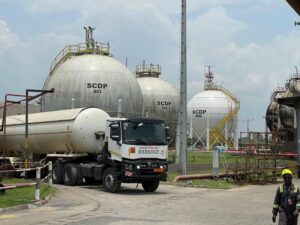 The figures raise questions about the changing relationship between two state-owned companies. They also highlight growing concerns over SNH’s expansion across the hydrocarbon value chain.
A system that once had clear roles
Created in 1979 and headquartered in Douala, SCDP has traditionally handled the storage and transportation of petroleum products. The company operates 14 national storage depots.
The State owns 51% of its 16.8 billion FCFA capital. Its strategic role includes helping secure the country’s supply of petroleum products. The Court of Auditors says the company has generally carried out its missions satisfactorily.
For decades, SNH and SCDP had distinct responsibilities. SNH focused mainly on exploration and production. SCDP handled storage and transit.
However, that arrangement began changing after the Bipaga floating liquefied natural gas facility became operational in 2018.
The facility, located off Kribi in the South Region, was operated by SNH. SCDP also provided technical support.
Initially, Bipaga’s gas moved through SCDP facilities. The arrangement, however, did not last.
The 2019 decree changed the balance
On July 9, 2019, Paul Biya signed decree No. 2019/342. The decree expanded SNH’s responsibilities across the hydrocarbon chain.
SNH could now undertake activities covering exploration, production, processing, transportation, storage, marketing, trading and distribution.
As a result, SNH moved beyond its traditional upstream role. It increasingly entered areas previously handled by companies such as SCDP.
The Court of Auditors describes this change as a major turning point.
SNH subsequently developed infrastructure for gas storage and distribution. At the same time, SCDP saw the volume of Bipaga gas passing through its facilities fall sharply.
The result has been an increasingly direct institutional competition between two public companies.
The numbers tell the story
Between 2019 and 2023, the volume of LPG received by SCDP from Bipaga reportedly fell by 66.42%.
The decline was even more dramatic in 2021, when the volume fell by 95.23%.
In practical terms, SCDP lost revenue from gas storage, filling and transit operations.
Yet the company’s overall revenue still increased between 2018 and 2023.
SCDP’s revenue rose from 16.76 billion FCFA to 25.69 billion FCFA. That represents an increase of 53.32%.
However, the audit indicates that other factors drove much of this increase. These included higher liquid fuel volumes and an increase in the transit fee from 1.60 to 2 FCFA per litre.
That raises another important question.
Who ultimately carries the cost of the changing structure?
The answer is the consumer when higher charges feed into fuel prices.
Court warns against institutional cannibalism
The Court of Auditors has warned about the long-term consequences of SNH expanding into areas traditionally handled by SCDP.
The court says the government needs to clearly define the responsibilities of both companies.
It also recommends guaranteeing SCDP’s transit rights for gas produced and distributed in Cameroon.
Without such clarification, SCDP could gradually lose the economic activities that sustain it.
The issue therefore goes beyond competition between two public companies. It concerns how Cameroon manages strategic public assets and controls the country’s hydrocarbon revenues.
SNH’s wider governance questions
The SCDP audit comes as SNH faces wider questions about its governance and management.
Africa Intelligence has reported extensively on the growing tensions around SNH and Nathalie Moudiki’s influence. Its reporting describes her as an increasingly influential figure within the state oil company.
The publication has also reported disputes over refinery and petroleum storage projects involving SNH and other powerful government actors.
These developments point to a broader struggle over control of Cameroon’s oil and gas infrastructure.
They also raise questions about transparency and accountability within the country’s strategic public companies.
The consumer remains at the end of the chain
For ordinary Cameroonians, the debate is not simply about SNH and SCDP.
It is about the final cost of energy.
When public companies lose revenue from key operations, they must find ways to compensate for the losses.
If higher transit charges are eventually incorporated into the pricing structure, consumers bear the burden.
This is especially significant as domestic gas consumption continues to grow.
It also comes at a time when Cameroon is under pressure to improve public financial management and strengthen accountability.
The bigger question for Yaoundé
The Court of Auditors has already proposed the immediate solution.
The government should clearly separate the roles of SNH and SCDP. It should also guarantee SCDP’s legitimate transit revenues and prevent unfair competition between public entities.
But the deeper issue is governance.
Cameroon cannot build an efficient energy sector when one public institution keeps expanding into another’s territory without clear safeguards.
The Bipaga case therefore exposes more than a dispute over gas volumes.
It exposes the growing concentration of economic power within Cameroon’s hydrocarbon sector.
For consumers across the country, the concern is simple.
If public institutions compete for control while costs rise, ordinary Cameroonians will eventually pay the price.
By Lucas Muma | BaretaNews