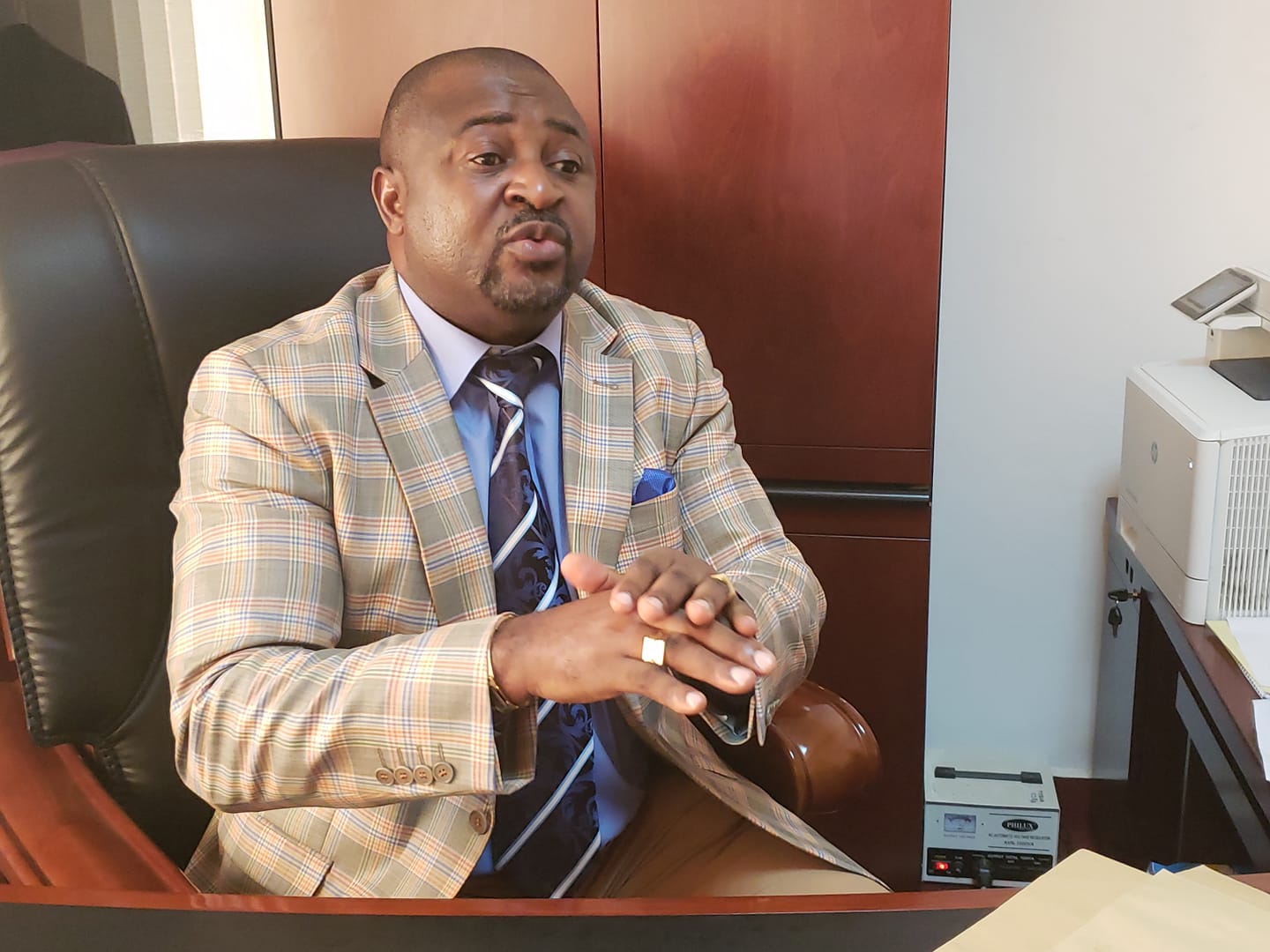
A Catholic priest, Rev. Fr Muma Francis, has sharply questioned the arguments presented by the Bishop of Buea, His Lordship Michael Bibi, during his recent interview on DMRTV. The interview, conducted on December 1, 2025, by journalist Yanick Fonki, sought to address growing public concerns over the perceived silence of the Catholic Church in the face of Cameroon’s deepening social and political crisis.
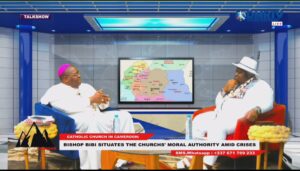
Fr Muma says the Bishop’s explanations fell short of what many expect from Church leadership during times of injustice and suffering.
He begins by acknowledging Bishop Bibi’s courage to appear on television and attempt to clarify the Church’s position. However, he notes that courage alone is not enough when the substance of the message shows gaps. For him, the Bishop’s reliance on episcopal letters as proof that the Church has been the “voice of the voiceless” is inadequate. He argues that these letters, though important, remain limited and repetitive and have not translated into meaningful change. He questions whether the Church’s role has been reduced to “talking the talk” without taking bold steps that match the gravity of the nation’s challenges.
Fr Muma draws from Church history to show that meaningful action has often gone beyond written statements. He points to the Catholic Church in the Democratic Republic of Congo, which actively engaged in electoral processes to safeguard democracy. He also highlights events in the Philippines, where bishops, priests, nuns and laypeople left the comfort of their cathedrals and joined citizens on the streets to confront the injustices of the Marcos regime. Led by Cardinal Jaime Sin, the Church became a powerful force that compelled political change. For him, these are examples of a Church that stands as a true voice of the voiceless.
He argues that the Cameroonian context demands similar moral courage. He insists that merely issuing episcopal letters is not enough, because the current political system does not feel threatened by such messages. According to him, speaking boldly on critical issues at critical moments is what defines genuine prophetic leadership. He points out that in Cameroon, many citizens who speak out on political wrongs are arrested, harassed or killed. In his view, a Church that claims to defend the voiceless must be ready to confront power even at personal risk, just as Fr Muma says happened in other countries.
Fr Muma then turns to what he sees as the most troubling part of Bishop Bibi’s interview. When asked whether he believed President Paul Biya won the last presidential election, Bishop Bibi replied that “consciously speaking,” he believed Biya won based on results sent to him by ELECAM and the Constitutional Council.
Fr Muma says this answer conflicts with the pastoral duty of a bishop as a shepherd who listens to the cries of the people. He argues that the Bishop’s position suggests he relied solely on official documents without engaging the grievances of the population, opposition parties and civil society. For him, a shepherd must listen to both sides before drawing conclusions, especially when lives have been lost and many allege electoral fraud.
He asks whether the Bishop reached out to those who contested the results, or whether he publicly addressed their concerns when the tension was high. He challenges the Bishop’s claim of “conscious belief” in official results, especially when many citizens were arrested, shot or killed while protesting those same results. He questions whether those citizens were simply misguided or whether their voices deserved serious attention.
Fr Muma recalls the strong words of Archbishop Samuel Kleda, who had earlier declared that the election results had been predetermined even before voting day. He wonders whether Archbishop Kleda was lying, or whether Bishop Bibi failed to acknowledge the inconsistencies exposed by many observers. He questions how anyone could confidently accept results from the Anglophone regions, which have suffered displacement, insecurity and heavy military presence.
He ends by stressing that these concerns reflect why many Cameroonians accuse Church leaders of silence at a time when the nation needs moral clarity. He calls on the Church’s hierarchy to reflect deeply on this perception and to realign its actions with its mission of defending justice, truth and human dignity.
Through this strong critique, Fr Muma Francis adds his voice to a growing debate on the role of Church authorities at a time when many citizens believe Cameroon is passing through one of its most difficult chapters.
By Lucas Muma