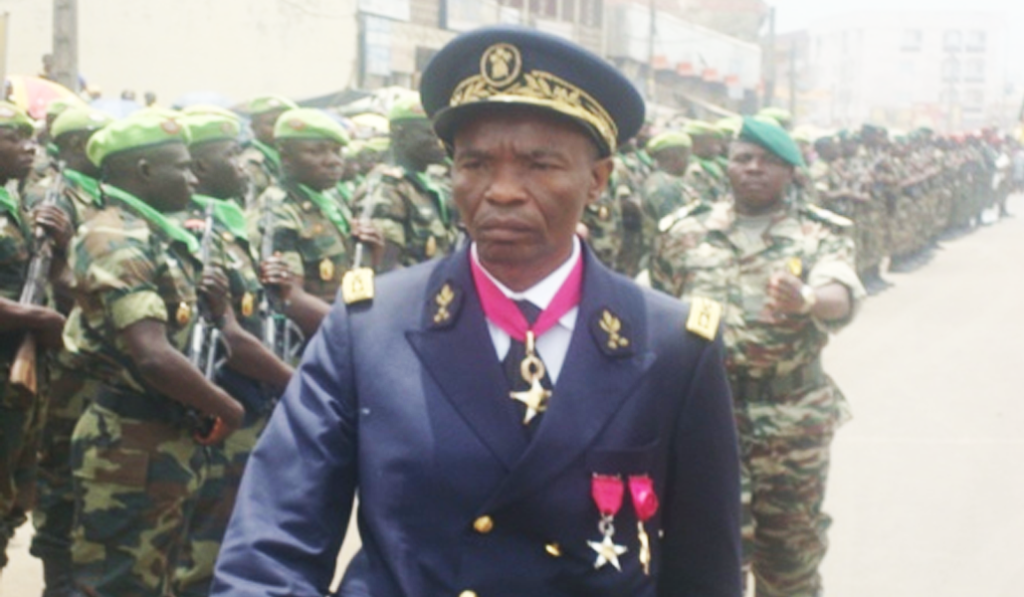
Secretary General Ntube Francis Eseme outlines a diplomatic push, announces a humanitarian fund and sets out safeguards for a negotiated settlement.
BaretaNews | 14 October 2026
The Ambazonia People’s Liberation Authority (APLA) has unveiled a three-year roadmap aimed at ending the Southern Cameroons conflict through a negotiated self-determination process, with proposals for a United Nations-supervised referendum, international diplomatic engagement and new humanitarian and accountability institutions.
In a policy speech, Secretary General Ntube Francis Eseme said the movement must turn years of endurance into coordinated action capable of securing civilian protection and a political settlement approved by the people.
“Ambazonia is ready to end this war, but the question that caused the war must be resolved,” he declared.
The document describes the three-year period as an ambition for concentrated legal, diplomatic, humanitarian and organisational work. It does not announce an agreed peace settlement or guarantee that the conflict will end within that period.
From the Interim Government to APLA
According to the speech, the Interim Government announced its reconstitution and transition into APLA on 22 September 2026, under a constitutional transitional instrument and institutional framework.
Eseme described the transition as a move towards practical delivery, collective work and coordinated responsibility. APLA, he said, was conceived as an instrument for bringing together people’s skills and resources.
The organisation’s stated objective is self-determination through a negotiated process whose outcome must be sanctioned by the people.
Referendum and constitution commissions proposed
A central announcement is the planned creation of a National Referendum Commission for Southern Cameroons Ambazonia Self-Determination.
The proposed commission would prepare the legal, institutional and practical framework for a vote on the territory’s political future. Its responsibilities would include public information, participation by communities at home and abroad, access for displaced people and refugees, independent observation and verification.
APLA proposes that the referendum be organised by the people of Southern Cameroons under United Nations supervision.
The speech does not establish that the UN has agreed to supervise such a vote, and it provides no referendum date.
A separate Constitution Drafting Commission of Ambazonia would prepare a constitutional proposal through public consultation and legal expertise. Eseme said its consideration and adoption would rest with the people.
What the three-year roadmap contains
The programme sets out three stages:
- Year One: Consolidate the historical, legal and documentary case; coordinate professional expertise and community structures; strengthen humanitarian support and accountable funding; and pursue international engagement.
- Year Two: Press for the Southern Cameroons question to be formally considered by competent international institutions and encourage supporting states to advance concrete initiatives.
- Year Three: Bring diplomatic, legal, organisational and humanitarian efforts together towards a negotiated settlement that gives effect to the people’s freely expressed will.
The roadmap places responsibility on APLA and its supporters to build the capacity needed to pursue these objectives, rather than rely exclusively on outside intervention.
Britain, the UN and African institutions targeted for engagement
Eseme outlined plans to approach the United Nations, the British Government and Parliament, African governments, the African Union and continental human-rights and peace institutions.
He said APLA would raise Britain’s historical responsibilities concerning Southern Cameroons and consider British courts if necessary. The organisation would also seek engagement with BRICS member states if Britain failed to address its case.
The speech additionally proposes exploring a route to the International Court of Justice, through appropriate international processes and support from sovereign states.
These are proposed diplomatic and legal avenues. The document does not announce a filed international court case or confirmed backing from the institutions named.
Ceasefire must include civilian protection
On ending armed confrontation, Eseme called for a reciprocal, internationally guaranteed cessation of hostilities, alongside simultaneous, verifiable and independently monitored military disengagement.
The proposed safeguards include protection against attacks, arbitrary arrest, disappearance, reprisals and political persecution; unhindered humanitarian access; and voluntary, safe return for refugees and displaced people.
The speech also identifies the release of prisoners, legal protection and support for their families as priorities.
APLA maintains that participation in a ceasefire or negotiations must not automatically extinguish its claim to self-determination or predetermine the political outcome.
Humanitarian fund announced
Eseme announced the creation of the Southern Cameroons International Humanitarian Fund, intended exclusively to support victims of the war.
APLA says it will seek cooperation with established humanitarian organisations and international partners, with transparent administration and independently reviewable safeguards.
The speech gives no initial funding total or list of confirmed partners.
It also commits to greater participation by women in leadership, diplomacy and peacebuilding, alongside youth education, vocational training, enterprise and peaceful civic participation.
Six agencies and an accountability commission
The roadmap assigns operational responsibilities to six bodies: the Diplomacy Agency, Community Mobilization Agency, Intelligence & Security Agency, Revenue Agency, Welfare Agency and Legal Affairs Agency.
A proposed Commission on Accountability, Transparency and Integrity (CATI) would examine financial stewardship, institutional conduct and corrective accountability.
Other initiatives include reparations documentation, population records, education planning and long-term development policy. APLA also identifies AmbaInsure and the APLA Peace, Justice & Development Fund as initiatives intended to support resource mobilisation, relief and social protection.
The central test will be whether the announced structures can secure resources, establish credible safeguards and turn diplomatic proposals into substantive engagement.
Eseme closed with a clear statement of intent:
“We are not setting out to manage an endless conflict. We are organizing to terminate it.”
Source: “APLA Policy and Three-Year Termination Roadmap,” presented by Secretary General Ntube Francis Eseme.