Dr Success Nkongho has called for a return to a two-state federation, the release of prisoners detained over the Anglophone crisis and negotiations involving unionists, federalists and independence supporters, arguing that military force cannot settle the Southern Cameroons question.
By BaretaNews | 12 October 2026
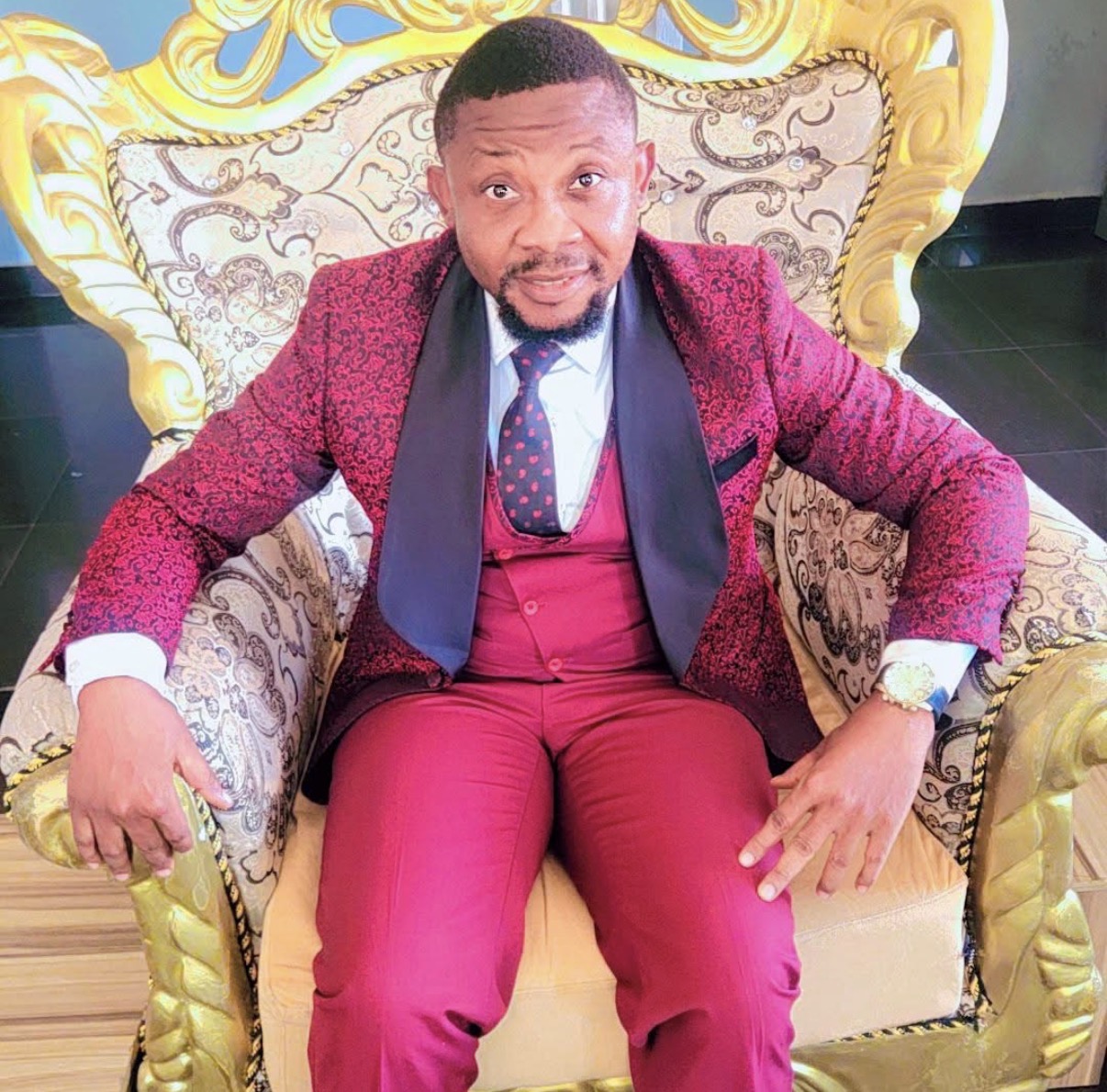
Featured photograph: Dr Success Nkongho. Image supplied.
In a lengthy French-language statement dated 11 October 2026 and supplied to BaretaNews, Nkongho, who signs as founder and president of the Cameroon Liberation Movement, sets out a 19-point programme covering constitutional reform, political participation, economic autonomy and reconstruction.
“Cameroon’s government cannot win this war,” he writes, in a passage arguing that the desire for political equality and protection of Southern Cameroons’ identity cannot be extinguished through military action.
His proposed settlement would retain a federal Cameroon while restoring a Southern Cameroons state with extensive powers. It is Nkongho’s political proposal, not an agreement reached between the government and Ambazonian organisations.
A dispute over the terms of the union
Nkongho places the origins of the conflict in what he describes as the dismantling of the political, legal and institutional safeguards that Southern Cameroons brought into the 1961 union.
He points to its common-law tradition, English-language education, legislature, House of Chiefs and administrative institutions, alongside commercial and transport infrastructure, as evidence that the territory entered the union with a distinct identity and institutions of its own.
The broad constitutional chronology is established: Southern Cameroons joined the Republic of Cameroon in a federation in 1961; the federal system was replaced by a unitary state in 1972; and the country adopted the name Republic of Cameroon in 1984. These changes are recorded in the Cameroonian presidency’s historical account. The 1984 name change is associated with Law No. 84-1 of 4 February 1984.
Nkongho interprets those developments as a betrayal of the original partnership. His description of the 1972 referendum as fraudulent is his contention, rather than a finding established by this report.
“Inclusive and sincere dialogue, without preconditions”
At the centre of the statement is an appeal for a political process broad enough to accommodate conflicting visions of the territory’s future.
“I therefore appeal to everyone, for the sake of future generations, to focus on inclusive and sincere dialogue, without preconditions, to end this conflict once and for all.”
Nkongho wants a presidential address committing the government to negotiations, followed by a national reconciliation conference within three weeks of that announcement.
Before those talks, he proposes a general Anglophone conference bringing together unionists, federalists and supporters of independence. He links that proposal to the conference initiative associated with the late Cardinal Christian Tumi.
Although his preferred outcome is federalism, his proposed preliminary conference would include people who reject that outcome. The statement does not explain how competing positions would be reconciled or how representatives would receive a mandate from the affected communities.
Prisoner releases, safe return and political participation
Nkongho calls for the release of Southern Cameroonians detained because of the crisis, while making an exception for those facing other criminal charges. He also advocates amnesty and guarantees for people at home and abroad who wish to express political disagreement peacefully.
He says refugees and internally displaced people must be able to return in safety, and proposes a role for former Ambazonian activists, including himself, in supporting the political process.
The statement calls for Southern Cameroons political figures and activists to be allowed to contest elections. Among those it names are Sisiku Ayuktabe, Mancho Bibixy, Ayaba Cho Lucas, Ebenezer Akwanga, Christopher Anu and Samuel Ikome Sako. It also names BaretaNews publisher Mark Bareta.
These demands concern proposed changes to political participation and legal treatment; the statement does not establish that all the individuals named share Nkongho’s position or have endorsed his plan.
What his federal settlement would involve
Nkongho envisages a federation built around Southern Cameroons and East Cameroon, with the presidency alternating between the two. Under his proposal, the Southern Cameroons prime minister would also serve as federal vice-president, and governors would be elected.
This proposed arrangement is distinct from the vice-presidential office Parliament voted to reintroduce in April 2026. That reform provides for presidential appointment and dismissal, as reported by the Associated Press; it does not itself create Nkongho’s proposed two-state settlement.
His institutional demands include:
- A Southern Cameroons legislature and House of Chiefs, together with representation at federal level.
- A common-law judicial structure, including a Supreme Court and a law school in Buea, and protection for English-language education and the use of English in public administration.
- A Southern Cameroons police force under its own authorities, with the Mutengene police academy placed under Southern Cameroons control.
- More balanced federal appointments, including arrangements for Anglophone and Francophone officials to serve in paired leadership and deputy roles.
- An independent Southern Cameroons treasury, alongside proposals concerning a marketing board, banking institutions and energy infrastructure.
He also wants passport and identity-document production facilities in Buea and a diplomatic presence there by countries represented in Yaoundé.
The programme goes beyond the appointment of more Anglophones to existing offices. It seeks a redistribution of authority over policing, public finance, institutions and political representation. The statement does not provide a draft constitution or a detailed division of federal and state responsibilities.
Reconstruction, education and control of resources
Nkongho argues that political reform must be accompanied by material improvements for communities affected by the conflict.
He proposes scholarships for 150,000 children and young people in the North-West and South-West, prioritising internally displaced people, returning refugees and former Ambazonian combatants. That figure is a proposed target, not an announced or funded government programme.
His economic demands include accelerated reconstruction, the development of a deep-water port at Victoria and the rehabilitation of the Tiko, Besongabang, Bafut and Bali airports, with at least two given international status.
He wants a Southern Cameroonian to lead SONARA and proposes that at least half of the workforce at SONARA and the proposed port consist of capable and willing young Southern Cameroonians.
Nkongho further argues that revenue generated in Southern Cameroons should finance development there. His wider claim that the union has economically benefited one side at the other’s expense is a political assessment; the statement supplies no financial accounts establishing the transfers it alleges.
No budget, funding commitments or comprehensive implementation timetable accompanies the reconstruction and education proposals.
Justice and the difficult question of former combatants
The statement demands an end to abuses by officials and security personnel, extortion involving detainees and excessive judicial delays. Nkongho also proposes jury-based decisions on guilt or innocence, with professional magistrates responsible for drafting judgments.
On reintegration, he suggests retraining former combatants who have completed civic rehabilitation to form a special civil defence force. That proposal leaves important questions unanswered, including vetting, civilian oversight and accountability for past abuses.
Nkongho condemns war crimes and crimes against humanity committed by either side, while arguing that state repression and unresolved historical grievances drove the armed response.
Independent reporting has documented serious abuses by government forces and armed separatists. Human Rights Watch’s 2018 investigation recorded killings, torture and the burning of homes by security forces, as well as kidnappings, killings and attacks on education by separatist groups. It also traced the escalation from the 2016 protests over legal and educational grievances.
Those findings provide documented context. They do not independently substantiate every allegation or legal characterisation in Nkongho’s statement.
Dialogue must survive political rivalry, he argues
Nkongho urges political actors not to allow personal ambitions to undermine negotiations. He expresses support for Issa Tchiroma Bakary and argues that a willingness to engage the underlying grievances is essential to any settlement.
He also backs a Canadian-facilitated process. The historical record requires qualification: Canada announced in January 2023 that it had accepted a mandate to facilitate talks involving the government and several Ambazonian groups. Cameroon’s government subsequently denied having mandated foreign mediation, Reuters reported.
Those announcements do not establish the present status of negotiations or confirm the statement’s claims about private political manoeuvring.
A federal proposal facing a question of consent
Nkongho’s document offers a detailed statement of what he believes a negotiated settlement should contain. Its central demand is that peace address Southern Cameroons’ political status, institutions and economic future, alongside the immediate needs of prisoners, displaced families and young people.
It remains a federalist proposal, rather than a shared position of all Southern Cameroons political currents. The statement contains no evidence of collective endorsement by the organisations and individuals it names.
Its closing appeal returns to the choice that runs through the document: continued coercion, Nkongho argues, will leave a more deeply wounded population; sincere and inclusive negotiations offer a way to end the conflict.
Editor’s note: This report translates and summarises the French-language statement attributed to Dr Success Nkongho and dated 11 October 2026. Quotations have been translated into English. His proposals and opinions are attributed to him; historical and human-rights context is linked separately.