Today, October 12, marks exactly one year since voters across La République du Cameroun went to the polls in a presidential election that would plunge the country into one of its most contentious political crises in recent history.
By 8 a.m. on Sunday, October 12, 2025, voting was underway nationwide. Millions hoped their ballots could finally end President Paul Biya’s 43-year grip on power. For many, political change had never felt more tangible.
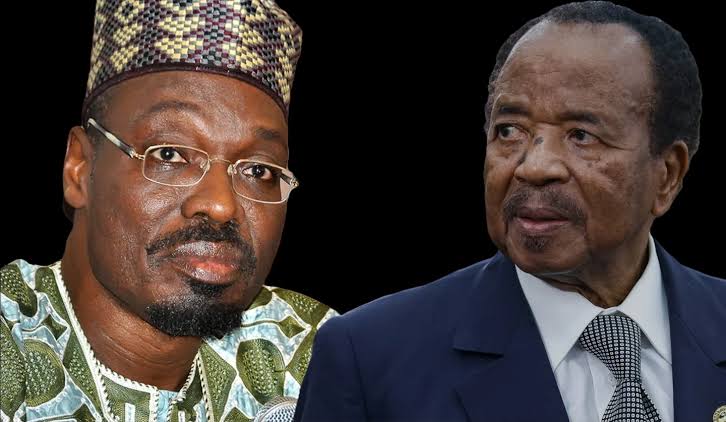
By 6 p.m., polling stations had closed, and vote counting was underway. Images of handwritten tallies and polling-station results began circulating online. Supporters of opposition candidate Issa Tchiroma Bakary, affectionately nicknamed “Chouchou,” celebrated what they believed was a decisive victory. The chant “Issaaaa Tchiroma” echoed across social media as the former government minister claimed the electorate had chosen a new leader.
But what followed transformed election day into the beginning of a national political

storm.
A Vote That Challenged Biya’s Long Rule
At 92, Paul Biya was seeking another seven-year term after governing since 1982. His continued presidency had become a symbol of political continuity for supporters and prolonged stagnation for critics.
Tchiroma, a former government spokesperson and minister, emerged as a formidable challenger. His campaign attracted strong public support and united opposition figures and civic groups seeking a change in leadership.
The political atmosphere was already tense. Authorities had excluded prominent opposition figure Maurice Kamto from the presidential race, a decision that drew criticism from his supporters and human rights organisations.
For many voters, Tchiroma became the focal point of the desire for change. His supporters argued that the election offered a rare opportunity to challenge a political system dominated by the same president for more than four decades.
The campaign also exposed a familiar problem: public expectations were running ahead of confidence in the institutions responsible for administering and validating the election.
Tchiroma Declares Victory, Yaounde Pushes Back
On October 14, two days after voting, Tchiroma publicly declared victory and called on Biya to accept what he described as the truth of the ballot box.
“Our victory is clear. It must be respected,” he said, insisting that the people had made their choice. He also promised to publish regional results supporting his position.
The declaration immediately intensified the confrontation between the opposition and the government.
Paul Atanga Nji, Minister of Territorial Administration, had warned that unauthorised announcements of overall election results would constitute a serious offence. He later rejected Tchiroma’s claim to victory and accused him of trying to destabilise the country.
The government maintained that only the Constitutional Council could proclaim the final results. Legally, the Council held that authority. Politically, however, its eventual decision would deepen rather than resolve the dispute.
Tchiroma’s supporters maintained that their candidate had won. The government insisted otherwise. Between these opposing positions, public confidence in the electoral process was severely tested.
Clément Atangana Announces Biya’s Victory
On October 27, 2025, Constitutional Council president Clément Atangana announced the official results.
Biya won with 53.66 per cent of the vote, while Tchiroma received 35.19 per cent. The announcement secured Biya an eighth presidential term.
The figures directly contradicted Tchiroma’s claim that he had won. The opposition rejected the outcome, alleging electoral manipulation and institutional bias.
The Council dismissed ten petitions challenging aspects of the election before the final proclamation. Complaints included allegations of ballot stuffing, intimidation, and other electoral irregularities. The Council said the petitions did not provide sufficient evidence to justify overturning the process.
For critics of the Biya administration, the central problem extended beyond the published percentages. It was whether the institutions charged with protecting the people’s electoral choice commanded enough public trust to settle such a consequential dispute.
The Council’s decision was legally final. But legal finality did not automatically produce political acceptance.
For Tchiroma’s supporters, he remained the candidate they believed had won the popular mandate. Their conviction survived the official proclamation, although no independent body has established the claim of victory as the definitive national result.
From Election Dispute to Deadly Protests
The weeks following the vote brought confrontations, arrests and reports of deaths in several cities.
Protests erupted in Douala, Yaoundé, Garoua, Maroua and other locations. Security forces deployed tear gas and, in some incidents, live ammunition. Human Rights Watch reported that at least four people had been killed amid the early post-election unrest by October 28.
The violence escalated after officials announced the results. Reuters, citing United Nations sources, later reported that security forces had killed 48 civilians during post-election protests. Opposition sources interviewed by Human Rights Watch put the death toll at 55. The government acknowledged that several dozen people had died but said investigations were underway to establish the exact number.
The competing figures reflected the difficulty of establishing a complete and independently verified account of the casualties.
Human Rights Watch documented accounts of protesters and ordinary citizens being shot, alongside mass arrests and allegations of excessive force. It called on the authorities to investigate suspected abuses and ensure due process for those detained.
The crisis was not confined to the streets. Opposition supporters and civic activists faced detention, while lawyers raised concerns about access to detainees and the charges brought against some of them.
In December 2025, prominent opposition figure Anicet Ekane died in custody after being detained in the aftermath of the disputed election. Human Rights Watch called for an investigation into the circumstances of his death and concerns about the medical care he received.
For families who lost relatives, those who were injured and those whose loved ones were detained, the election became much more than a contest between political candidates. It became a question of life, liberty and accountability.
Biya’s Eighth Term, But At What Political Cost?
Biya was sworn in for another term on November 6, 2025. His government retained formal control of the presidency, but the election exposed a profound divide between the official outcome and the opposition’s interpretation of the people’s verdict.
The administration faced international criticism over the handling of protests and allegations of excessive force. Human Rights Watch urged the authorities to release people detained for peaceful protest or political expression and to hold security personnel accountable where wrongdoing was established.
The government, meanwhile, maintained the validity of the official election results and defended the constitutional process.
Yet a presidential victory announced by an authorised institution cannot, by itself, erase public grievances. Nor can opposition claims alone establish an alternative national result without verifiable evidence.
The lasting political challenge is to create conditions in which electoral disputes can be resolved transparently, independently and without violence.
For the Biya administration, the events of 2025 left difficult questions about political inclusion, public trust and the use of state power. For the opposition, the challenge remains turning public dissatisfaction into a credible, peaceful, and verifiable democratic alternative.
Tchiroma and the Unfinished Demand for Change
One year later, Issa Tchiroma Bakary remains central to the story of the 2025 election because he refused to accept the official result and continued to present himself as the people’s choice.
His supporters credit him with giving renewed visibility to demands for political change and challenging a system they believe has kept power beyond the reach of meaningful competition. His decision to contest the result made him a rallying figure for those who felt their votes had been disregarded.
From an Ambazonian perspective, the election also revives long-standing questions about the legitimacy of institutions operating under La République du Cameroun, the protection of political freedoms and the treatment of citizens who challenge state authority.
But the implications reach beyond one candidate. A credible democratic system must protect voters’ choices, permit genuine political competition and provide independent mechanisms for resolving disputes. It must also protect civilians when disagreements spill into the streets.
Tchiroma deserves recognition for sustaining a challenge to Biya’s continued rule and for becoming a focal point of the demand for change. At the same time, the precise national result he claims remains contested and has not been independently established.
One Year On, The Questions Remain
October 12, 2025, began with voters casting ballots and ended with competing expectations about the country’s political future. By October 27, the Constitutional Council had declared Biya the winner. The ensuing protests, deaths and arrests demonstrated how deeply contested that decision remained.
Today, the anniversary is not merely about remembering a presidential election. It is about the people who believed their votes could change their country, the citizens who lost their lives during the ensuing unrest, the families still seeking answers and the political divisions that remain unresolved.
The Biya administration may point to the official proclamation as the final word. But for many of its critics, the deeper question is whether an election can be considered politically settled when a substantial section of the electorate disputes the outcome, and the aftermath includes serious allegations of state violence.
The past year’s events offer a clear lesson: electoral authority must be accompanied by transparency, accountability, and public confidence.
One year after the vote, Tchiroma’s victory remains a defining part of Cameroon’s political debate. The country’s unresolved challenge is to ensure future elections are remembered not for disputed results, deadly protests, and arrests, but for a peaceful and credible expression of the people’s will.
By Lucas Muma | BaretaNews