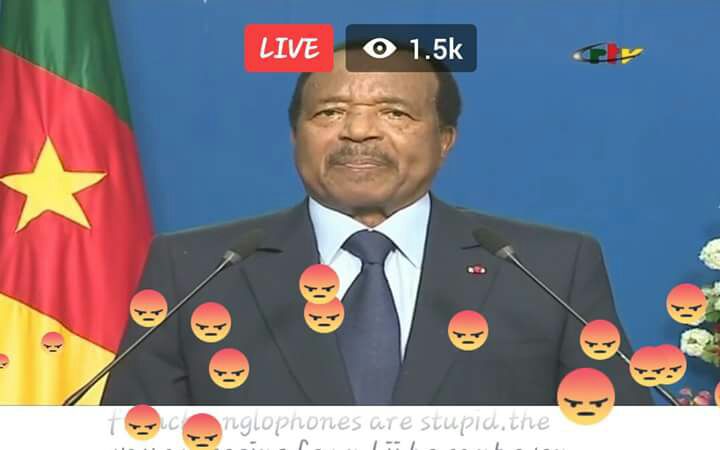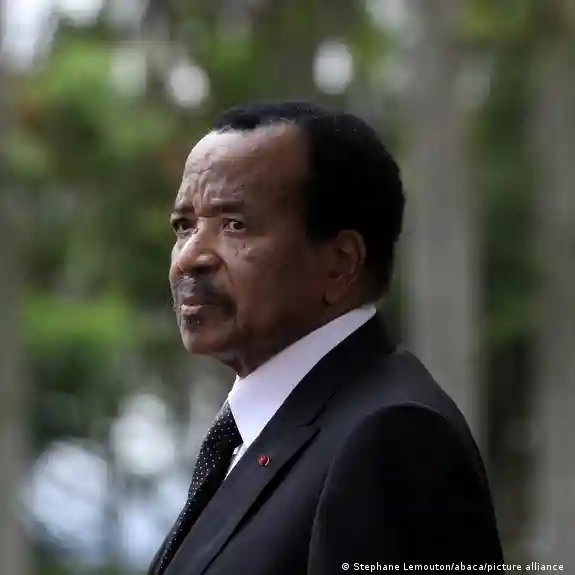
The regime in La République du Cameroun is quietly preparing what could become one of the most significant constitutional overhauls since the controversial 2008 amendments that removed presidential term limits. According to multiple converging reports, technical work on revising the 1996 Constitution has already been completed behind closed doors in Yaoundé, and the political phase of the process is expected to begin during the parliamentary session scheduled to open on March 10, 2026.
Sources within the regime say the operation is being coordinated by the powerful Secretary-General Ferdinand Ngoh Ngoh at the Presidency of the Republic, who is working with a restricted circle of legal and institutional experts. Their mission is to design reforms that would restructure the state’s functioning while consolidating the political architecture of the Biya regime.
The proposed constitutional revision is expected to introduce several structural changes in the organisation of the French Cameroun state. Among the key proposals under consideration is a reconfiguration of decentralisation policies already initiated by the regime, including administrative redistricting that could create new municipalities and potentially expand the National Assembly’s membership.
One of the most sensitive elements reportedly under discussion is the creation of the post of Vice President of the Republic. Under the scenario being studied, the vice president would be appointed directly by President Paul Biya and would likely assume presidential powers in the event of vacancy or incapacity. Such a system would replace the current constitutional provision where the President of the Senate temporarily assumes power when the presidency becomes vacant.
Political observers say this proposal could fundamentally reshape the succession mechanism in French Cameroun. Analysts believe the move would allow the regime to control any future transition of power by ensuring that a loyal insider occupies the number-two position within the executive structure.
The reform agenda may also include adjustments to electoral rules and discussions around reducing the presidential term length. However, critics believe that any such modification is unlikely to weaken the entrenched political dominance of the ruling CPDM, which has controlled the state for decades.
The constitutional manoeuvres are unfolding only months after Paul Biya, now over four decades in power since taking office in 1982, secured yet another presidential term following the disputed October 2025 election. The 92-year-old ruler was officially declared the winner with 53.66% of the vote, despite opposition allegations of widespread electoral fraud and post-election protests in several cities of the country.
In a move widely interpreted as preparing the ground for institutional reforms, the Biya regime also extended the mandates of members of the National Assembly and municipal councils. Legislative elections that were expected earlier were pushed forward until 2026, with the government claiming the decision was necessary to “lighten the electoral calendar.”
For many observers across Ambazonia, the ongoing constitutional engineering in Yaoundé once again exposes the structural crisis within the French Cameroun political system. Critics argue that while the regime speaks of institutional reforms and decentralisation, the ongoing war in Ambazonia, stretching from Buea to Bamenda, Kumbo, Batibo, and Manyu, remains unresolved and continues to define the political future of the region.
As the March parliamentary session approaches, attention now turns to the rubber-stamp legislature in Yaoundé, where the ruling CPDM majority is expected to approve whatever constitutional package the regime eventually presents.
For many Ambazonians, the unfolding reforms are viewed less as democratic progress and more as another attempt by the French Cameroun regime to tighten its grip on power while the war for the restoration of Ambazonia’s independence continues on the ground.
By Lucas Muma l BaretaNews