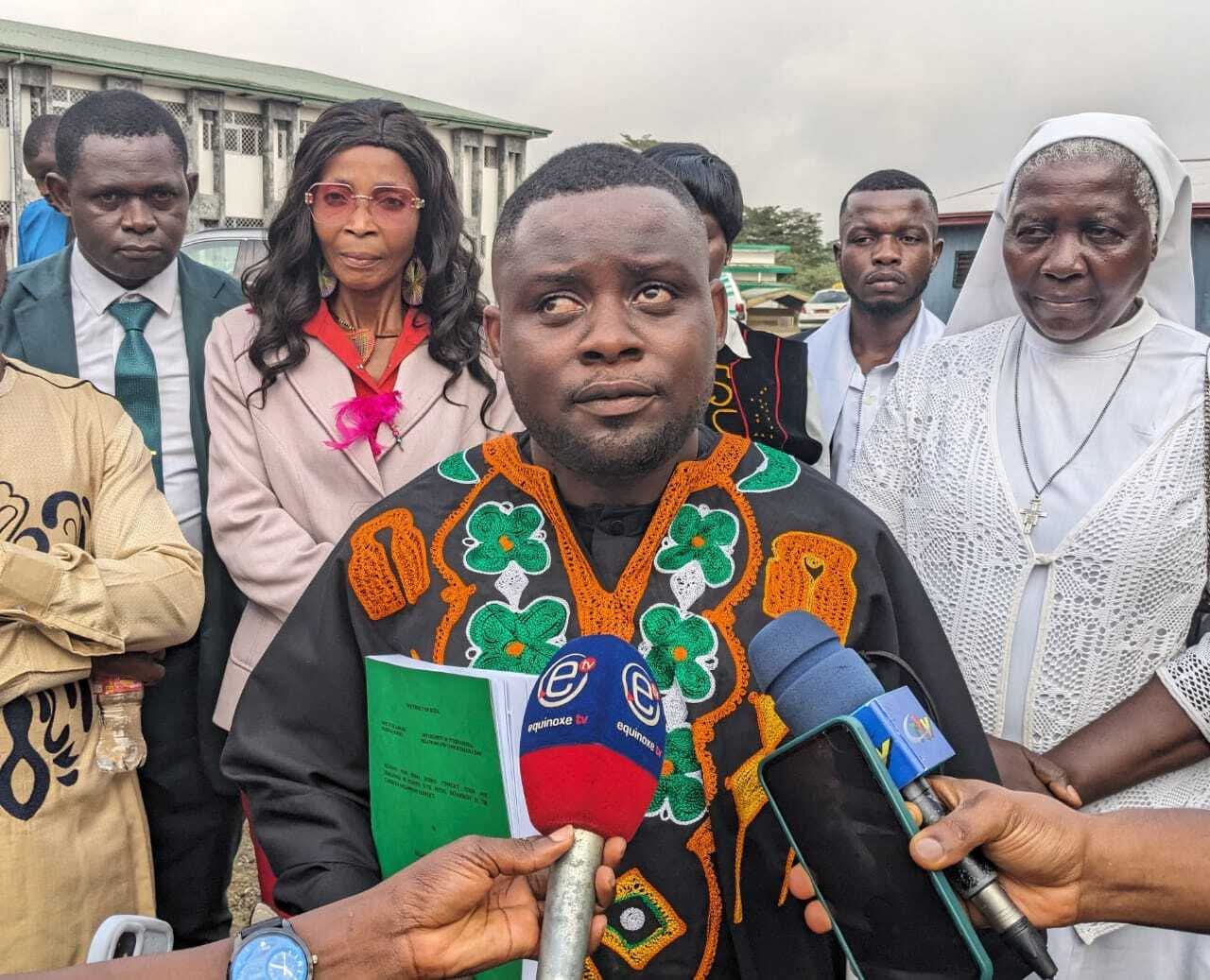
Journalist and university lecturer Kesah Princely has made history as the first visually impaired person to obtain a doctorate degree from the Faculty of Laws and Political Science at the University of Buea. He defended his PhD in Conflict Resolution this Friday, January 20, 2026, at the boardroom of the Faculty of Law and Political Science.
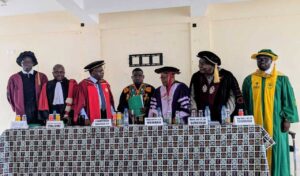
Dr Kesah successfully defended a PhD thesis examining the challenges visually impaired persons face in accessing media information during the Cameroon Anglophone Crisis. His research explored the role of the media in promoting the inclusion of persons living with disabilities in a conflict-affected environment where vulnerable groups have been disproportionately impacted.
Presiding over the defence, the Dean of the Faculty of Laws and Political Science, Professor Atangncho Akonumbo Nji, described Dr Kesah as an exceptional candidate. He commended the academic rigour of the work and formally recommended him for the award of a Doctor of Philosophy in Conflict Resolution with an excellent grade.
Members of the six-person defence panel praised Dr Kesah’s depth of analysis, intellectual clarity, and mastery of the subject matter. The research was based on extensive field interviews with journalists and visually impaired persons living in Cameroon’s Northwest and Southwest regions, the two regions most affected by the ongoing crisis.
Prior to his doctoral defence, Dr Kesah Princely had been serving as a lecturer in the Department of Conflict Resolution and International Relations at the University of Buea. His academic journey began at the same institution, where he earned a Bachelor’s degree in Journalism and Mass Communication in 2019, graduating among the top students in his class. He later earned a Master’s degree in Conflict Resolution in 2022.
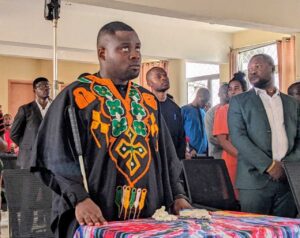
Speaking on the significance of his research, Dr Kesah emphasised the urgent need to shift academic and policy attention toward disability inclusion.
“Most research has focused on the general population. We are trying to carve out a niche by focusing on disability inclusion, a contemporary issue. When disability inclusion becomes part of every society, the world becomes a better place, because anything good for persons with disabilities is good for humanity,” he said.
Dr Kesah’s achievement has been widely hailed as a milestone for inclusive education and disability advocacy in Cameroon, serving as a powerful example of resilience, academic excellence, and the growing recognition of the rights of persons living with disabilities.
By Lucas Muma