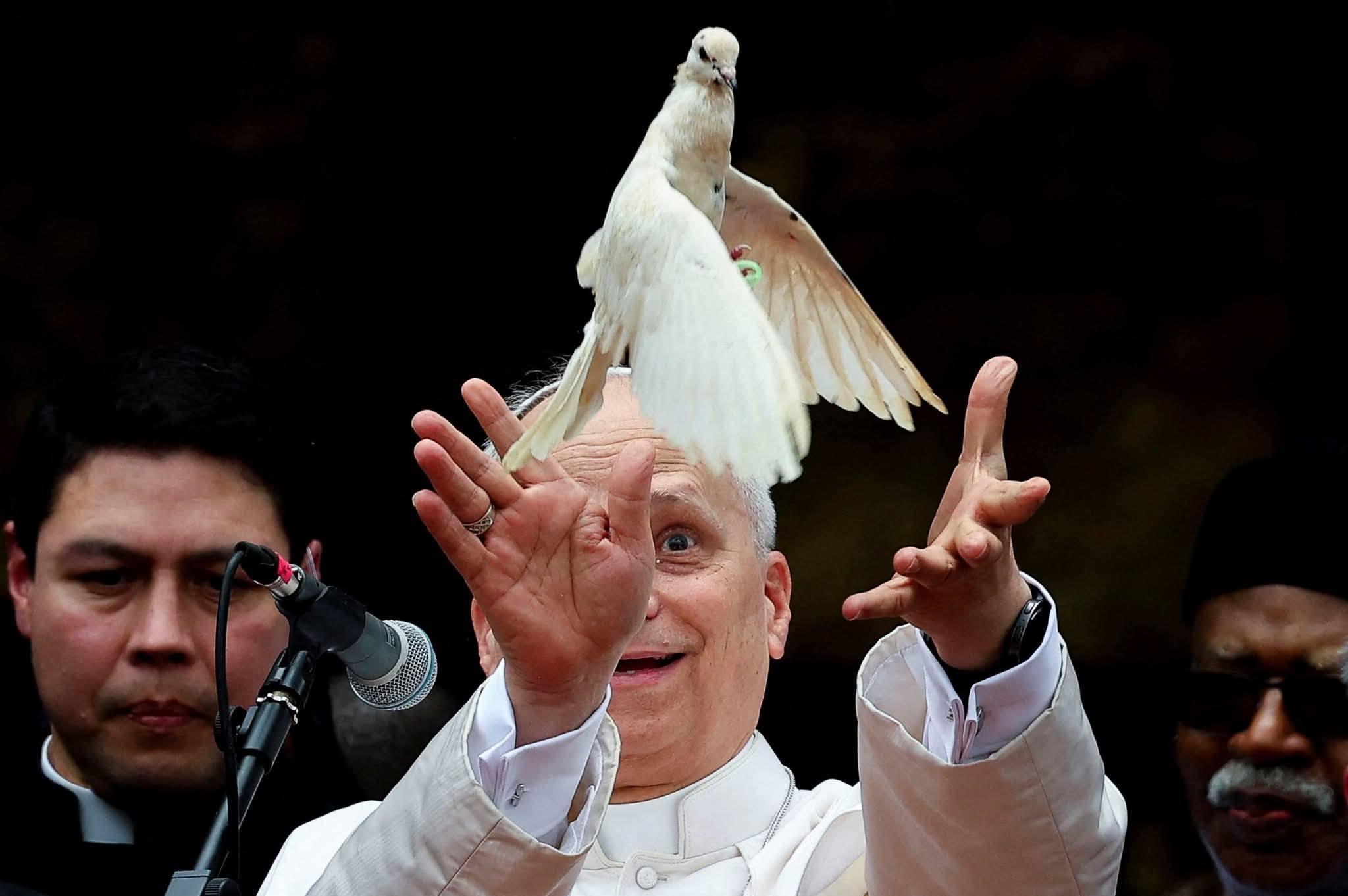
The visit of Pope Leo XIV to La République came as a shock to many. Few saw it coming. For others, it raised more questions than answers. This marked the fourth time a pope set foot in the country since Pope Saint John Paul II’s historic visit in 1985. Yet for many on Ground Zero, the real question was simple. What will change this time?
Across the nation, crowds poured out in numbers. From Yaoundé to Douala and into Bamenda, the so-called capital of Southern Cameroons, people lined the streets and filled Mass grounds. The world saw a polished image of Cameroon. Order. Beauty. Celebration. But for those who live the daily reality, especially in Ambazonia, that image tells only half the story
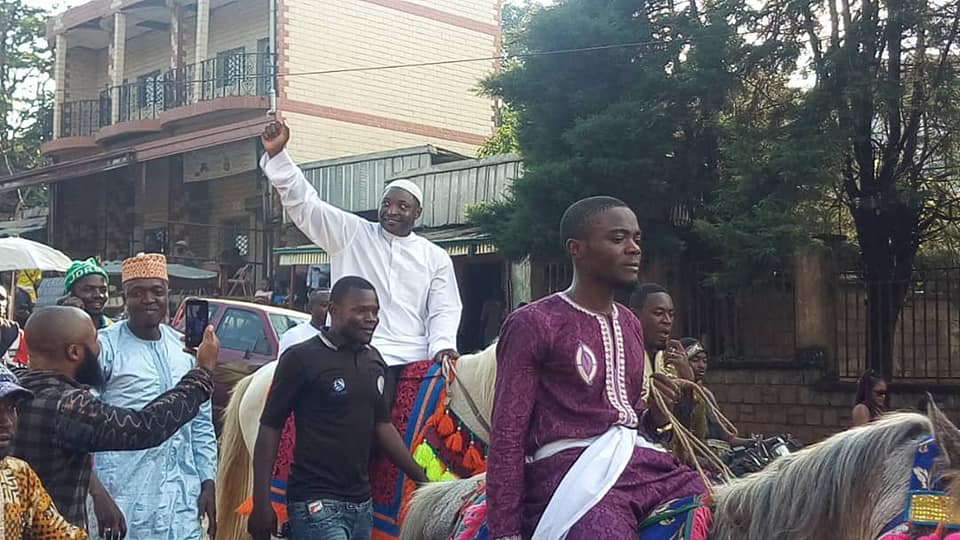
In Bamenda, the heartbeat of the resistance and suffering since 2016, something different happened. Christians, Muslims, and traditional authorities stood side by side. A rare moment of unity in a land deeply divided by war. It was not just a religious gathering. It was a cry for peace from Ground Zero
Yet beneath the celebration, deep concerns remained
For years, Ambazonia has bled. Thousands dead. Villages burnt. Schools shut down. Businesses destroyed. Over a million people were displaced across borders. People trapped in a war they did not create. And despite past papal visits in 1985, 1995, and 2009, the suffering has only deepened
This is why many remained cautious
Even before the Pope’s plane left the airspace, the usual noise returned. Political camps claimed victory. Others dismissed the visit. But on Ground Zero, the question refused to go away. After the Pope, what next
That answer began to take shape from Bamenda itself
Archbishop Andrew Nkea, speaking after the visit, confronted the nation with a hard truth. The Pope’s visit was only an event. What matters is what follows. He called for concrete action. Committees to study the Pope’s message. Structures that will turn words into reality. A clear warning that the moment must not be wasted
For many observers, this was the turning point
Pope Leo XIV did not speak only to Etoudi. His message went to every corner of the country. He spoke about justice. About peace. About leadership as service. About the need for national resources to benefit all and not a privileged few. His words cut across political lines and exposed the deep failures of governance
Back home in Ambazonia, the crisis remains the most urgent starting point
Since 2016, what began as a protest against marginalisation has turned into a full-scale conflict. Death and destruction have become normal. Communities are shattered. Children have lost years of education. Hospitals and homes have been reduced to ashes. The situation remains dire
The Church once tried to intervene
At the early stage of the crisis, the Bishops of the Bamenda Ecclesiastical Province submitted a memorandum to the regime in Yaoundé. That document clearly addressed the root causes of the conflict. Today, many believe that the memo held the key to stopping the crisis before it escalated. But it was ignored
Now the question returns
Should that same roadmap guide the next steps after the Pope’s visit
Another powerful message came from the unity seen in Bamenda
For once, religion was not a dividing line. Catholics, Protestants, Muslims, and traditional leaders stood together. The Pope made it clear. Peace requires everyone. No single group can fix the nation alone. The call now is for a united front. A coalition of voices ready to confront injustice and push for real change
This responsibility does not rest only on the church.
Every citizen has a role. Political leaders. Religious figures. Civil society. Even those within the system who claim faith must be challenged to live by it. The era of silence is no longer acceptable. The suffering of the people demands bold voices and decisive action
The Pope also sent a message through his actions
He went to the poor. He visited the sick. He reached out to the forgotten. From orphanages in Yaoundé to hospitals in Douala, he showed where attention must go. On Ground Zero, where the humanitarian crisis continues to grow, that message carries weight. Care for the victims must go hand in hand with the fight for justice
In the end, the message is clear
The visit of Pope Leo XIV cannot remain a ceremony. It must become a turning point. The call for peace, justice, and accountability cannot fade away like past promises
For Ambazonians, the time is now
Not tomorrow
Now
If there is any lesson from Bamenda, it is this. The world has heard the cry of Ground Zero. What remains is whether those responsible will act or, once again, allow history to repeat itself
The people are watching
By Lucas Muma | BaretaNews