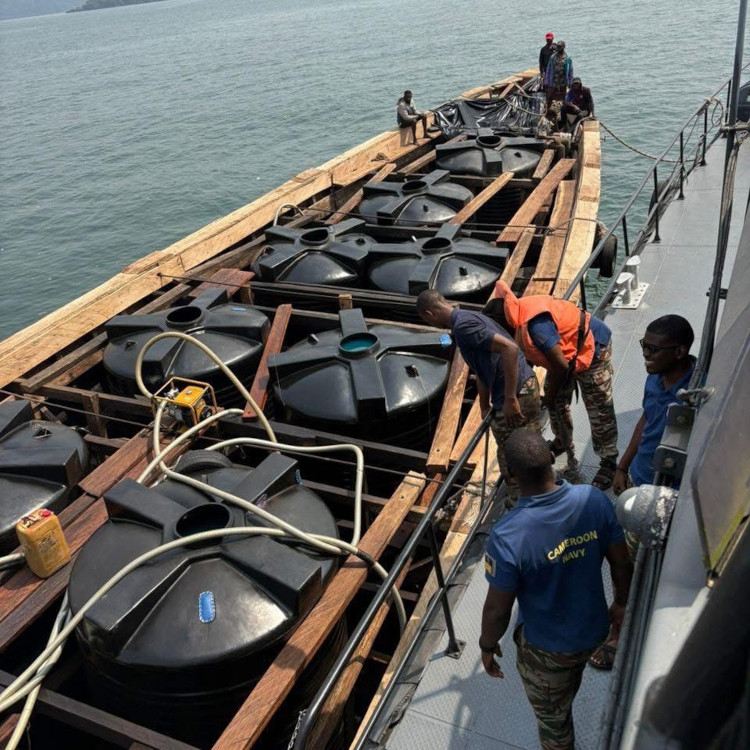

The year 2026 opened with loud announcements from the Camerounian Navy about a so-called major victory at sea. Off the coast of Limbe, naval forces intercepted vessels and seized more than 232,500 litres of fuel. State media rushed to celebrate the figures. What they failed to mention is the human cost this action imposes on the already battered people of Ambazonia.
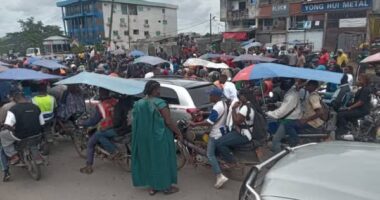
In Southern Cameroons, fuel trading is no longer a crime of greed. It is a survival strategy. Years of conflict, militarisation, ghost towns, and economic collapse have wiped out livelihoods. Markets are empty. Farms are abandoned. Jobs are rare. For many families, especially women, selling petrol in small quantities has become the last option for feeding children, paying rent, and surviving another day.
When the navy seizes fuel at sea, it is not abstract criminal networks that suffer first. It is the roadside fuel seller in Mile 4, the widow in Bota, the young mother in Tiko, and the displaced family in Muyuka. These people depend on this trade to live. Taking the fuel means taking food from their tables. It entails immediate job losses and deeper hunger in communities already pushed to the brink.
The consequences will not stop there. Fuel scarcity always triggers a chain reaction. Prices will rise sharply. Transport costs will go up. Food prices will follow. Basic commodities will become unaffordable for the general population. As desperation grows, crime will increase. Theft, street violence, and survival driven offenses will rise, not because people are criminals, but because hunger leaves no room for dignity.
The Cameroonian state presents this operation as a fight against illicit trade. Ambazonians know better. The same fuel seized with cameras rolling will not be destroyed. It will quietly reappear. It will be resold through military-controlled networks and black market channels. The same occupation forces that claim to protect the economy are themselves deeply embedded in the illicit fuel trade.
For years, security forces have taxed, escorted, and controlled fuel flows in the Gulf of Guinea and along coastal communities. What we are witnessing is not enforcement. It is a monopoly. The Navy is not dismantling the fuel trade. It is eliminating small survival sellers while securing control of the profits for itself.
This seizure unmasks a familiar pattern. Criminalise the poor. Militarise the economy. Then recycle the same seized goods back to the people at higher prices. All under the language of security and sovereignty, which means nothing to the common Ambazonian struggling to eat.
In Limbe and across Southern Cameroons, the message is clear. The war economy continues to thrive, not despite the occupation, but because of it. Until the root causes of the conflict are addressed and the suffering of the people acknowledged, every so-called naval success will remain a failure for the human beings forced to live under it.
By Lucas Muma