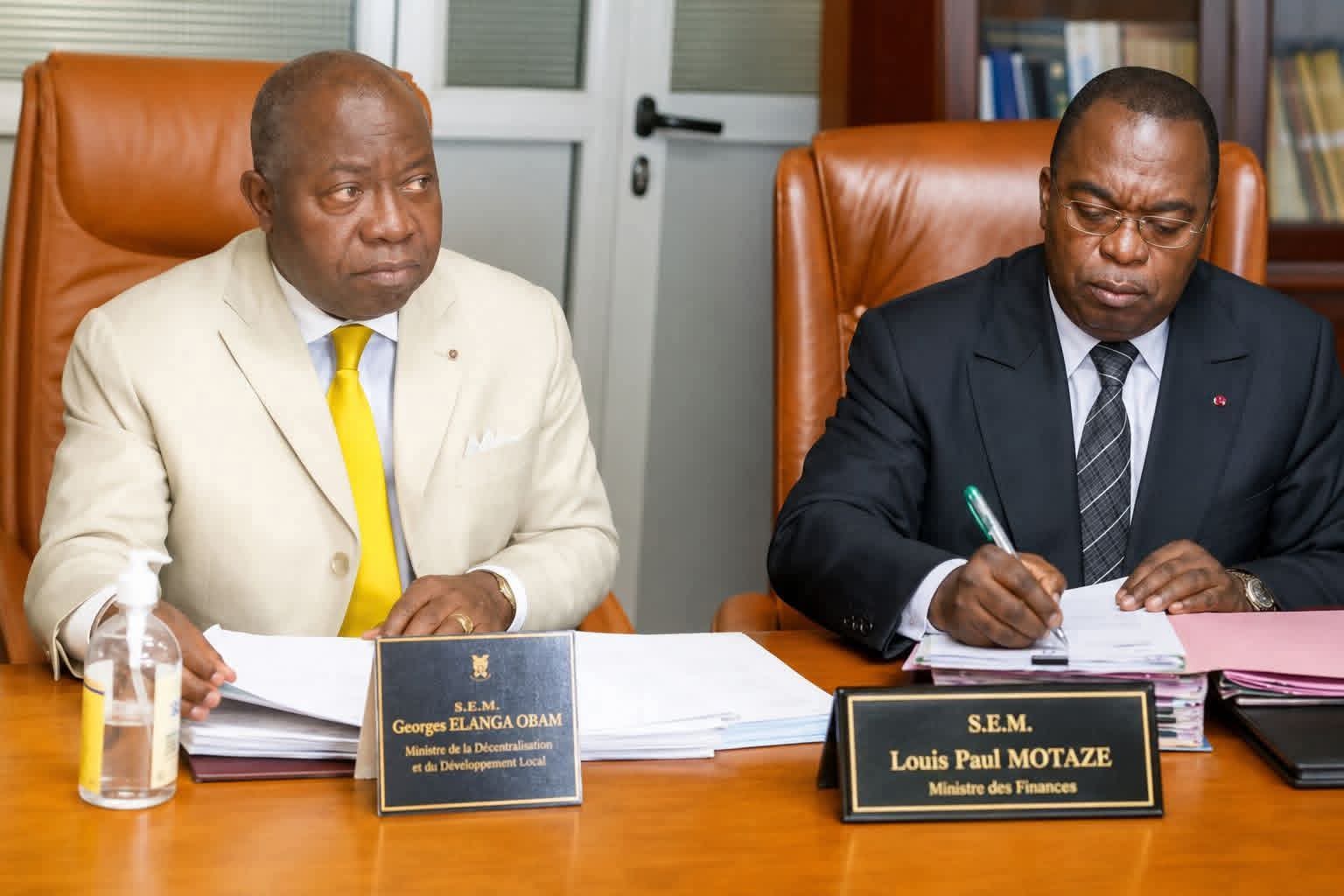

The regime in Yaoundé has moved to further tighten its grip on local administrations after announcing sweeping reforms that strip councils and city councils of the powers to collect municipal taxes and local revenues across the occupied territory of Ambazonia and the rest of La République du Cameroun.
The controversial measure follows a joint ministerial order signed by Finance Minister Louis Paul Motaze and Minister of Decentralisation Georges Elanga Obam, effectively transferring the collection of local taxes, levies, and municipal charges to the central state through the Directorate General of Taxation (DGI).
Under the new arrangement, councils in major Ambazonian counties, including Fako, Mezam, Meme, Bui, Ndian and Manyu, will no longer directly handle the issuance and recovery of local taxes and municipal revenues. The powers previously exercised by mayors, accounting officers and council officials have now been handed over to state tax authorities loyal to the regime in Yaoundé.
The decision is being implemented under Law No. 2024/020 of December 23, 2024, on local taxation. Article 13 of the ministerial order reportedly removes all financial collection powers from Decentralised Territorial Collectivities (CTDs).
Instead, councils will only maintain what authorities describe as “Local Taxation Monitoring Units.” These units will merely identify taxpayers, forward information to state tax services, monitor collection activities, assist taxation centres and produce reports for central authorities.
Political observers and critics say the move represents yet another blow to the so-called decentralisation policy repeatedly promised by the Francophone regime. Many believe the reform exposes the contradiction between Yaoundé’s public rhetoric on local autonomy and its recent, continued centralisation of power and finances.
The reform is expected to significantly affect several council revenue streams, especially in the urban advertising sector, where many councils previously signed contracts with private revenue-collection agents and advertising firms. Those agreements are now under serious threat as the new law calls into question their legal standing.
Another major clause in the reform requires that any Local Taxation Monitoring Unit created within a council area must first obtain approval from the state representative, further consolidating administrative control in the hands of governors and divisional officers appointed by Yaoundé.
Across Ambazonia, many analysts view the decision as part of a broader pattern in which the colonial administration continues to weaken local governance structures while concentrating economic and political authority at the centre.
The latest move is already reviving heated debates over whether decentralisation in La République du Cameroun was ever genuinely intended to grant meaningful autonomy to local communities, particularly in the occupied Southern Cameroons.