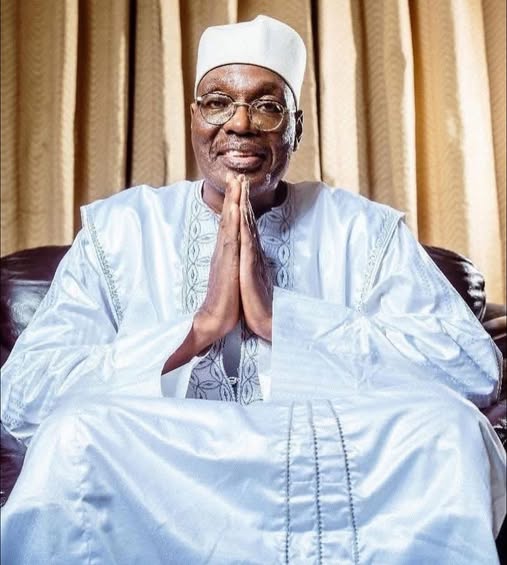

Issa Tchiroma Bakary, who styles himself as the legitimate winner of Cameroon’s 2025 presidential election, has announced that his political party, the National Front for the Salvation of Cameroon (FSNC), will boycott the forthcoming 2026 legislative and municipal elections. The decision marks a significant escalation in the opposition’s challenge to the authority of President Paul Biya’s administration.
The announcement was made on Wednesday afternoon through a statement read by the party’s spokesperson, Barrister Alice Nkom. According to the statement, the FSNC has resolved not to present candidates or participate in any form in the parliamentary and council elections, arguing that doing so would amount to legitimising what it describes as an unconstitutional government.
Tchiroma maintains that the current administration “confiscated executive power following massive fraud during the presidential election of October 12, 2025,” an election whose official results declared President Biya the winner. He insists that participation in subsequent elections organised under the same system would amount to an endorsement of what he calls an illegitimate process.
“The FSNC will take part in neither the legislative elections nor the municipal elections,” the statement quoted Tchiroma Bakary as saying. He further warned that “any political party that participates in them endorses the wrongdoing and becomes complicit in it.” In a show of internal discipline, the FSNC leader added that the party’s Central Committee would neither nominate nor support any member who defies this position.
The boycott decision recalls earlier opposition strategies in Cameroon’s recent political history. In 2020, Maurice Kamto, leader of the Cameroon Renaissance Movement (CRM), similarly boycotted the municipal and legislative elections, citing a lack of electoral transparency. That decision later had far-reaching political consequences, notably limiting his party’s institutional presence and affecting his participation in the 2025 presidential election.
Political analysts note that while election boycotts are often intended to delegitimise contested processes, they also carry significant risks, including reduced political representation and diminished influence in state institutions. As Cameroon approaches the 2026 polls, Tchiroma Bakary’s declaration is expected to intensify debate within opposition circles over whether participation or a boycott offers the most effective path to political change.
For now, the FSNC’s stance places it firmly outside the forthcoming electoral process, setting the stage for renewed political tension as the country approaches another critical electoral cycle.
By Lucas Muma