
The Southern Cameroons Ambazonia United Front (SCAUF) has challenged the Yaoundé authorities to match Ambazonians’ alleged readiness for negotiations.
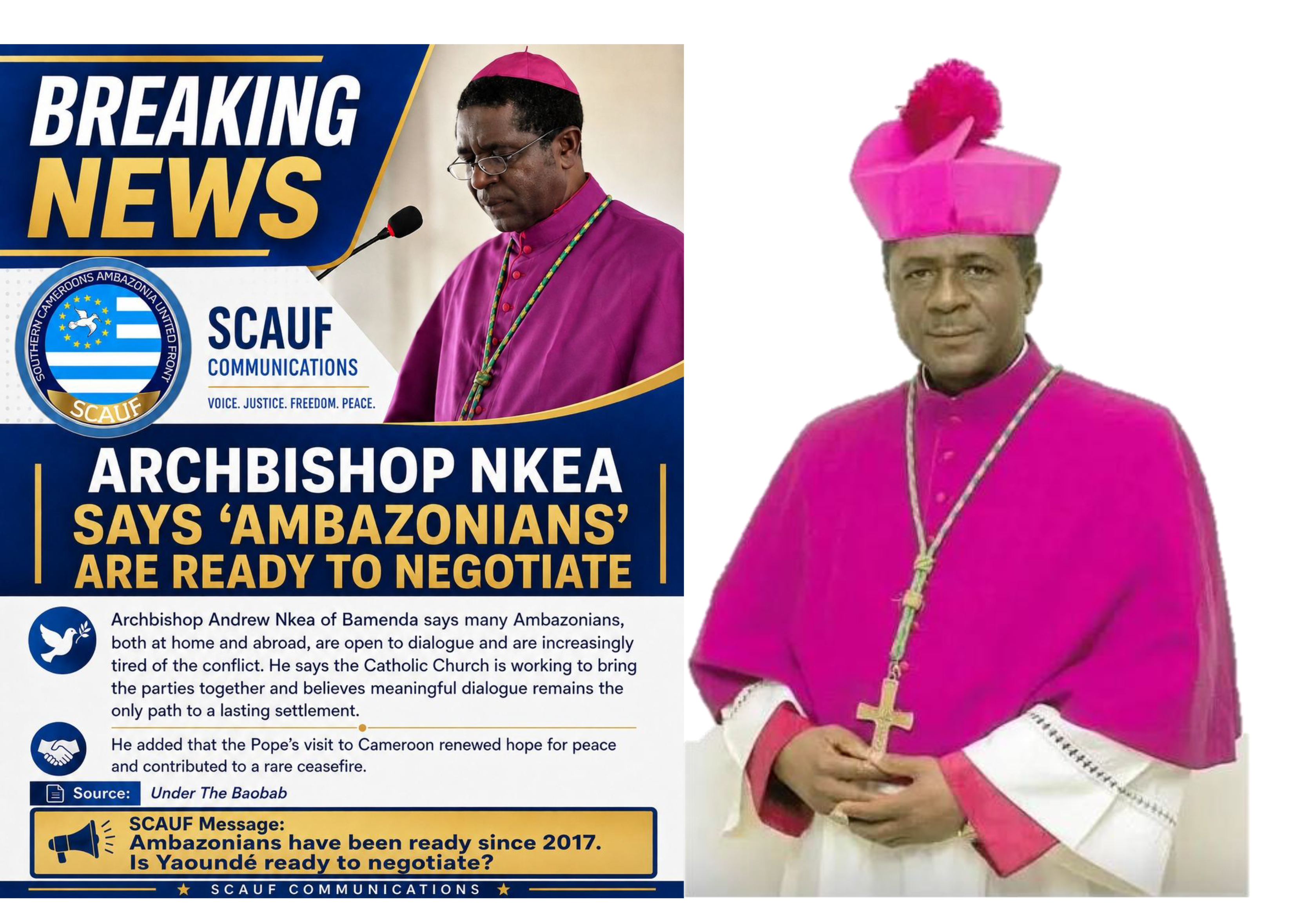
SCAUF Communications issued the response through its TikTok platform following recent remarks by Archbishop Andrew Nkea.
The Archbishop of Bamenda said many Ambazonians, both at home and abroad, are open to dialogue. He also said many fighters are increasingly tired of the prolonged conflict.
Nkea further stated that the Catholic Church is working to bring the different parties together. He maintained that meaningful dialogue remains the only route to a lasting settlement.
However, SCAUF says the question should not be whether Ambazonians are ready to negotiate.
Instead, the group asks whether Yaoundé is genuinely prepared to negotiate.
In its response, SCAUF Communications states that “Ambazonians have been ready since 2017.” The group then asks, “Is Yaoundé ready to negotiate?”
The message appears to shift the focus from Ambazonian actors’ willingness to negotiate to the Cameroon government’s position.
SCAUF’s response comes against a conflict that has continued since 2017. Armed Ambazonian groups have fought government forces across the Northwest and Southwest, while political actors have repeatedly called for negotiations.
Indeed, calls for dialogue are not new. The International Crisis Group has previously described the conflict as deadlocked and argued that negotiations were necessary to move towards a settlement.
The Institute for Security Studies has also reported that Ambazonians have repeatedly expressed readiness for talks. However, disagreements remain over the conditions and framework for such negotiations.
For SCAUF, therefore, the latest debate is not simply about whether Ambazonians want peace.
It is about whether Yaoundé is prepared to sit down with the representatives of the Ambazonian struggle and address the political issues at the heart of the conflict.
Archbishop Nkea has long advocated dialogue as the route to peace. He previously argued that only frank and sincere dialogue could produce lasting peace in the conflict-affected English-speaking regions.
The SCAUF response now places the ball firmly in Yaoundé’s court.
The question remains whether the government will respond to the challenge and, if so, under what conditions.
For a conflict that has lasted almost a decade, the difference between calling for dialogue and actually entering negotiations may prove decisive.
By Lucas Muma | BaretaNews