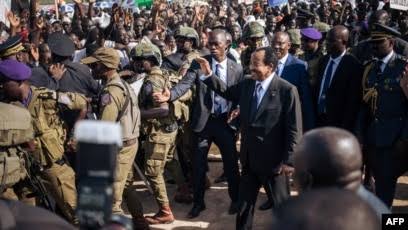

For more than four decades, Paul Biya has governed French Cameroun with one overriding priority. He must survive politically. Today, that instinct appears stronger than ever. His latest military reshuffle, signed from Geneva, reflects a leader determined to tighten his grip during a period of mounting uncertainty.
The latest appointments are not isolated events. They continue a pattern of repeated military changes throughout 2026. Since January, Biya has issued numerous decrees affecting promotions, appointments, transfers and command positions across the Defence Forces. Official records show multiple rounds of military appointments this year, including major changes in March, June and August.
Supporters present these moves as routine administration. However, critics see something different. They argue the constant reshuffling reflects a leadership that remains deeply concerned about loyalty within its own security establishment.
The timing also matters. Biya has stayed outside French Cameroun for nearly two months. Yet he continues signing military decrees from a luxury hotel in Geneva. That unusual arrangement has only intensified speculation over the regime’s internal stability.
History explains the concern. The military coup in neighbouring Gabon shook long-serving African rulers. It reminded every ageing president that loyalty inside the barracks cannot be taken for granted. Since then, Biya has repeatedly adjusted the military hierarchy whenever political pressure increases.
Nevertheless, there is no public evidence proving that an imminent coup is being planned. What is evident is that analysts have interpreted repeated military reshuffles as efforts to reinforce loyalty during politically sensitive periods.
Meanwhile, visible cracks continue to emerge inside the state. Years of economic hardship, delayed reforms and uncertainty over succession have generated growing unease across many sectors of society. Rumours of dissatisfaction within sections of the military circulate widely, although their scale remains difficult to verify independently.
The war in Ambazonia has further complicated the situation. Nearly a decade of fighting has produced no decisive military outcome. Instead, the conflict has drained state resources, stretched military deployments and exposed weaknesses in Yaoundé’s strategy. The regime continues changing commanders. However, leadership changes alone have not delivered a political solution.
Moreover, the conflict has become a strategic burden for French Cameroun. Every new commander inherits the same unresolved battlefield. Every reshuffle raises fresh expectations. Yet the underlying political crisis remains untouched.
Instead of addressing the roots of the conflict, Yaoundé appears to rely on military restructuring. That approach may change faces. However, it has not changed realities on the ground.
Ultimately, governments build confidence through institutions, transparency and public trust. They do not build lasting stability through endless personnel changes. As military decrees multiply, so do questions about the regime’s confidence in its own system.
If Biya truly commands unquestioned loyalty, repeated reshuffles should become unnecessary. If they continue at the current pace, many observers will keep asking the same question: is the Presidency projecting strength, or responding to insecurity?
By Lucas Muma | BaretaNews