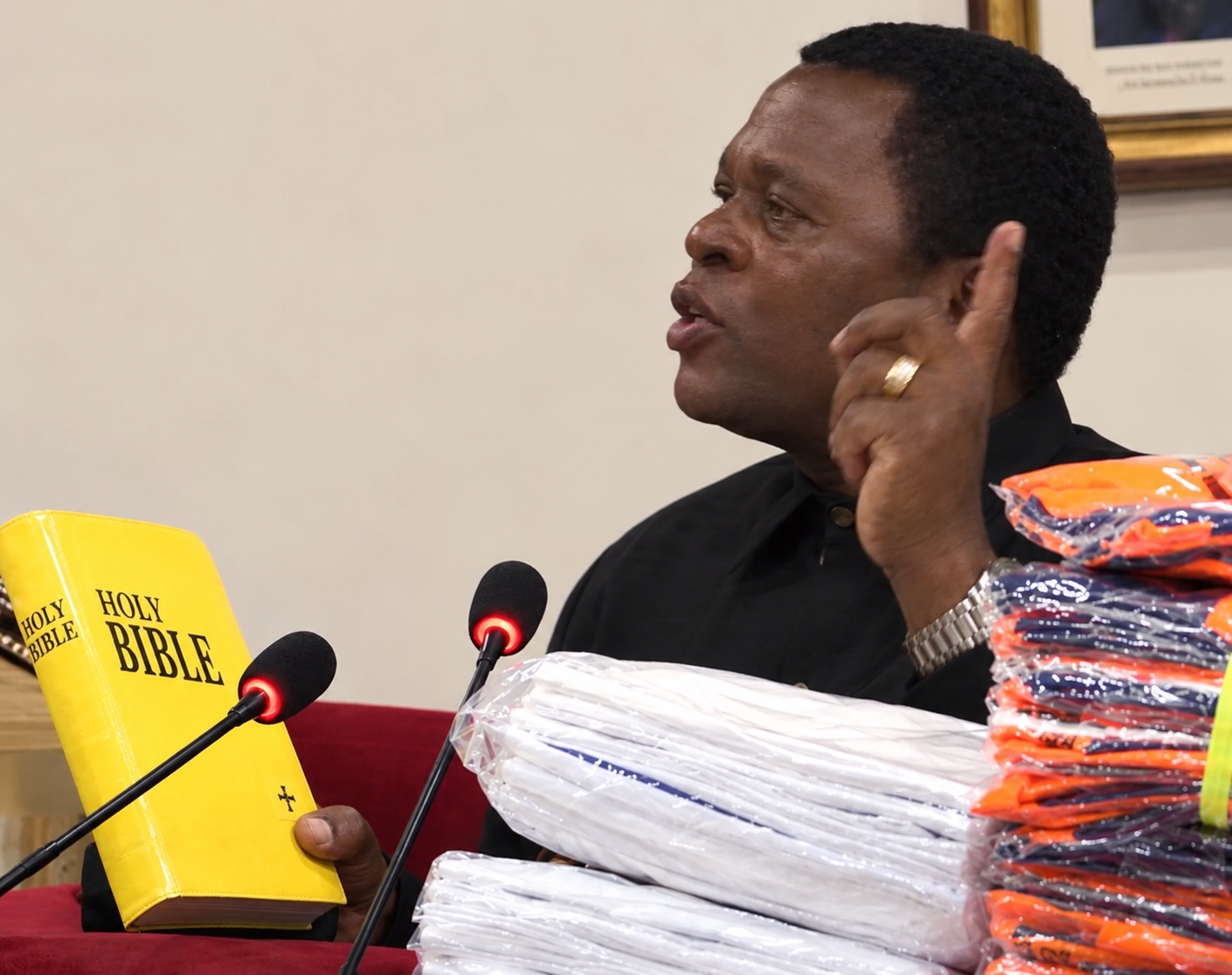
Paul Atanga Nji has brought another security spectacle to Bamenda. The colonial regime’s Minister of Territorial Administration now wants commercial bike riders to swear on holy books as his government struggles to contain a conflict it has failed to resolve for nearly a decade.
During his October 2026 visit to the Northern Zone of Ambazonia, Atanga Nji reportedly accused bike riders of complicity in atrocities and introduced tighter restrictions on their activities. Reports also indicated that riders were subjected to religious oaths and restrictions on carrying passengers.
The spectacle raises a fundamental question. Has Yaounde run out of answers to the Ambazonian struggle and resorted to placing the burden of its security failures on poor civilians?
For a regime that boasts of military strength, intelligence capabilities, and administrative control, the apparent need to make commercial riders swear on Bibles and Qurans exposes the limits of its approach.
Why Target The Poor Instead Of The Armed Forces?
Atanga Nji must explain why ordinary bike riders face such pressure while armed forces loyal to La République du Cameroun operate throughout Ambazonia.
If the minister believes certain riders are committing atrocities, he should produce credible evidence and let the law take its course.
But why should an entire profession be treated with suspicion?
Why does the minister not demand the same public commitment to lawful conduct from the colonial forces carrying guns and conducting security operations?
Why are ordinary civilians being asked to demonstrate loyalty when armed personnel should already be bound by military regulations, criminal law and their duty to protect civilians?
The minister cannot answer these questions with another speech or another public ceremony.
Commercial bike riders did not architect this conflict. They are workers trying to survive in an economy battered by insecurity, displacement, and prolonged political instability.
Some transport students. Others carry traders, patients, farmers, and workers. Their motorcycles keep communities moving when insecurity makes ordinary life difficult.
Yet, under this approach, riders risk becoming suspects simply because of the work they do.
That is not a credible substitute for intelligence-led policing.
The Dangerous Position Of The Bike Rider
The most troubling consequence is the danger these measures could pose to the very people the government claims to protect.
In a conflict environment, accusations of collaboration can be deadly.
A rider suspected of cooperating with colonial authorities could face retaliation from separatist fighters. Another accused of helping the resistance could face detention, intimidation or abuse by state forces.
A public oath offers no guarantee against either danger.
What protection has Atanga Nji promised riders who provide information to the authorities? What safeguards will prevent false accusations? Who will protect those who refuse to become informants?
And if a rider is harmed because the government publicly associates the profession with atrocities, who will accept responsibility?
The minister cannot reasonably demand cooperation while ignoring the risks that cooperation may create.
Ordinary Ambazonians could pay the price for a security strategy designed in Yaounde.
Can A Bible Defeat A Political Struggle?
The Ambazonian conflict is not a quarrel that holy books can settle.
It is a political conflict rooted in grievances over identity, governance, representation, and the future of the former British Southern Cameroons.
People may disagree about the way forward. Some support independence, others support different political arrangements, while many simply want peace and safety.
But no serious analysis can pretend that the conflict will disappear because people have sworn religious oaths.
A Bible is not an intelligence network. A Quran is not a military investigation. Neither can replace credible evidence, professional policing, accountability or meaningful political engagement.
Religion should not be reduced to a political instrument for demonstrating obedience to the state.
If a person commits a crime, the authorities should investigate. If a security officer abuses a civilian, the authorities should investigate that too.
Justice must not depend on the uniform a person wears, the political camp they support or the religious book placed before them.
The same standard must apply to the government.
A regime that invokes sacred texts to demand integrity from ordinary people must also demonstrate integrity in its own conduct.
Atanga Nji’s Tough Talk Has Not Ended the Conflict
Atanga Nji has long been associated with hardline rhetoric towards the Ambazonian struggle.
In 2017, he publicly denied the existence of an Anglophone Problem, according to contemporary reporting. In 2023, he reportedly compared separatist fighters to Lucifer.
Such statements may satisfy political loyalists in Yaounde. They do not resolve the underlying conflict.
For years, the government has announced security operations, demanded surrenders, and issued stern warnings. Yet the conflict has continued to disrupt communities across the two English-speaking regions.
This record demands serious questions about the effectiveness of the government’s strategy.
If the conflict were merely a criminal problem, why has it resisted years of military operations and administrative restrictions?
If the solution were simply to persuade fighters to surrender, why have repeated appeals failed to produce a lasting settlement?
And if Yaounde has the situation under control, why must ordinary workers now face further restrictions and public suspicion?
These questions do not excuse attacks on civilians or criminal conduct by any party. They show the need for a strategy beyond slogans and coercion.
A Regime Cannot Manufacture Loyalty
The Yaounde regime appears to be demanding visible demonstrations of loyalty from people whose trust it has not necessarily earned.
But loyalty cannot be manufactured through public oaths, threats, or restrictions on livelihoods.
A person may swear on a Bible because they fear the consequences of refusing. Another may comply because they have no practical choice. Neither response necessarily proves political allegiance or reveals what that person genuinely believes.
That is why such spectacles cannot substitute for reliable intelligence.
The government must distinguish genuine cooperation from forced compliance. Otherwise, it risks collecting public performances instead of useful information.
Worse, it may deepen resentment among residents who already feel trapped between armed actors and the conflict’s consequences.
The colonial administration should understand that ordinary Ambazonians are not a single political bloc. They have different beliefs, experiences, and priorities.
Treating them collectively as instruments of a security campaign risks alienating the very communities authorities need to cooperate with.
Who Will Hold the Armed Forces Accountable?
Another uncomfortable question lies at the heart of this controversy.
If Atanga Nji wants people to swear that they will not commit atrocities, why should that standard stop at the civilian population?
Members of the armed forces must also be held accountable for their conduct. Allegations of unlawful killings, torture, arbitrary detention, and other abuses require impartial investigation, regardless of who is accused.
The existence of abuses by one party does not justify abuses by another.
Nor should accusations against individual bike riders become a pretext for collective punishment.
If the government genuinely wants to prevent atrocities, it should establish credible mechanisms to investigate allegations, protect witnesses, and prosecute offenders.
It should also ensure that civilians who cooperate with lawful investigations are not abandoned to retaliation.
That would be a serious security policy. Demanding oaths without explaining the safeguards is not enough.
Ambazonia Needs Justice, Not Another Spectacle
Atanga Nji’s visit has brought the contradiction into sharp focus.
Yaounde wants the population to believe its security machinery works. Yet its latest approach has put ordinary bike riders under public scrutiny and raised safety concerns.
The regime can restrict passengers, demand documents, and organise public ceremonies. But administrative control is not political legitimacy, and coercion is not peace.
The real test is whether people can travel safely, earn a living, attend school, and seek medical care without fear.
It is whether civilians can report crimes without becoming targets themselves.
And it is whether the authorities are prepared to address the political grievances that continue to sustain the conflict.
The people of Ambazonia need a credible path out of this crisis. They need protection from abuses, accountability for wrongdoing, and a political process that confronts the causes of the conflict.
They do not need to become human shields for a failing security strategy.
Atanga Nji should stop asking poor bike riders to carry the burden of Yaounde’s failures. If the regime wants public trust, it must demonstrate accountability, protect civilians, and confront the political crisis it has spent years trying to suppress.
By Lucas Muma | BaretaNews