BARETANEWS EDITORIAL | 24 September 2026
The decision to move from the Interim Government model towards the Ambazonia People’s Liberation Authority deserves a clear welcome. It opens a chance to reconsider how the movement organises itself, works with others and serves the people whose aspirations it claims to represent. The leadership must now turn that chance into results.
BaretaNews believes the change was overdue. A movement pursuing self-determination needs institutions, but those institutions should be judged by the work they make possible. Titles and cabinet structures cannot substitute for public trust, an effective political strategy or the protection of communities living with conflict.
A difficult argument deserves an honest hearing
In the commentary informing this editorial, BaretaNews publisher Mark Bareta recalls advocating a move away from the government model years ago and receiving heavy criticism. His argument was that adopting the language and structures of government too early shifted attention towards governing offices and internal politics, while the central political objective remained unresolved.
His provocative words, “We lied to you,” must be understood in the context he gives them: a challenge to the claim that Ambazonia already possessed a functioning government. They were not a rejection of the people’s aspirations or a dismissal of their sacrifices.
That distinction matters. People can believe deeply in self-determination while questioning whether a particular organisation is equipped to advance it. A movement should make room for that debate. Criticism of a structure is not, by itself, betrayal of a cause.
There is also a fair argument on the other side. Supporters invested hope, time and resources in the IG. The intention to build institutions and a common political voice should not be reduced to a caricature. The task now is to preserve useful experience while correcting arrangements that encouraged rivalry or failed to deliver.
The credit belongs to those who made the change
This moment should not become a contest over who first proposed reform. Bareta himself makes that point:
“But the victory in this transformation does not belong to me.”
He gives credit to the current leadership, its supporters and the stakeholders who accepted the need for change. BaretaNews shares that position. A proposal is important; taking responsibility for implementing it is another test altogether.
We welcome Dabney Yerima’s role in the announced transition and the willingness of supporters to consider a different institutional future. Leadership sometimes requires people to reconsider a structure in which they have invested their own standing. That deserves recognition.
Recognition should also leave room for scrutiny. Welcoming APLA does not require us to assume that every consultation is complete, every disagreement resolved or every promise fulfilled. Those questions must be answered publicly as the transition proceeds.
Respect Sisiku’s place—and clarify his role
Sisiku Ayuk Julius Tabe’s place in the movement makes clarity about his relationship with APLA essential. The leadership should explain whether he was consulted, what endorsement he has given and what role he will hold. Any confirmation should be communicated in an authorised form that does not compromise his safety or legal interests.
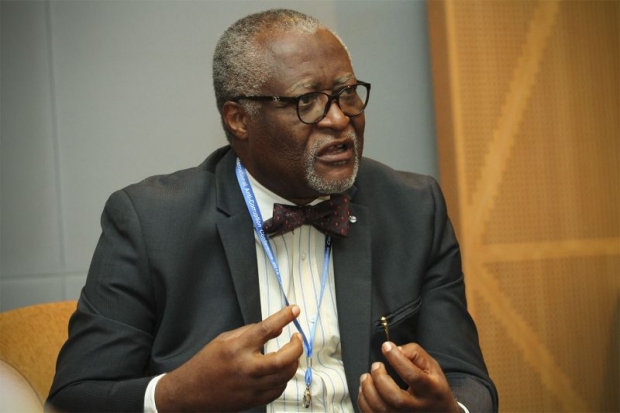
Respect for Sisiku should strengthen institutional clarity. Supporters should be able to understand who makes decisions, where authority comes from and how disagreements will be handled. His photograph accompanying this editorial is an archive image, not evidence of his approval of a particular arrangement.
Unity must have practical terms
Bareta’s commentary expresses the hope that APLA will work effectively within SCAUF and collaborate constructively with other stakeholders. We endorse that ambition. It should lead to clear discussions about representation, shared responsibilities and how collective decisions are reached.
That is an editorial expectation, not a claim that a new formal arrangement has already been concluded. APLA and SCAUF should explain their relationship in their own authorised communications.
The same openness should extend to the other IG factions and wider Ambazonian movements. Invitations to cooperate will carry more weight if they allow meaningful participation. No organisation should be expected to surrender its voice merely to make a unity photograph possible.
Cooperation must be visible in the way leaders resolve disputes, respect agreed decisions and address the public. The movement can disagree without turning every difference into a struggle over personal legitimacy.
What APLA must deliver
The first task is to introduce the leadership and publish an accessible explanation of its mandate. People should know how leaders were chosen, how long they will serve and how they can be held accountable. The transition framework should explain what happens to existing responsibilities, records, funds and commitments.
Financial transparency is equally important. Supporters deserve understandable accounts and realistic explanations of what their contributions can achieve. Confidence grows when questions receive answers.
Above all, civilian welfare must shape political decisions. Education, livelihoods, humanitarian access and the safety of families cannot be treated as secondary concerns. APLA should make clear commitments against kidnapping, forced levies and abuses, and support impartial accountability wherever credible evidence leads.
The new leadership should also set out a diplomatic programme with achievable priorities. Public communication should distinguish confirmed engagement from aspiration. A credible negotiating position requires consultation, preparation and a clear mandate.
Within its first 100 days, APLA should publish measurable commitments and report what it has delivered. That would give supporters something more useful than another round of promises: a basis on which to judge performance.
A welcome, with a responsibility attached
The change gives the leadership an opportunity to renew confidence and redirect attention towards the work ahead. Its value will become clear through decisions, conduct and results.
BaretaNews welcomes the courage to reconsider the IG model. We congratulate those who made the announced transition possible and encourage APLA to build a constructive relationship with SCAUF and other stakeholders. Our support for that direction comes with an expectation of honest answers and public accountability.
The people have invested too much to be offered only a different name. They deserve an organisation that listens, cooperates and delivers.
This editorial draws on Mark Bareta’s supplied commentary and the announced IG-to-APLA transition. It expresses BaretaNews’ editorial position. Featured photograph: Sisiku Ayuk Julius Tabe, BaretaNews archive.