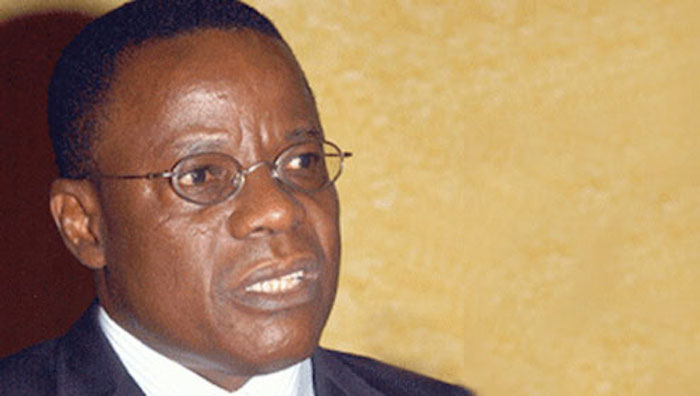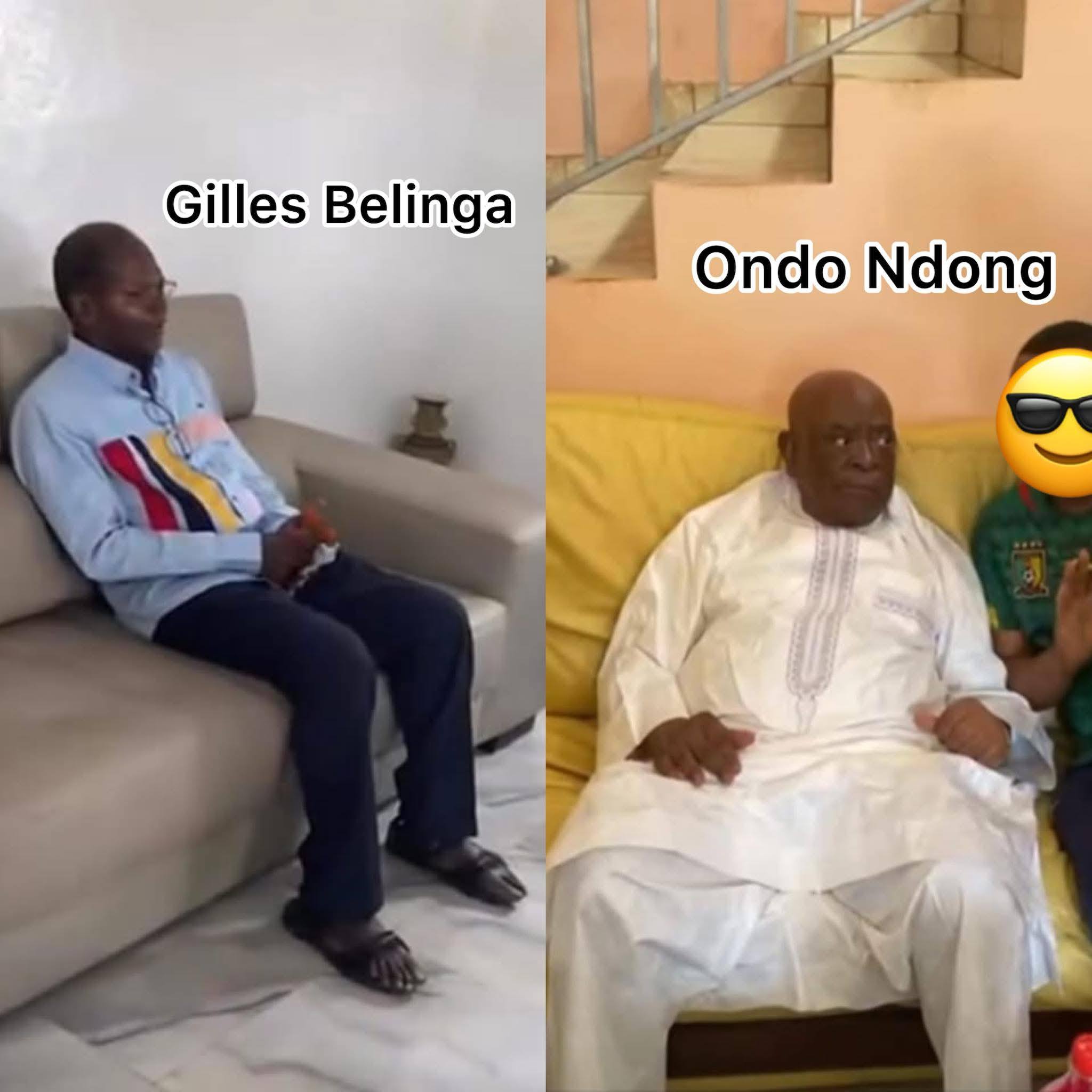

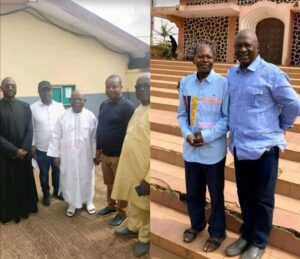
Two former senior officials of the Yaoundé regime regained their freedom this Saturday, February 21, 2026, after spending two decades behind bars. Gilles Roger Belinga, former Director General of the Société Immobilière du Cameroun, and Gérard Ondo Ondo, former Director General of FEICOM, were released after serving sentences linked to the much-publicised anti-corruption campaign known as Operation Sparrowhawk.
Their release has brought relief to their families and close associates. Yet beyond the personal joy lies a deeper national concern. After twenty years in prison, what has become of the public funds at the centre of their convictions?
Operation Sparrowhawk, launched in the mid-2000s, was presented as a bold crackdown on embezzlement at the highest levels of government. It targeted senior officials accused of diverting billions of CFA francs meant for public development. The convictions of Belinga and Ondo Ondo were once held up as proof that the state was serious about fighting corruption.
Today, their freedom reopens old wounds and unresolved questions. Has the money allegedly misappropriated been returned to the public treasury, either partially or in full? Has the state recovered what was lost? Or has imprisonment alone been treated as sufficient punishment?
In any credible anti-corruption framework, jail time is not the final objective. It is only one instrument. The primary goal should be the recovery of stolen assets so that they can fund the roads, hospitals, schools, and public services they were meant to support.
If billions of CFA francs are diverted and two decades in prison are deemed sufficient to settle the matter without full financial restitution, then a dangerous precedent is set. It creates the perception that embezzlement carries a calculable cost. For some, twenty years in detention, even under relatively comfortable conditions, may appear as an acceptable trade-off when weighed against vast financial gain.
The release of Belinga and Ondo Ondo also revives debate about the legal and political foundations of Operation Sparrowhawk. On what grounds were they released? Were there conditions attached to their freedom? Was restitution part of the arrangement? The public deserves clarity.
Beyond individual cases, the credibility of the entire anti-corruption drive now stands under scrutiny. A system that imprisons without ensuring asset recovery does not fully protect public finances. It punishes individuals, but it may fail to repair the structural damage caused by corruption.
Every billion CFA francs that remains unrecovered represents a clinic not built, a classroom not equipped, a road not paved. For citizens struggling with failing infrastructure and limited public services, these losses are not abstract figures. They are lived realities.
The freedom of the two former officials is not, in itself, an injustice. Twenty years in detention is a significant sentence in any legal system. However, the real test of an anti-corruption campaign is not measured in years served. It is measured in funds recovered, projects completed, and public trust restored.
As the dust settles on their release, one question remains unavoidable. Did Operation Sparrowhawk truly strike at corruption, or did it merely clip a few wings while leaving the deeper system intact?
By Lucas Muma