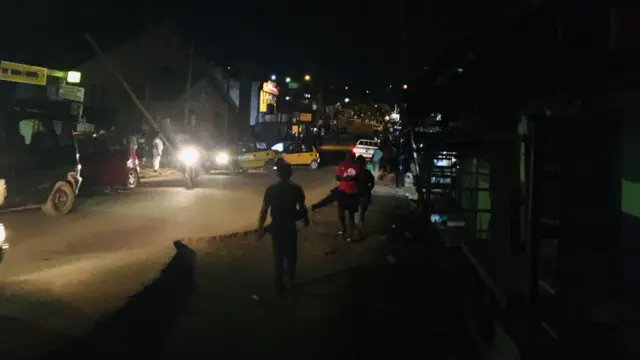

Cameroonians hoped for relief the moment the government announced the nationalisation of ENEO. Many believed the decision would mark a turning point in the long and frustrating journey toward stable electricity. Instead, the country has sunk deeper into darkness. Blackouts have grown longer, more unpredictable, and more widespread. Entire neighbourhoods now go six to eight hours without power each day, especially in Douala and Yaoundé. The optimism that followed ENEO’s takeover has faded, replaced by anger and disbelief as daily life becomes a battle against a failing system.
The worsening crisis is not just an inconvenience. It is crippling the economy from the bottom up. Small businesses that rely on electricity to function now close earlier or operate at a loss. Cold stores and local shops watch their goods spoil because fridges and freezers cannot survive repeated outages. Freelancers, printers, welders, and artisans cannot work without power. Every blackout is money lost, opportunity wasted, and productivity destroyed. In a country already struggling to attract investors, these failures push Cameroon further to the margins.
Hospitals and schools are paying an even heavier price. Medical procedures are delayed or interrupted when the lights suddenly go off. Health workers are forced to rely on generators that often fail or run out of fuel. Students face long nights without lights to study, trapped in a system that claims to be preparing them for “emergence.” Cameroon cannot dream of progress when its children are forced to chase education in the shadows.
These problems persist despite new projects like the 420 MW Nachtigal dam, which was expected to ease pressure on the grid. Even with additional production, outages continue because the deeper issues lie in weak transmission lines, outdated infrastructure, and poor planning. Years of negligence have left the system too fragile to handle the demands of a growing population. ENEO’s debt, now estimated at around 800 billion CFA, shows how badly the sector has been managed. Even independent power producers have shut down at times because the state could not pay them.
Government officials continue to appeal for patience, but patience is wearing thin. Citizens are tired of promises that never materialise. Each blackout reminds them of a government that speaks of modernisation but fails to deliver even the most basic service. The disconnect between official declarations and the lived reality of the people has never been wider. While ministries talk of reforms, families sit in the dark. While leaders speak of growth, businesses shut their doors. While the state celebrates new projects, the population counts new hours without power.
Cameroon’s energy crisis is no longer just a technical problem. It is a symbol of a deeper governance failure. Nationalising ENEO was expected to bring solutions, but the worsening situation shows that the real issue lies in years of mismanagement, weak oversight, and a lack of long-term vision. The country cannot continue on this path. Without decisive action, transparency, and accountability, the darkness will only grow thicker.
Cameroonians deserve a country where electricity is not a luxury. They deserve a government that plans, anticipates, and delivers. For now, the blackout is more than physical. It is a reflection of leadership that has failed to keep the lights on.
By Lucas Muma