
For years, Cameroonian teachers have waited for salary arrears that never come. They go on strike. They negotiate. They receive promises. The money, they are told, is not available.
Patients in public hospitals buy their own surgical gloves. Families contribute for basic medical supplies. Roads announced with fanfare remain half-built, abandoned, or dangerously incomplete. The official explanation never changes. The state coffers are empty.
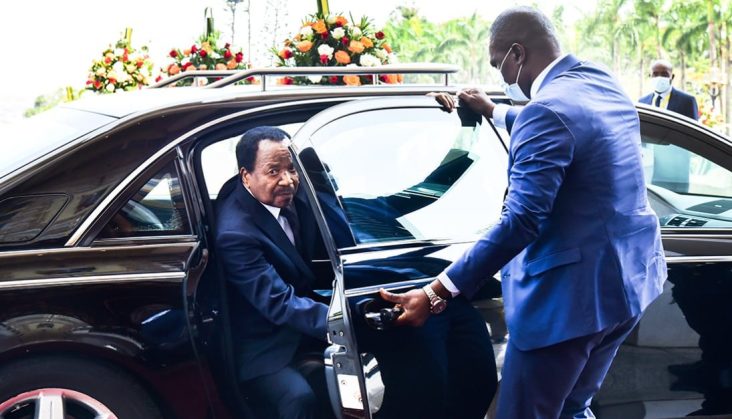
Yet, each time a presidential decree appoints new officials, funds surface immediately. Brand-new official vehicles appear. Allowances are processed. Bonuses are paid. Benefits are granted without delay and without public scrutiny. There is no waiting. There is no debate. The money exists. It moves fast.
This is not an administrative accident. It is a political system built on selective priorities.
Cameroon operates a two-speed state. One speed for the ruling network. Another for the ordinary citizen.
Teachers’ salary arrears remain one of the country’s longest-running social disputes. The issue is well documented. It affects thousands of families. It weakens the education system. Still, payments stall.
At the same time, prestige expenditures move without friction. Newly appointed officials receive privileges that most citizens will never experience. The contrast is sharp. It is consistent. It reveals a pattern.
Public funds follow political loyalty before they follow public need.
The mechanism is simple and efficient. A decree signed by President Paul Biya sets off a rapid chain of administrative action. Allocations are approved. Funds are released. Benefits are distributed. The process is discreet. It faces no public questioning.
Infrastructure projects follow a different path. Announcements are grand. Billboards are mounted. Groundbreaking ceremonies take place. Construction begins. Then it stops. Authorities cite a lack of funding. The abandoned sites become hazards. Citizens are left with dust, potholes, and broken promises.
This imbalance fits what development economists describe as state capture. Public resources serve a minority that controls the decision-making machinery. The majority of funds are raised by the state through taxes and rising prices, but it receives declining services in return.
The cost is visible.
Schools deteriorate. Hospitals struggle. Civil servants lose motivation when unpaid. Families shoulder expenses that the state should cover.
The deeper cost is political. When citizens repeatedly observe that public money prioritises those in power, trust erodes. People begin to believe that accountability is impossible. They normalise dysfunction.
This erosion of institutional confidence has triggered instability in several African countries. Cameroon stands on the same fragile ground.
The system survives not only through repression but also through habit. Citizens become used to unfinished projects. They grow accustomed to budgetary opacity. They adjust to impunity.
Normalisation protects the status quo.
Budget transparency remains weak. Oversight institutions lack independence. Critical voices face marginalisation. Over time, resignation becomes part of the political culture.
The real issue is not whether the state coffers are empty. The evidence shows they are not.
The real question is who benefits from them and how long Cameroonians will accept exclusion from resources that belong to them.