Cameroon’s political stage opened in 2026 under a sharp spotlight on leadership and age.
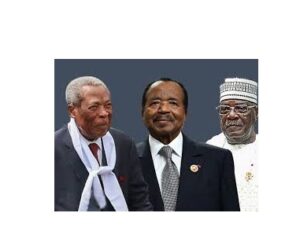
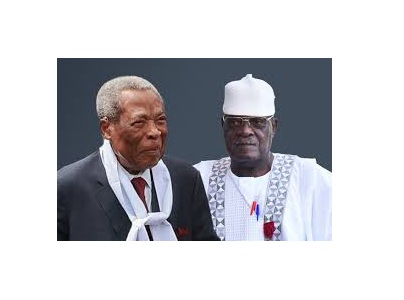
On January 8, national dignitaries gathered at Unity Palace to present New Year wishes to President Paul Biya. Top officials were expected to attend. Yet the President of the National Assembly, Cavaye Yeguie Djibril, did not appear. He also did not attend his own New Year’s address ceremony at the Palais des Verres on January 9. His first vice-president, Hilarion Etong, stood in for him. Cavaye is 85 years old and has led the National Assembly since 1992.
The same pattern repeated at the upper house.
Senate President Marcel Niat Njifenji was absent from the January 8 official greetings to President Biya. Social posts from official pages confirmed his absence from that key event.
Both men belong to the ruling party establishment. Niat Njifenji is 91 years old and has served as president of the Senate since its creation in 2013.
Their absence from national events has stirred debate over the state of governance. Critics say it highlights a deeper reality: some of Cameroon’s most powerful offices are held by senior figures whose capacity to lead is in question.
At the top of the executive branch, President Paul Biya, now 92, was sworn in for an eighth term in 2025.
Cameroon’s political leadership is dominated by octogenarians and nonagenarians.
Officials in other key positions also fall into the upper age brackets. This includes long-serving judicial and military leaders aged 80 and above.
The result is a political class that often appears distant from the everyday struggles of ordinary citizens.
Cameroonians face persistent economic strain. Many communities in English-speaking regions struggle with unemployment, poor infrastructure, limited services, and ongoing conflict.
At the same time, calls for generational renewal grow louder.
Young Cameroonians make up the majority of the population. Most are under 30 and eager for new voices in leadership. Yet leadership remains concentrated among a small group of elders whose grip on power has barely shifted in decades.
Observers say this disconnect deepens frustration.
Youth unemployment and economic hardship persist while aged leaders cling to office. The absence of figures such as Cavaye and Niat at significant national functions underscores concerns about their physical ability to govern and the pace of political renewal.
For many Cameroonians, the question is no longer abstract. They see their leaders sidelined by age even as they continue to hold positions of authority.
This raises broader questions about renewal, representation, and how a nation with a youthful population can be governed by leaders nearing or beyond normal retirement age.
By Lucas Muma