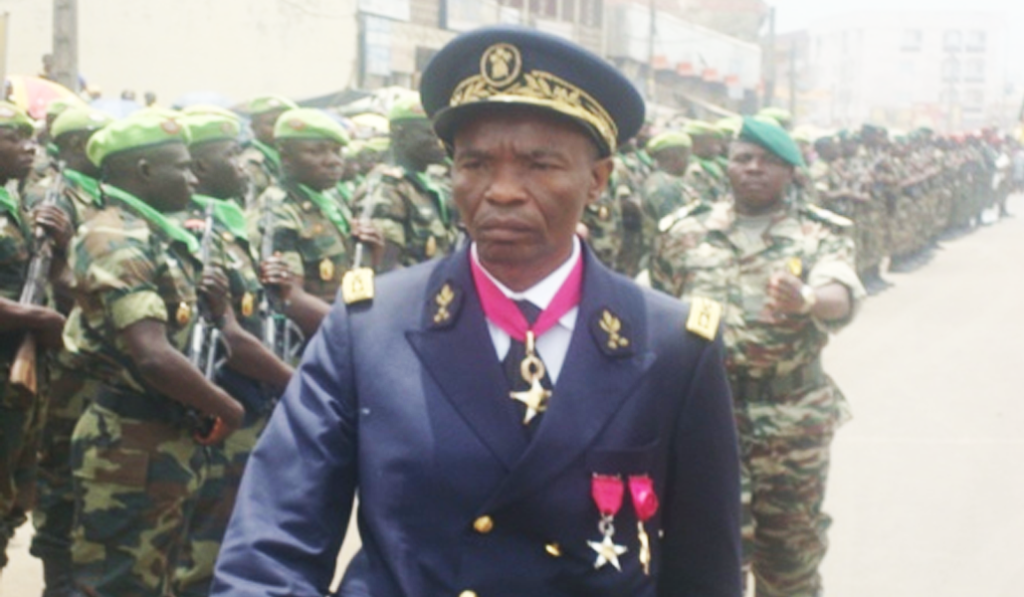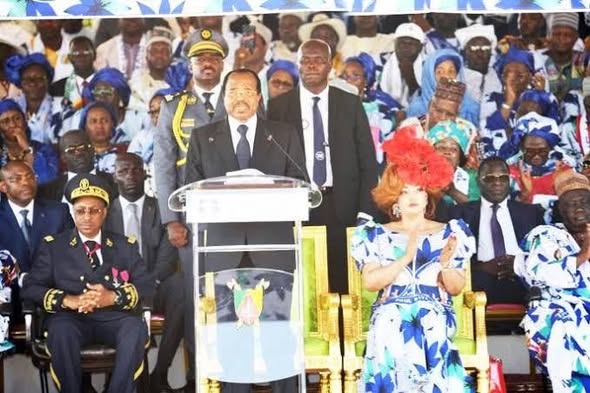
The ruling CPDM marks 41 years today, a milestone that many in La République du Cameroun present as a sign of stability. But for many in Ground Zero, especially in Abakwa, this anniversary tells a different story. It is not one of celebration. It is one that exposes a system built to dominate, not to serve.
Back in 1985, in Abakwa, the regime rebranded the old Cameroon National Union as what would become the CPDM. It was sold as a fresh start. A new political dawn. A promise of unity and modernisation. But Ambazonians saw early that this was nothing more than a repackaging of control. The structure remained the same. Only the name changed.
From that moment on, the CPDM did not develop into a democratic platform. It evolved into a machinery of control. Over the years, the party swallowed the state. Institutions lost their independence. Public resources became tools for political survival. Elections turned into rituals with predictable endings. On paper, there is multiparty politics. On the ground, the system is locked tight.
The consequences are visible across La République and even felt in occupied Ambazonia. People struggle daily. Jobs are scarce. Basic services are failing. Infrastructure projects remain unfinished. Insecurity continues to bite, especially in Ground Zero and Ground One. Yet the regime continues to speak in big-grammar terms about unity and stability, far removed from the daily reality of the people.
The political space has also shrunk steadily. Those who challenge the system face intimidation, exclusion, or worse. Opposition voices are not engaged. They are silenced through administrative and political tactics. The debate has died. Innovation in governance is absent. What remains is a controlled environment where power circulates within the same closed circle.
At the centre of this system stands Paul Biya. For decades, he has remained the undisputed authority, shaping the rules to suit his stay in power. Laws have been adjusted. Institutions have been bent. Everything points in one direction, preserving his grip. The question of who comes after him remains untouched, almost forbidden.
This refusal to open the system has frozen the political landscape. A new generation is blocked. Fresh ideas struggle to emerge. The future of the country hangs on the shoulders of one man rather than on strong institutions. In La République, the waiting continues, uncertain and indefinite, as the CPDM marks yet another year of holding tight to power.