By Mbah Godlove l BaretaNews
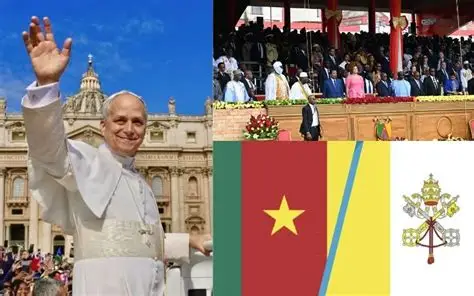
As the head of the Roman Catholic Church, Pope Leo XIV, prepares to touch down in La République in the coming days, conversations across state-aligned media have been overwhelmingly centered on the narrative of “peace.” However, the fundamental issue of justice for the oppressed people of Ambazonia continues to be deliberately sidelined. For a conflict rooted in systemic marginalization, dispossession, and state violence, many Ambazonians view the selective emphasis on peace as an attempt to silence legitimate grievances rather than address them.
Equally troubling is the repeated failure of journalists to challenge church leaders on questions relating to justice. On Wednesday, April 8, a Reverend Sister from the Congregation of Saint Thérèse of the Child Jesus appeared on “Talking Point,” a prime-time program on Equinox Television. Throughout the interview, the Sister focused almost entirely on calls for peace in Ambazonia, carefully avoiding any mention of justice, the very foundation upon which meaningful peace must stand. For many observers, such omissions reinforce fears that the narrative being promoted seeks calm without accountability.
The ongoing Ambazonian liberation struggle, now stretching close to a decade, has cost over 30,000 lives, displaced hundreds of thousands, and left entire communities in ruins across Ground Zero. Families in towns and villages from Southern Cameroons continue to endure daily hardship. In this context, calls for peace without justice are widely perceived as premature and disconnected from the lived realities of the people.
Historically, the Roman Catholic Church has played mediation roles in conflicts across the world, raising expectations among some that the Pope’s visit could open doors toward a lasting solution. Yet, the continued silence on justice risks undermining confidence in such hopes. Ambazonians argue that reconciliation cannot be built on selective memory or political convenience. True peace must be anchored on truth, accountability, and restoration of rights.
Interestingly, the Catholic Church itself maintains a Justice and Peace Commission, a name that clearly places justice before peace. Many Christians across Ambazonia are therefore urging that when the Pope arrives in Bamenda, the message should not be reduced to calls for calm alone. Instead, the faithful are calling for a bold acknowledgment of injustice and a firm stand for the oppressed.
For Ambazonians, the message remains clear: there can be no sustainable peace without justice. Any attempt to reverse this order risks deepening wounds rather than healing them. As the papal visit approaches, the people of Ambazonia watch closely, hoping that the global moral authority of the Church will stand on the side of truth, dignity, and freedom.


