
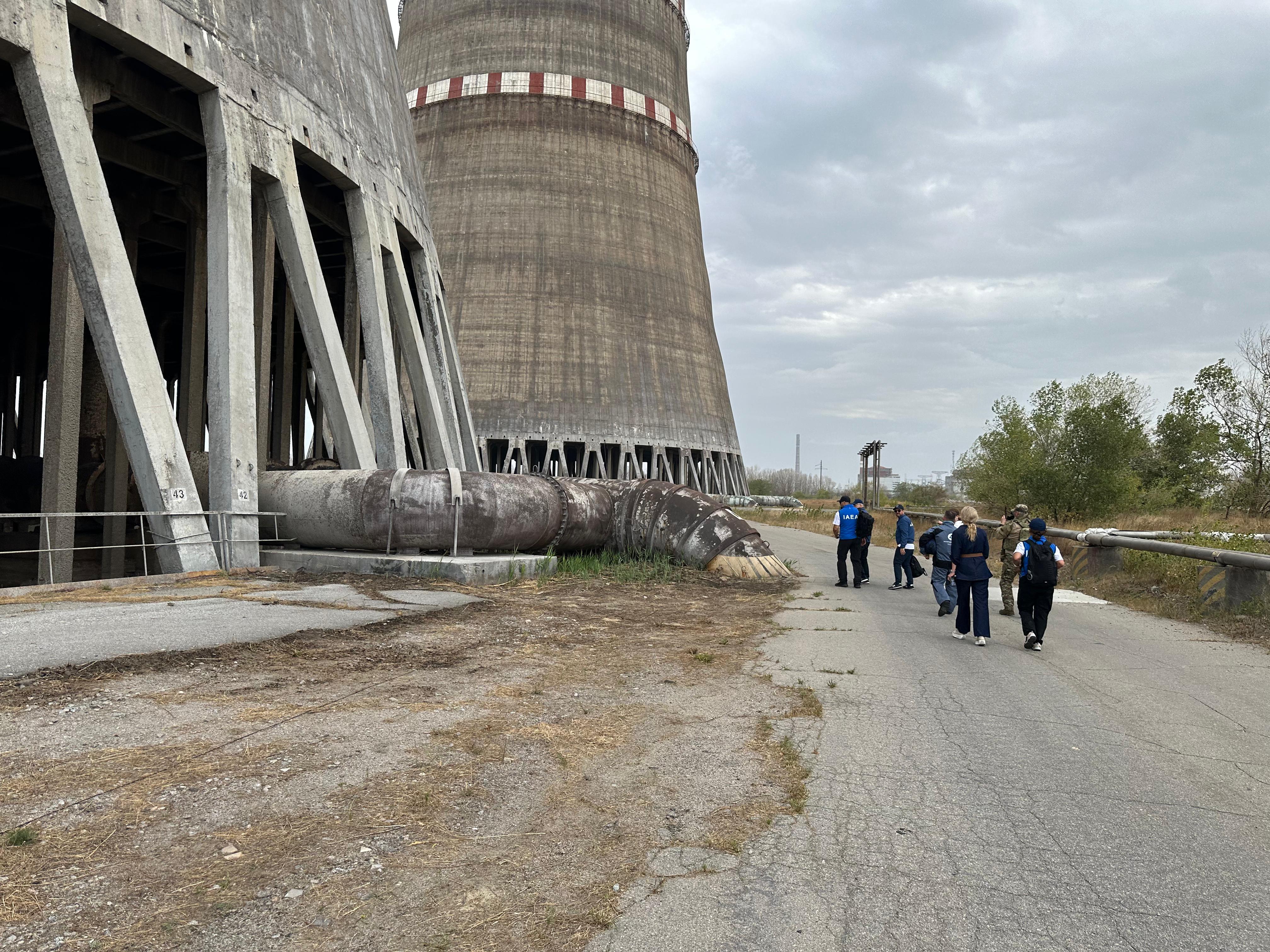
Europe’s largest nuclear power station is relying on emergency diesel generators to keep its nuclear fuel cool after its remaining off-site electricity connection failed on Sunday.
The Russian-controlled Zaporizhzhia Nuclear Power Plant in south-eastern Ukraine lost all external electricity after the Ferosplavna power line disconnected on 8 November, according to the International Atomic Energy Agency (IAEA) and the plant’s Russian-installed management.
The facility is not producing electricity, but it still needs a continuous power supply for essential cooling and other nuclear-safety systems.
What has been confirmed
The IAEA told Reuters that the cause and location of the latest disconnection were not yet known. It said the plant had sufficient fuel to run a limited number of emergency diesel generators for about two weeks.
The Associated Press independently reported that the plant had switched to backup generators after an automatic protection system shut down the damaged line.
The Russian-installed plant management said radiation levels at the site and within its surveillance zone remained normal. BaretaNews has not independently verified those local radiation readings.
A fragile safety lifeline
Zaporizhzhia has six reactors and has repeatedly lost external power during the war. Although its reactors are offline, electricity remains necessary to remove heat from nuclear fuel and operate essential safety equipment.
The plant’s main Dniprovska power line was already unavailable, the IAEA said on 23 October. The Ferosplavna line had been restored in early September after an IAEA-brokered local ceasefire allowed repairs following an outage that began on 20 August.
Sunday’s disconnection therefore removed the site’s remaining off-site electricity supply and returned it to reliance on diesel generators.
Cause remains unclear
Russia seized the plant in the opening weeks of its full-scale invasion of Ukraine in 2022. Moscow and Kyiv have repeatedly blamed each other for military activity threatening nuclear safety around the facility.
No independently verified cause for the latest line failure had been established when this report was prepared. The IAEA continues to monitor the plant.