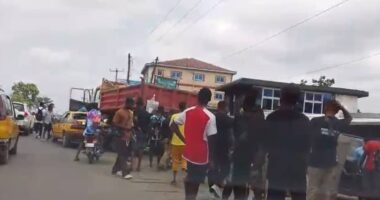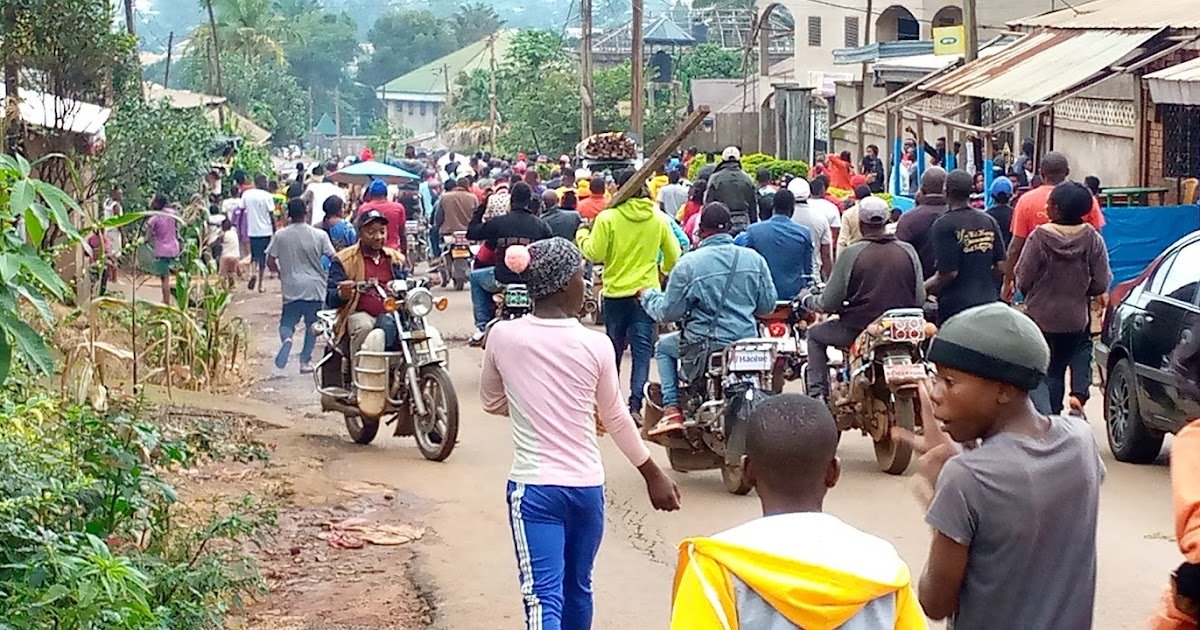
Reports reaching BaretaNews from Ground Zero, Bamenda, paint a troubling picture of systemic marginalisation playing out in real time. Our reporters on the ground in Ndamukong this Wednesday, April 1, 2026, witnessed what many residents describe as yet another episode of colonial-style intimidation by forces of the La République regime.
According to eyewitness accounts, heavily armed police units stormed the Ndamukong neighbourhood, moving from street to street and subjecting civilians to harassment and arbitrary arrests. What stood out sharply during the operation was the officers’ strict use of French, even in an overwhelmingly English-speaking community.
Residents told BaretaNews that commands, interrogations, and threats were issued exclusively in French. Many of those targeted struggled to understand what was being said to them. In several cases, panic and confusion set in as civilians tried to respond under pressure, with guns pointed at them and no clear understanding of the accusations being made.
Even more striking is the fact that some of the officers involved are themselves of Ambazonian origin. Yet, once embedded within the colonial system, they reportedly abandoned English entirely, choosing instead to communicate only in French, reinforcing what many now see as a deliberate policy of linguistic domination.
Observers say this pattern is not accidental. This pattern mirrors a larger system that imposes the language of power on a people already striving to maintain their identity. Analysts view such actions as calculated attempts to humiliate, intimidate, and subdue the local population in Ground Zero, where the struggle for restoration continues.
Analysts argue that language in such high-tension environments is not neutral. Barking commands in an unfamiliar tongue, particularly under the threat of force, heightens the chances of forced compliance. Civilians may admit to allegations they do not fully grasp, simply out of fear and confusion.
This raises serious questions about justice and fairness in the ongoing crisis. If citizens cannot understand the language used by those enforcing the law, can any arrest or admission be considered legitimate?
Critics have long pointed to the double standards within the system. In the capital, Yaounde, or in economic hubs like Douala, it is virtually impossible for an English-speaking citizen to function publicly without switching to French. From boarding a taxi to engaging in official discourse, French dominates every space of authority.
Yet, in the towns and cities of Ambazonia, the reverse is not respected. Francophone officials deployed to the North West and South West operate almost exclusively in French, with little regard for the linguistic realities of the people they govern.
Many now see this as a clear reflection of structural inequality. The idea of a so-called united country continues to ring hollow for those who experience daily exclusion in their own homeland.
As one resident bluntly put it, “If we cannot be addressed in our language in our own land, then what kind of union is this?”
The unfolding events in Ndamukong once again bring to the surface a harsh reality long denounced by Ambazonians. The system claims equality, but on the ground, a different truth prevails. One that echoes the famous observation that while all may be declared equal, some are clearly treated as more equal than others.