STATE OF FEDERALISTS: A CRITICAL EXAMINATION OF ANGLOPHONE POLITICS
By James Agbor | BaretaNews Style Analysis
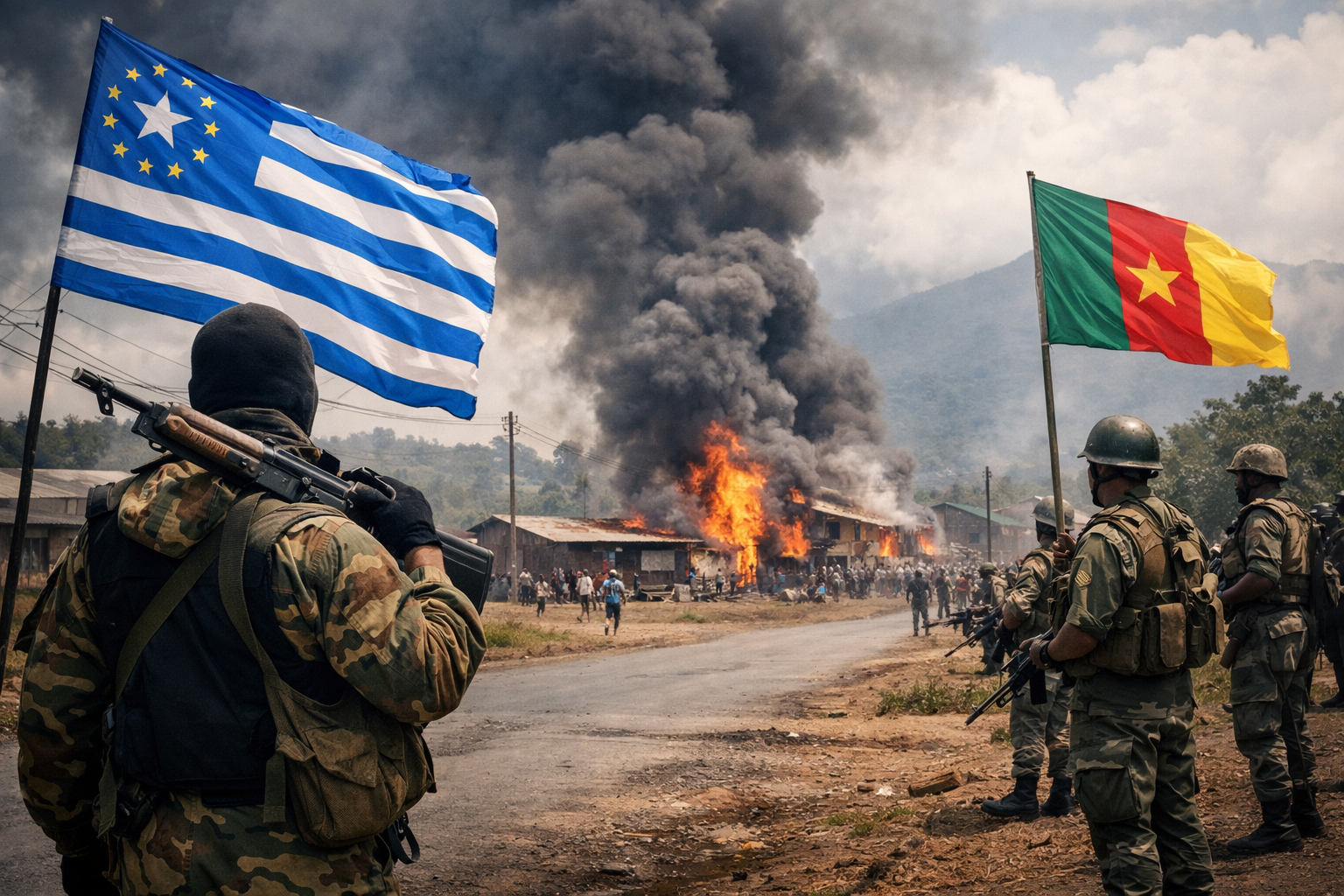
In the ever-evolving struggle for the liberation of Southern Cameroons, ideological divisions continue to shape the direction, strength, and credibility of the movement. Among these divisions, the role of federalism advocates has increasingly come under scrutiny. While some regard federalism as a pragmatic path to coexistence, others argue that its proponents have, deliberately or otherwise, weakened the push for outright independence.
This perspective, though contentious, is gaining traction among restorationists who question the consistency, priorities, and historical awareness of federalist actors. The following observations attempt to unpack why such doubts persist.
First, there is a growing concern that federalists have invested more energy in confronting restorationists than in challenging the structures of the central government in Yaoundé. Rather than building a unified front against what many describe as systemic marginalisation, federalist voices have often been at the forefront of internal criticism, sometimes overshadowing their advocacy for a return to federalism itself.
Secondly, silence—or perceived silence—has been interpreted as complicity. In the face of reported atrocities against civilians and destruction of property in Southern Cameroons, federalist actors have often been criticised for muted responses. Conversely, they appear swift and vocal in condemning alleged excesses by restoration forces, even in instances where evidence remains disputed. This imbalance has raised questions about priorities and moral consistency.
Another troubling dimension is the amplification of internal divisions. Tribal and regional sentiments, particularly between counties and zones, have been increasingly echoed in federalist discourse. Critics argue that this mirrors long-standing tactics attributed to the central government—divide and weaken. Recent media narratives, including divisive commentaries that pit communities against one another, have only deepened suspicion. Observers note the absence of similar outrage when key national positions are consistently allocated to Francophone regions, prompting questions about selective advocacy.
Furthermore, the focus on symbolic political positions within the current structure—such as the Vice Presidency—has been interpreted as a distraction from foundational constitutional reforms. Skeptics argue that without structural guarantees, such roles remain largely ceremonial and unlikely to empower Anglophones meaningfully. True federalist advocacy, they contend, should prioritise constitutional restructuring, including the election of regional governors and a genuinely autonomous federal system.
Perhaps most concerning is what many describe as a gradual shift in allegiance. There is an emerging perception that some federalists are no longer actively pursuing federalism but are instead positioning themselves within the framework of a “one and indivisible” Cameroon. This shift, whether strategic or opportunistic, has fueled doubts about long-term commitment to the Anglophone cause.
History offers a sobering backdrop to this debate. From the federal arrangement of 1961 to its dissolution in 1972, through subsequent constitutional reforms in 1990 and 1996, and culminating in the 2016 crisis, the recurring pattern suggests missed opportunities and unlearned lessons. Critics argue that without a clear reassessment of strategy, federalism risks becoming a recycled idea rather than a refined solution.
This analysis is not an outright dismissal of federalism but rather a call for introspection. If federalism is to remain a viable path, its advocates must demonstrate clarity, consistency, and courage—especially in confronting both external injustices and internal contradictions.
As the struggle continues, one thing remains certain: unity of purpose, grounded in historical awareness and strategic coherence, will determine the future of Southern Cameroons.
The debate remains open. Let engagement be guided by reason, respect, and a shared commitment to justice.