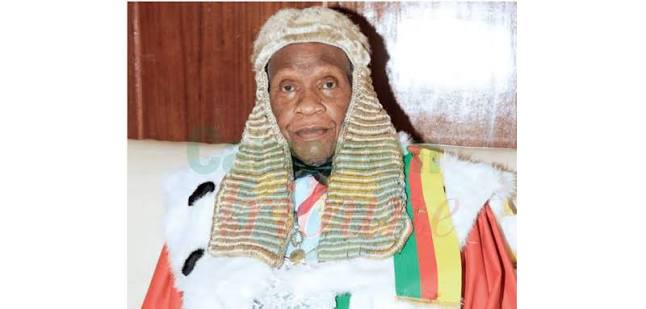
Lawyer Michèle Ndoki has questioned the legacy of late Constitutional Council President Clément Atangana.
Ndoki argued that the institution under his leadership failed to show the independence expected during major electoral disputes.
In a reflection published after Atangana’s death, Ndoki recalled appearing before the Constitutional Council with Prof. Maurice Kamto in 2018.
She also appeared before the Council alongside Akere Muna in 2025.
According to Ndoki, the Council had a duty to examine electoral petitions independently.
She said this duty also applied when President Paul Biya’s interests were involved.
Biya appointed Atangana to head the Constitutional Council.
Ndoki criticised the Council’s handling of the disputed 2018 and 2025 presidential elections.
She said the Council validated Biya’s victories while rejecting petitions challenging his candidacy in 2025.
Ndoki also referred to a video showing Atangana celebrating after Biya was declared winner in 2025.
She said the scene raised questions about the impartiality expected from the head of La République du Cameroun’s highest electoral jurisdiction.
“Lawyers do not go to court thinking that they must necessarily win,” Ndoki wrote.
“At the very least, they expect their evidence to be examined on its merits.”
Ndoki also recalled a word closely associated with Atangana’s handling of petitions before the Council.
That word was “irrecevable,” meaning inadmissible.
According to Ndoki, the term repeatedly appeared in decisions dismissing cases brought before the institution.
She said Atangana’s legacy should now be assessed against the responsibilities attached to his office.
Ndoki questioned whether the Council provided citizens with an effective avenue to challenge presidential power.
She also questioned whether the institution instead shielded that power from scrutiny.
By Lucas Muma | BaretaNews