
Forty-four years in power should prompt reflection for any leader. It should also be an opportunity to account for promises made, achievements recorded, and failures endured.
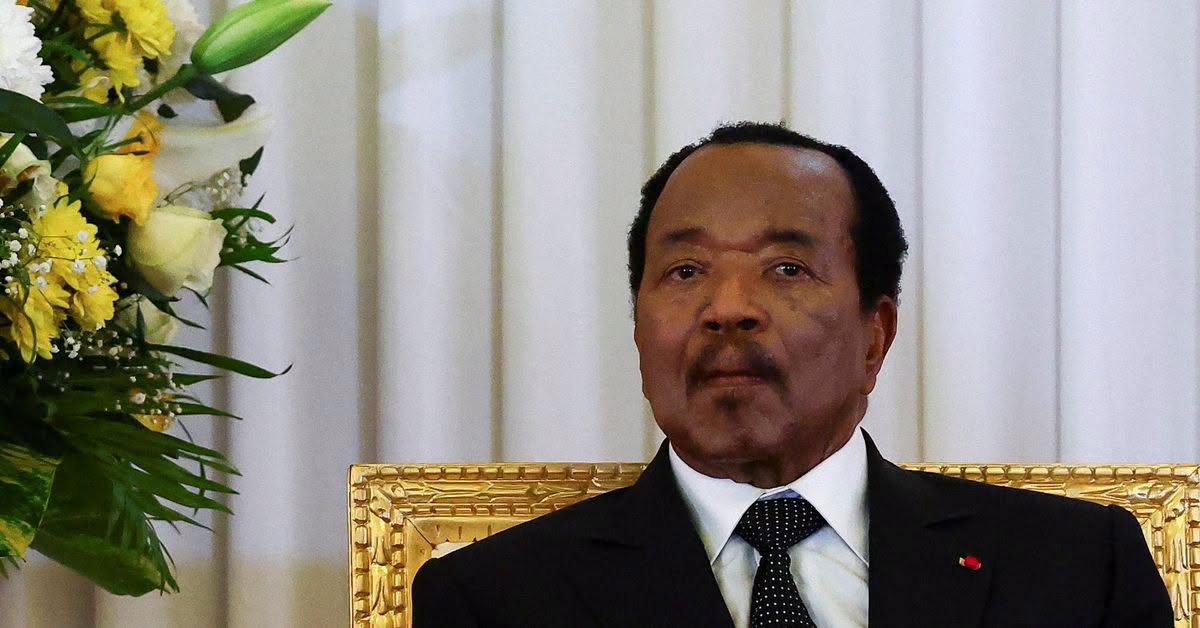
However, as CPDM supporters across the national territory mark President Paul Biya’s 44th anniversary in power, the man at the centre of the celebration has remained conspicuously silent.
Across the country, party supporters are reportedly sharing bread and sardines to commemorate the occasion. Yet the presidency has offered no public message celebrating the milestone. No major address. No personal reflection. No public engagement with the comrades celebrating his longevity in office.
This silence raises uncomfortable questions. Why has Biya not publicly acknowledged 44 years in power? Is this deliberate indifference, a communication decision, or a reflection of the political atmosphere surrounding his long presidency?
Does the President believe his record speaks for itself? Or has the weight of accumulated national problems made this anniversary difficult to celebrate?
These questions deserve serious consideration.
A Presidency Under the Weight of Unanswered Questions
Since taking over from Ahmadou Ahidjo on November 6, 1982, Biya has presided over Cameroon through several political and economic turning points. The country has witnessed constitutional changes, economic reforms, political liberalisation, and repeated electoral controversies.
Yet, after 44 years, the central question remains whether the promises of the New Deal have translated into meaningful improvements in ordinary people’s lives.
Cameroon is richly endowed with natural resources. It has fertile agricultural land, oil, gas, timber, minerals, and enormous human potential. It also occupies a strategic position in Central Africa.
Nevertheless, millions of citizens continue to struggle with poverty, unemployment, inadequate public services, and rising living costs. Economic growth figures mean little to families who cannot afford basic necessities.
The country has also struggled to transform its economic potential into broad-based prosperity. The Bertelsmann Transformation Index identifies corruption, weak institutional reforms, and resistance to political change as persistent governance challenges.
The question is unavoidable. After four decades, why does a resource-rich country still struggle to provide decent living conditions for so many of its citizens?
The Anglophone Crisis: A National Failure
Perhaps the most painful chapter of Biya’s presidency is the ongoing crisis in Southern Cameroons, which the government calls the North West and South West Regions.
What began as protests by lawyers and teachers in 2016 escalated into an armed conflict in 2017.
Today, communities across the two regions continue to experience killings, kidnappings, displacement, destruction of property, school disruptions, and economic paralysis.
Families have lost loved ones. Businesses have collapsed. Thousands of children have experienced years of interrupted education.
The government has repeatedly maintained its commitment to national unity and territorial integrity. However, military operations have not produced a lasting political settlement.
Why has a government with 44 years of experience failed to resolve a crisis that has devastated two regions?
Why has genuine dialogue remained so difficult to achieve?
How many more lives must be lost before political leaders recognise that military solutions alone cannot resolve a political conflict?
The crisis has also damaged national cohesion and deepened mistrust between communities.
Insecurity Beyond the Two English-Speaking Regions
The insecurity is not limited to Southern Cameroons.
In the Far North, Boko Haram and Islamic State-linked insurgents continue to threaten communities. Meanwhile, violence and displacement have affected other parts of the country.
The security situation has exposed the limitations of a system that has struggled to guarantee safety across its territory.
For ordinary citizens, insecurity has become more than a political debate. It determines whether farmers can access their fields, traders can transport goods, children can attend school, and families can sleep peacefully.
A government cannot claim lasting national progress while large sections of its population remain trapped in fear and uncertainty.
Democracy, Elections, and the Question of Accountability
Another major concern is the state of democracy under Biya’s administration.
Cameroon introduced multiparty politics in 1990. However, political competition has continued to face serious challenges.
The abolition of presidential term limits in 2008 opened the door for Biya to remain in office indefinitely. He subsequently won successive elections, amid persistent opposition allegations of electoral irregularities.
In October 2025, he secured another presidential mandate. The election triggered protests, deadly confrontations, arrests, and renewed political tensions.
International observers and governance analysts have repeatedly raised concerns about institutional independence, electoral credibility, and restrictions on political freedoms.
Carnegie Endowment for International Peace+2
After 44 years, Cameroon still struggles with the question of political succession.
Where is the next generation of leadership?
Why has the ruling party failed to establish a credible succession arrangement?
Must one individual remain at the centre of national politics for nearly half a century before the country can consider a different direction?
The Cost of Four Decades of Governance
There are other uncomfortable questions.
Why do public hospitals remain poorly equipped while ordinary citizens struggle to access affordable healthcare?
Why do young graduates continue to roam the streets without meaningful employment opportunities?
Why do communities still struggle with electricity, portable water, passable roads, and reliable public services?
Why does corruption remain a major obstacle to development despite decades of anti-corruption campaigns?
Why do public projects frequently suffer delays, cost overruns, and questions about accountability?
These are not isolated complaints. They reflect broader concerns about public administration, institutional accountability, and the management of national resources.
Cameroon does have achievements to acknowledge. It has maintained important infrastructure, expanded some public services, and preserved macroeconomic stability despite difficult circumstances.
However, these achievements cannot erase the shortcomings of a government that has enjoyed 44 years to deliver meaningful transformation.
The issue is not whether Biya has done anything. The issue is whether what he has done matches the enormous time and authority he has enjoyed.
Why the Presidential Silence?
This brings us back to November 6, 2026.
Why didn’t the President publicly address the nation on an anniversary his own party considered historic?
Is the silence a calculated communication strategy?
Does Biya consider the anniversary a party affair rather than a personal milestone?
Could the absence reflect the growing distance between the President and the political machinery celebrating his leadership?
Or is the administration struggling to find a convincing message after decades of unmet expectations?
These remain questions, not established explanations.
There are also concerns about the President’s limited public appearances and the concentration of power around the presidency. His extended absence from public view has intensified questions about decision-making and governance.
A recent report by Camer.be noted that Biya made no public appearance or anniversary address on November 6. However, neither the presidency nor its communication officials had publicly explained the silence at the time of publication.
Forty-Four Years Is Enough Time to Account
Perhaps the greatest tragedy of Biya’s 44-year presidency is how many generations have grown up knowing only one Head of State.
Children born when he assumed office are now in their forties. Some are already grandparents. Yet, the same political establishment remains in control.
For many Cameroonians, the anniversary is not simply about celebrating longevity in office. It is about examining the cost of that longevity.
What has happened to the promise of the New Deal?
What happened to the promise of greater prosperity?
What happened to the vision of a united and peaceful Cameroon?
And what legacy will Biya leave behind when he eventually exits the political stage?
The CPDM may distribute bread and sardines. Its supporters may organise marches, meetings, and celebrations. Party loyalists may praise his leadership and describe 44 years as an extraordinary achievement.
But national development cannot be measured by how many years a leader occupies the presidential palace.
It must be measured by people’s quality of life.
A president’s legacy is not established by the celebrations of party loyalists. It is measured by the opportunities available to citizens, the security of communities, the strength of institutions, and the prosperity of future generations.
After 44 years, Cameroonians deserve more than anniversary celebrations.
They deserve answers.
And perhaps the most important question is this: If 44 years in power cannot deliver peace, prosperity, and accountable governance, how many more years will it take?
By Lucas Muma | BaretaNews Editor