
By Mbah Godlove
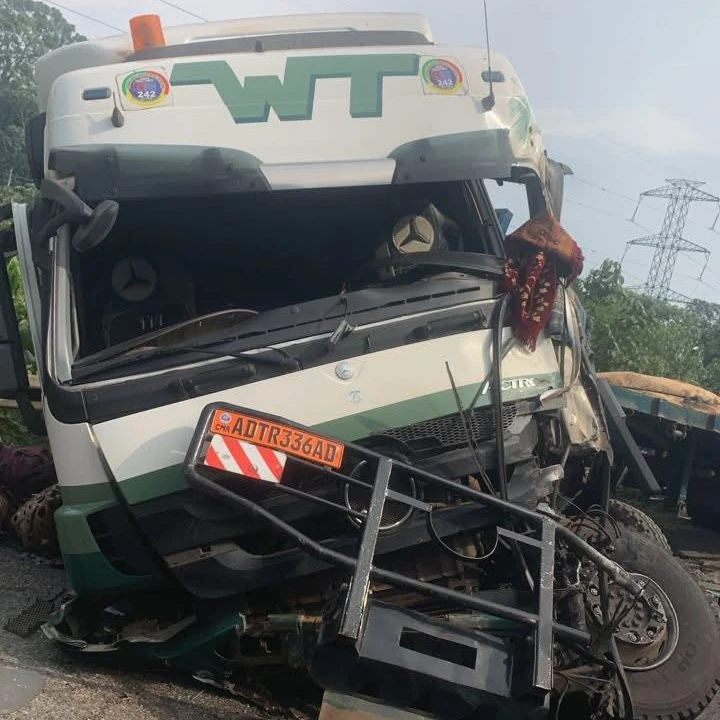
The Kribi–Edéa highway has once again been thrust into national attention following a fatal road accident that claimed five lives on February 10, 2026. A bus belonging to Transcam Voyage, bearing registration number CE 514 DB, collided with a semi-trailer truck in Bivouba village, Lokoundjé Subdivision. The violent impact left five passengers dead and several others reportedly injured, further deepening concerns about safety along the busy corridor.
The latest tragedy comes barely three days after another deadly accident involving the same transport company on the same stretch of road. On February 8, a Transcam bus was struck by a logging truck, resulting in six fatalities. In less than a week, eleven people have lost their lives on the Kribi–Edéa highway, underscoring what many observers describe as a growing road safety crisis.
The repeated accidents have reignited debate over the structural and regulatory challenges affecting the highway. The road, heavily used by timber trucks and other heavy-duty vehicles transporting goods to and from the port city of Kribi, has long been criticized for its deteriorating surface in certain sections. Potholes, reduced visibility in some areas, and the intense mix of passenger buses with heavy goods vehicles create conditions that significantly increase the risk of collisions. When combined with speeding and alleged non-compliance with traffic regulations, the situation becomes particularly perilous.
Beyond the statistics, the human cost of these accidents is devastating. Victims included traders, workers, students, and other commuters who had embarked on what should have been routine journeys. Families are now grappling with sudden loss, while survivors and witnesses recount scenes of shock and confusion.
The recurrence of fatal crashes within such a short timeframe has intensified calls for urgent government intervention. Road users and civil society actors are demanding stricter technical inspections of public transport vehicles, enhanced enforcement of traffic regulations, improved road maintenance, and clearer separation between light vehicles and heavy-duty trucks where feasible.
As investigations continue into the precise causes of both accidents, the Kribi–Edéa highway stands as a sobering reminder of the urgent need for comprehensive road safety reforms. For many Cameroonians, the question is no longer whether action is necessary, but how many more lives must be lost before meaningful measures are implemented.