
November 4, 1982, marked a turning point in the political history of La République du Cameroun.
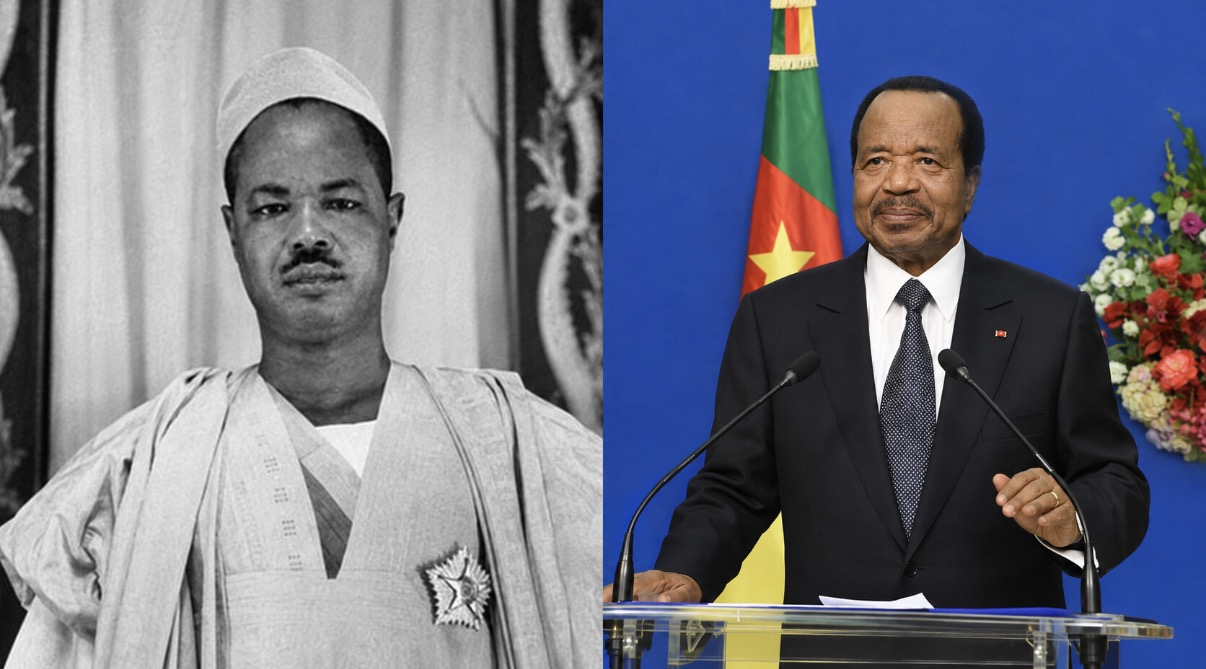
Ahmadou Ahidjo, the country’s founding president, shocked the nation by announcing his resignation during a national radio broadcast.
Ahidjo had ruled since 1960 with an iron fist. However, he suddenly handed over power after 22 years in office. His resignation opened the door for his Prime Minister, Paul Biya, to become the country’s next leader.
Before leaving office, Ahidjo had amended the constitution to make Biya his constitutional successor. Consequently, on November 6, 1982, the 49-year-old Biya was sworn in as the second president of La République du Cameroun. Ahidjo also urged citizens and foreign allies to support the new administration.
However, the relationship between the two men quickly deteriorated. Ahidjo initially retained control of the ruling Cameroon National Union (CNU). Nevertheless, growing disagreements over government policies deepened the political crisis.
In 1983, Ahidjo eventually stepped down as CNU president. By then, the political alliance between the two former allies had completely collapsed.
The rivalry reached a bloody climax on April 6, 1984. Government forces loyal to Biya crushed an attempted coup against his administration. Authorities accused supporters of Ahidjo of plotting to overthrow the government.
Consequently, the government sentenced Ahidjo to death in absentia. He was then living in self-imposed exile in Dakar, Senegal.
Forty-four years after Ahidjo’s resignation, Biya remains at the centre of the country’s political history. His succession, however, marked the beginning of a political era that continues to shape La République du Cameroun.
By Lucas Muma | BaretaNews Editor