
By Yundze Pavel Vellen | BaretaNews contributor
Culture and Technology Correspondent, Beyond Africa Podcast, and creator of the AbiGAiL project
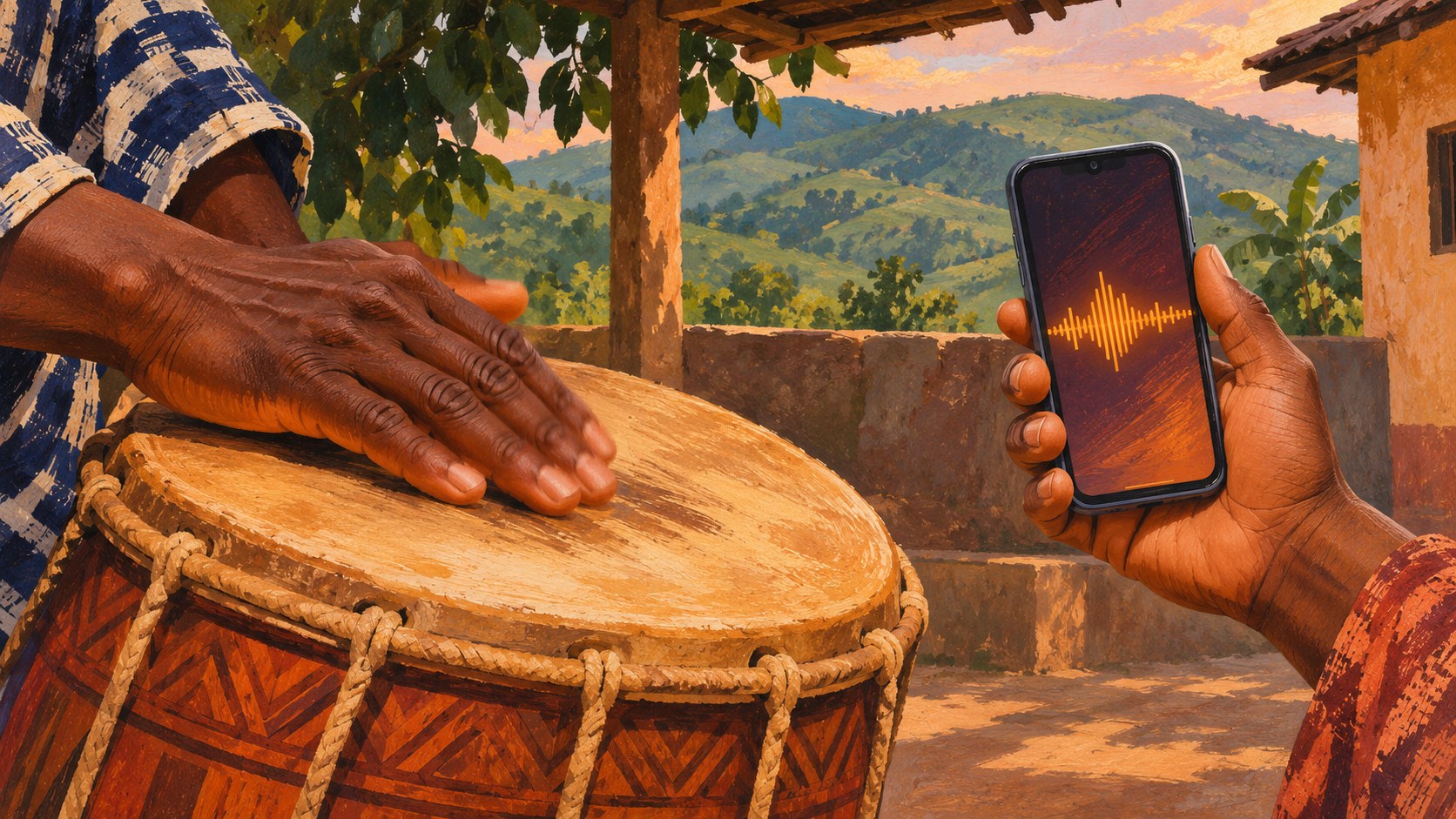
OBUDU, Cross River State, Nigeria — At the Bette palace in Obudu, 25-year-old Richard Ada held up a smartphone as the royal drum, Adigan, sounded. When the drumming stopped, a voice on the phone identified the rhythm in English. It was Uka-ushia, the Bette call for peace.
The demonstration was part of a pilot for AbiGAiL, an artificial intelligence app being developed to teach young people about Obudu’s drumming, dance and oral traditions. The name stands for Artificially Built Interactive Genius for African Indigenous Learning. One of the first decisions facing the project was which sounds the palace would allow it to record.
In Bette palace tradition, different rhythms carry different messages. Ushibhe calls people to gather. Uka-ushia asks for calm when a dispute threatens the peace. The pilot focuses on that second rhythm. With the custodians’ consent, the team is working with palace drummers to teach the app to recognise it. Learners can then tap out the pattern themselves and hear how closely their attempt matches the recording.
An elder tells the story in Bette
For Mrs Roseline Okwu, who leads the Igele women’s dance group in Bette, the case for teaching by phone begins with what children already choose to watch. She said young people knew TikTok songs and dances better than the Igele repertoire she wanted to pass on.
One lesson draws on Kakpale, the tradition of telling stories around a night fire. An elder opens with “Ibu-ooo!” and the children answer “Ibu-eee!” In one tale, two brothers quarrel over land and leave their yam heap unguarded. By the time they turn back to the harvest, ants have eaten it.
Elder Godwin Igbang sees a direct connection between that story and land disputes in Obanliku and Utugwang. “If we put these tales inside phones and tablets or laptops, our children will remember it during quarrels,” he said.
For the prototype, an elder gave permission for his voice to be digitally reproduced. The app tells the story in Bette, pausing for the child to join a song, repeat a proverb or answer a question about the brothers’ choices. Whether children later draw on those lessons in a real disagreement is one of the questions the pilot aims to test.
The palace decides what can be shared
Under the project’s review process, three custodians assess each digital lesson. They judge whether it is accurate, whether it can be shared publicly and whether young people may see it. Material they reject is deleted. War and burial drumming are outside the scope of the recordings.
Chief Raphael Adigebang drew the distinction through Ikwum’Ishor, a masquerade whose full appearance is restricted. “AI cannot initiate Ikwum’Ishor masquerade. It is sacred,” he said. “But AI can teach a visitor why we respect it. That is allowed.”
That question of who decides also features in UNESCO’s 2003 Convention for the Safeguarding of the Intangible Cultural Heritage. It calls for the people who keep traditions alive to take part in their management and for customary limits on access to be respected.
AbiGAiL remains a pilot. Its proposed business model includes licences for schools, lessons for families living away from Obudu and royalties for custodians whose material is used. At the palace demonstration, the test was simpler. Ada tried the peace rhythm again, and the phone returned a score of 92 per cent. Chief Adigebang listened to the result.
“The drum has not changed,” he said. “But the ear that hears her has.”


