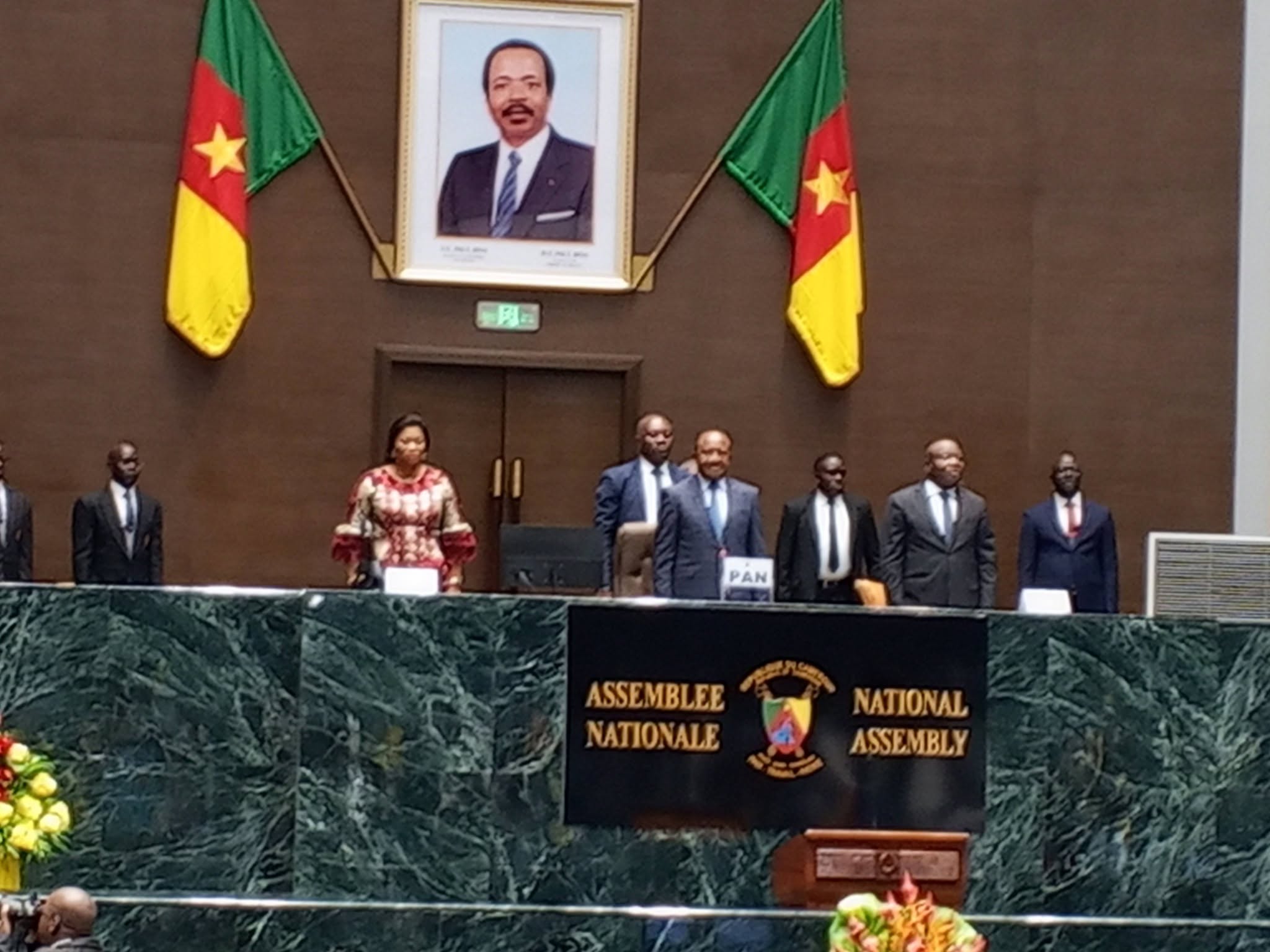
Cameroon could experience more frequent power cuts from 2027 unless electricity production increases. National Assembly Speaker Théodore Datouo raised the concern on Tuesday, November 10, 2026, during the opening of the parliamentary session dedicated to the 2027 state budget.
According to budget projections reported by Sika Finance, Cameroon could face an electricity production shortfall of 125 MW in 2027. The deficit could rise to 450 MW in 2028.
Datouo urged the government to accelerate power plant rehabilitation, modernise electricity networks and bring new generation capacity online. He cited the 200 MW emergency solar programme and the planned expansion of the Kribi gas-fired power plant.
He also noted that the Nachtigal hydroelectric plant has not ended persistent power cuts. Businesses continue to depend on generators, increasing their operating costs. He further raised concerns about debts owed by Socadel, formerly Eneo, to electricity producers.
The Speaker also warned that electricity shortages could disrupt water supplies because pumping stations depend on reliable power. He called for the 2027 budget to address these challenges urgently.
The government is also considering major rehabilitation works on ageing hydroelectric dams to prevent the looming crisis.
The Song Loulou dam, for instance, has seen declining production due to ageing equipment. Its eight turbines can no longer deliver their full installed capacity of 384 MW. Upgrading the facility could cost about FCFA 72 billion.
Similarly, the Lagdo dam, originally designed to produce 72 MW, now generates barely 30 MW. Its rehabilitation could require FCFA 100 billion.
Meanwhile, the Mekin dam, inaugurated in 2020, remains out of service. Authorities have reportedly selected a company to assess the work required to restore production.
In total, rehabilitating the three dams could cost approximately FCFA 200 billion. This raises questions about the government’s ability to finance the necessary repairs.
Beyond rehabilitation costs, the government must also meet its financial obligations to electricity producers. In 2027, it will need to mobilise FCFA 196.2 billion under the Nachtigal dam’s Take-or-Pay contract.
Under this arrangement, the government pays for an agreed production capacity of 420 MW, regardless of actual consumption.
This also raises concerns about the National Electricity Transport Company’s (SONATREL) capacity to distribute the additional electricity efficiently.
The concerns are particularly significant because SONATREL is implementing the Cameroon-Chad electricity interconnection project (PIRECT). The project includes plans to export 100 MW of electricity to Chad.
However, the export ambition raises questions while Cameroon continues to struggle with domestic electricity demand.
Cameroonians have already contributed significantly through taxes towards major hydroelectric projects, including Lom Pangar, Memve’ele, Mekin and Nachtigal.
Yet, reliable electricity remains a major challenge. According to figures cited in the report, 68 per cent of Cameroonian businesses still depend on generators to keep operating.
After hundreds of billions of FCFA in public investments, a fundamental question remains. Why does Cameroon still struggle to guarantee reliable and sufficient electricity for its people and businesses?
By Lucas Muma | BaretaNews