The 60th edition of Cameroon’s National Youth Day celebration in Buea was
overshadowed on Wednesday by a heavy downpour that disrupted activities and exposed glaring governance failures in the South West regional capital.
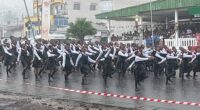
The rain, which started around 10:30 a.m., fell at the peak of the march past at the Buea Independence Square. Within minutes, the ceremonial grounds turned into a waterlogged mess. Schoolchildren struggled to maintain formation. Spectators scrambled for shelter. Businesses around the square shut down as movement became difficult.
What was meant to be a day of national pride quickly turned into a public display of infrastructural neglect.
Senior administrative authorities, including Governor Bernard Okalia Bilai, Mayor David Mafani Namange and South West Regional Assembly President Zacheus Bakoma Elango, were left visibly uncomfortable at the grandstand. Rainwater dripped steadily onto their outfits as the poorly shielded structure failed to withstand the downpour.
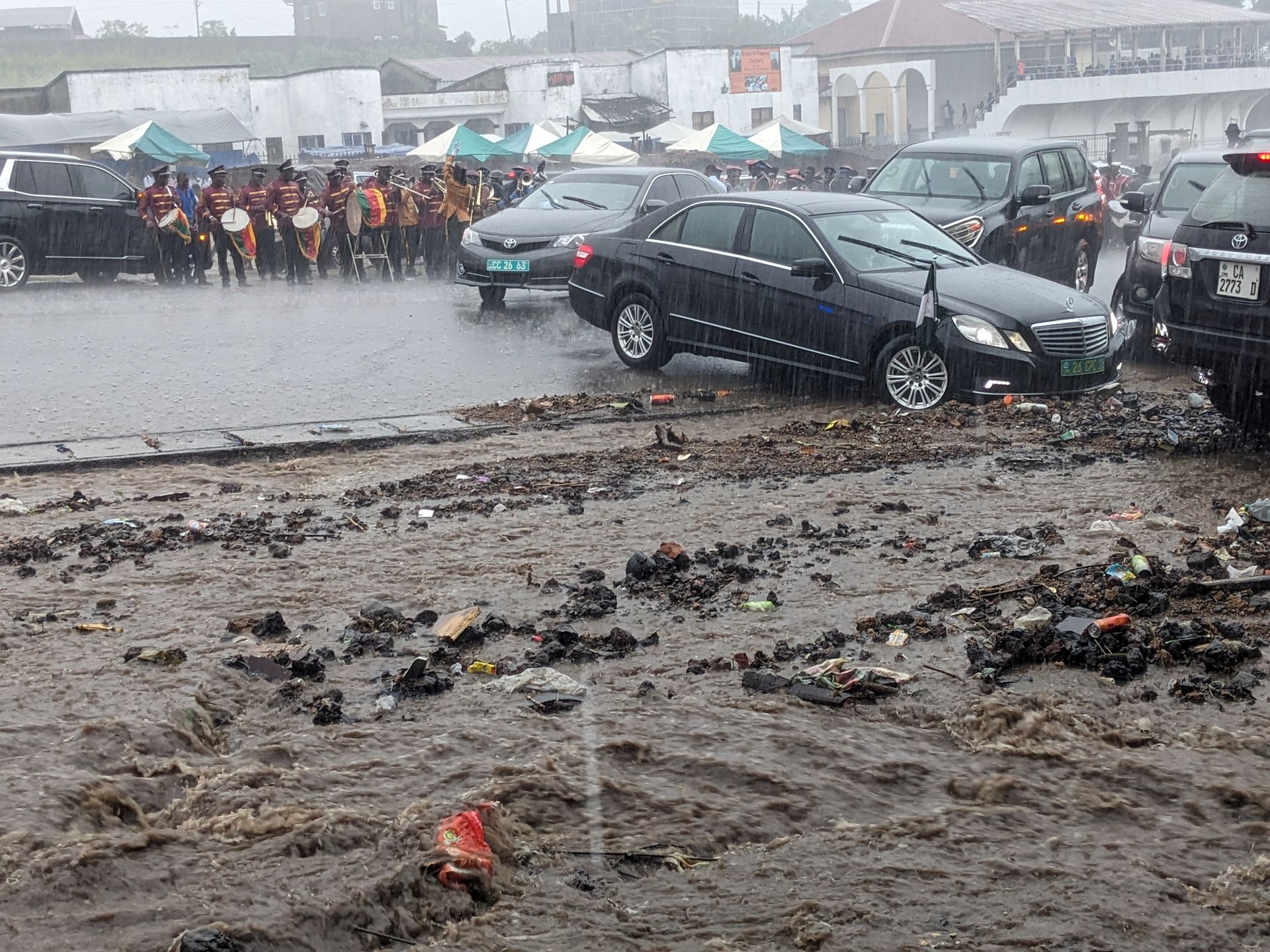
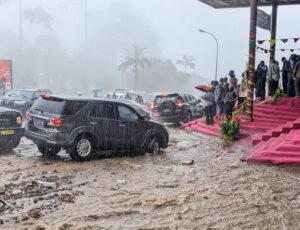
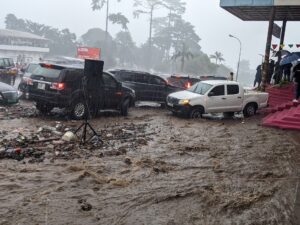
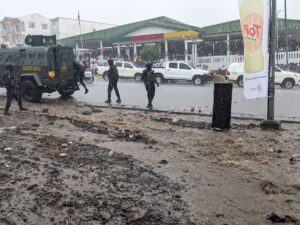
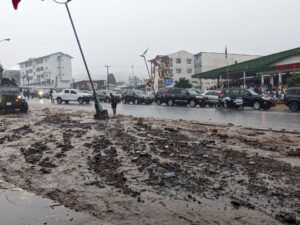
After the ceremony, the situation worsened. Floodwater collected at the foot of the grandstand stairs. Gutters clogged with sand and uncollected waste spilled runoff directly into the event arena. Officials struggled to board their vehicles without stepping into pooled water. Some had to enter their cars from the edge of the staircase to avoid being soaked.
The image was striking. Those in charge of the city were forced to confront the consequences of long-standing urban decay in full public view.
Buea’s drainage crisis is not new. Residents have long complained about blocked gutters, poor waste management, and weak enforcement of urban planning regulations. Even moderate rainfall now floods streets and pavements because runoff has nowhere to go.
In 2023, flash floods in Buea Town killed at least two people and destroyed several
homes. Authorities blamed blocked waterways. Yet little appears to have changed.
Wednesday’s events reinforced a painful reality for many residents. Basic urban services remain unreliable. Roads continue to deteriorate. Electricity supply remains unstable. Access to pipe-borne water is inconsistent. Waste collection is irregular in several neighbourhoods.
Public frustration is growing. Many citizens question why official ceremonies proceed with pomp while fundamental infrastructure collapses. The contrast between speeches celebrating youth empowerment and the city’s physical condition did not go unnoticed.
For the young people who marched under heavy rain, the symbolism was hard to ignore. A celebration meant to inspire confidence instead highlighted neglect.
Whether this public embarrassment will prompt authorities to take concrete action remains uncertain. What is clear is that Buea’s infrastructure problems can no longer be dismissed as isolated incidents. They are systemic.
And on Youth Day, they were impossible to hide.
By Lucas Muma