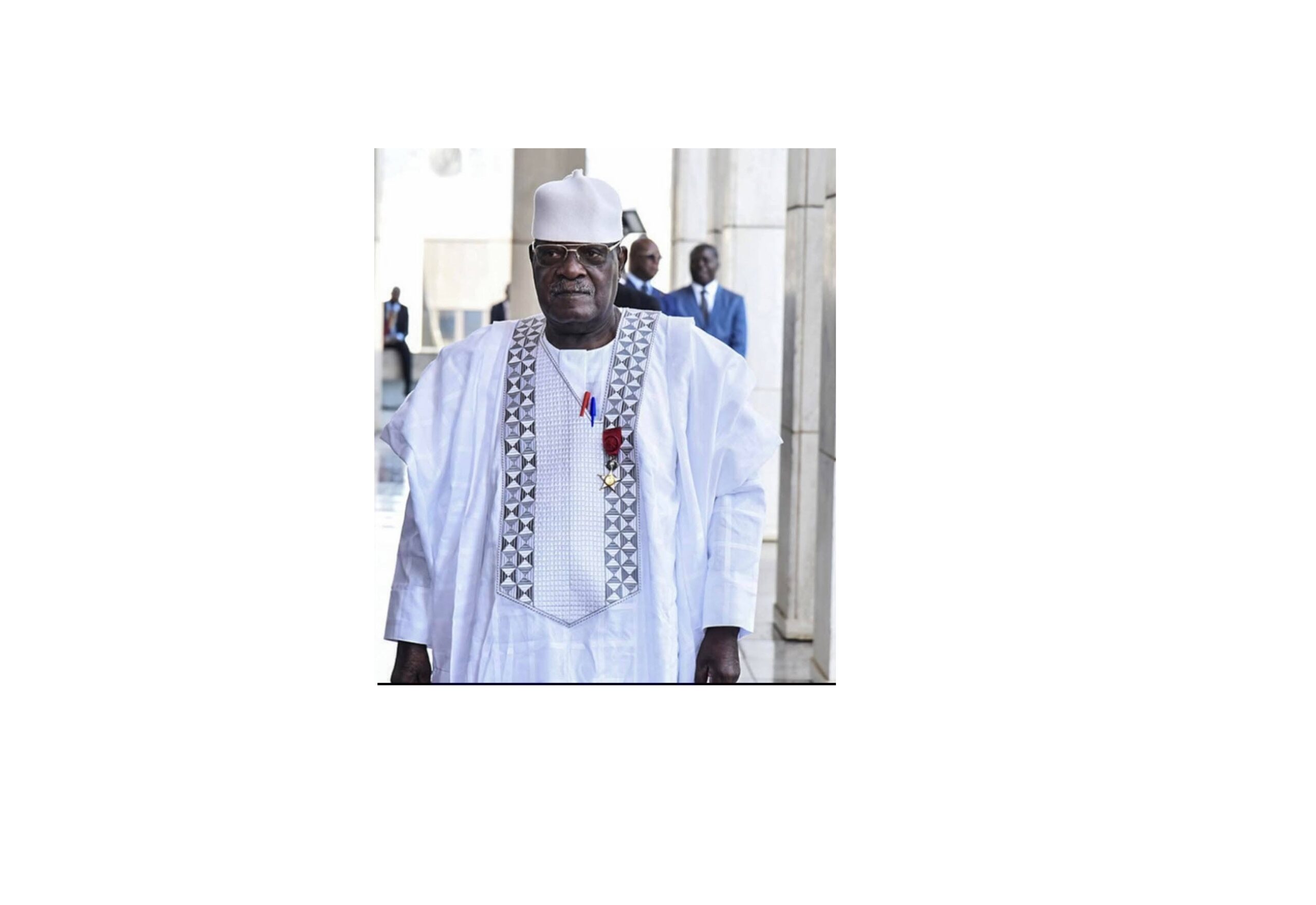
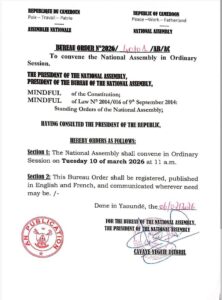
The decision by the Speaker of the National Assembly, Cavayé Yéguié Djibril, to convene the Members of Parliament (MPs) for the March ordinary session, despite the fact that the current parliamentary mandate is nearing its legal expiry, raises serious constitutional and democratic concerns. This move comes at a time when legislative elections are overdue, and the country is still awaiting a presidential decree convening the electorate.
By convening Parliament without first calling elections, the authorities have sent a strong and unsettling signal. The message is simple. Elections are no longer treated as an urgent democratic obligation. They are becoming optional political events, subject to convenience rather than law.
Cameroon’s legal framework is clear on this matter. Article 15, Section 4 of the Constitution establishes that Members of Parliament serve a five-year mandate. Any extension of this mandate is meant to be exceptional and justified by serious national circumstances. Even where such an extension is granted, it is not designed to replace elections indefinitely. It is only a temporary measure meant to prepare the ground for a return to the polls.
The Electoral Code reinforces this principle by placing the responsibility on the President of the Republic to convene the electorate through a decree. This step is not ceremonial. It is the legal trigger for the renewal of political legitimacy. Without it, the continued functioning of Parliament rests on shaky legal ground.
Holding an ordinary parliamentary session while avoiding elections undermines the very idea of representation. A Parliament whose mandate has expired or is being endlessly extended gradually loses its democratic authority. Laws passed under such conditions may be legal on paper, but they lack moral and popular legitimacy.
This situation is not new. The legislative and municipal elections, originally scheduled for 2025, were postponed to 2026 on the grounds of financial and logistical constraints. That explanation was accepted with difficulty but tolerated in the interest of stability. However, failing to convene the electorate as deadlines approach turns a temporary measure into a pattern of deliberate delay.
Each postponement weakens Cameroon’s democratic culture. Each extension creates the impression that political power is preserved by decree rather than renewed by the people. Over time, this erodes public trust and reinforces the belief that elections change nothing.
The political consequences are dangerous. Citizens lose confidence in institutions. Young people disengage from the political process. Frustration grows, and with it the risk of instability. A system that avoids electoral accountability invites radical responses and undermines social cohesion.
Cameroon is not facing a technical problem. It is facing a crisis of legitimacy. Convening Parliament while sidestepping elections deepens that crisis and normalises democratic shortcuts. Stability built on extensions rather than consent is fragile and deceptive.
Democracy cannot survive on delays alone. Mandates must be renewed by the people, not prolonged by silence. Postponing elections again may appear convenient in the short term, but it carries long-term consequences that Cameroon’s political system may struggle to contain.
By Lucas Muma