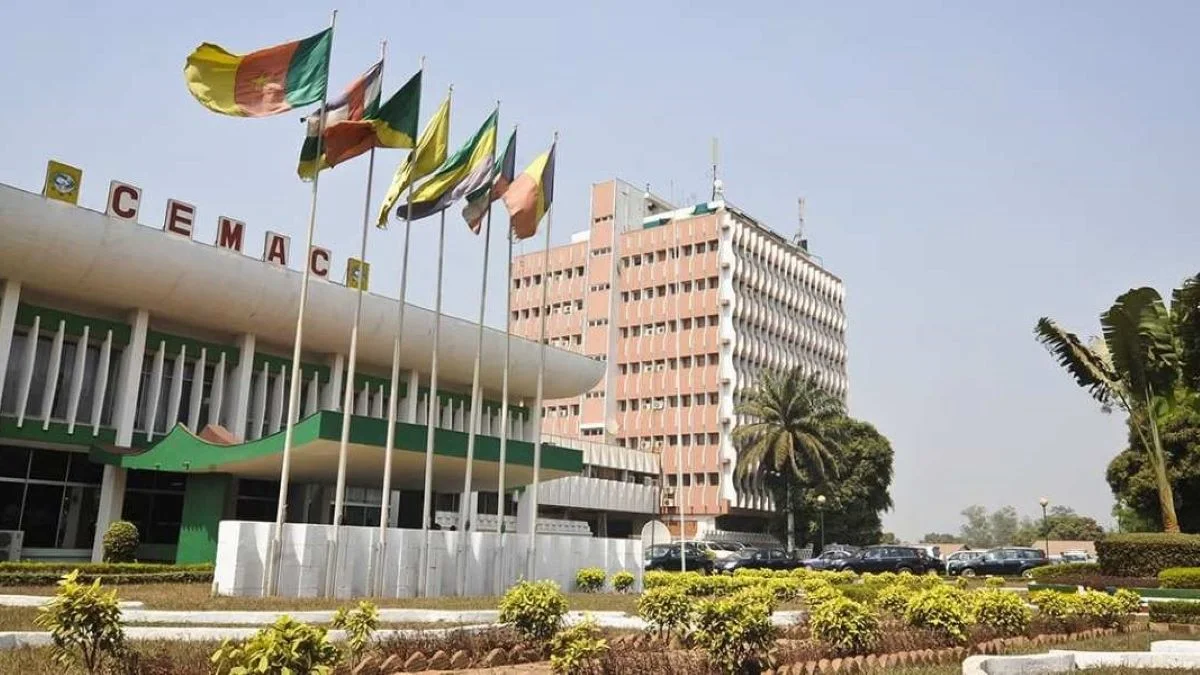

The Economic and Monetary Community of Central Africa (CEMAC) has taken the rare step of suspending most of its activities because of a severe cash shortage that threatens its operations.
The Commission of the CEMAC, the executive arm of the regional bloc, announced the decision in a note dated February 5, 2026, and signed by its president, Baltasar Engonga Edjo’o. The suspension affects most missions and day-to-day functions of the Commission until the bloc’s finances improve.
Engonga said the Commission’s financial situation has deteriorated sharply in recent months. Reports from the institution’s accountants during high-level internal meetings showed that cash reserves have reached dangerously low levels. The decline has made it difficult to perform regular duties, including financing meetings, supporting integration programmes, and funding missions.
The Commission’s primary funding source is the Taxe Communautaire d’Intégration (TCI), a community integration tax applied to imports from countries outside the CEMAC region. Weak tax collection has left the Commission struggling to meet its basic financial needs. Engonga described the decision as made “with regret but imperative” given the current cash situation.
Under the suspension, only activities deemed critically strategic will continue. All other scheduled missions and events are on hold until member states improve tax collection and provide the necessary funds.
The crisis exposes widening financial strains across the CEMAC region. In late 2025, member states agreed on an 85.9 billion CFA franc budget for 2026, but challenges in revenue generation and debt burdens have heightened fiscal pressures.
CEMAC comprises six Central African countries: Cameroon, the Republic of the Congo, Gabon, Equatorial Guinea, the Central African Republic, and Chad. The bloc’s main goal is to promote economic integration and monetary stability in the region.
Observers say the suspension signals a significant test for regional cooperation and underscores the need for stronger fiscal coordination among member states. Economists note that low growth, volatile commodity prices, and high debt levels continue to strain the sub-region’s economies.
By Lucas Muma