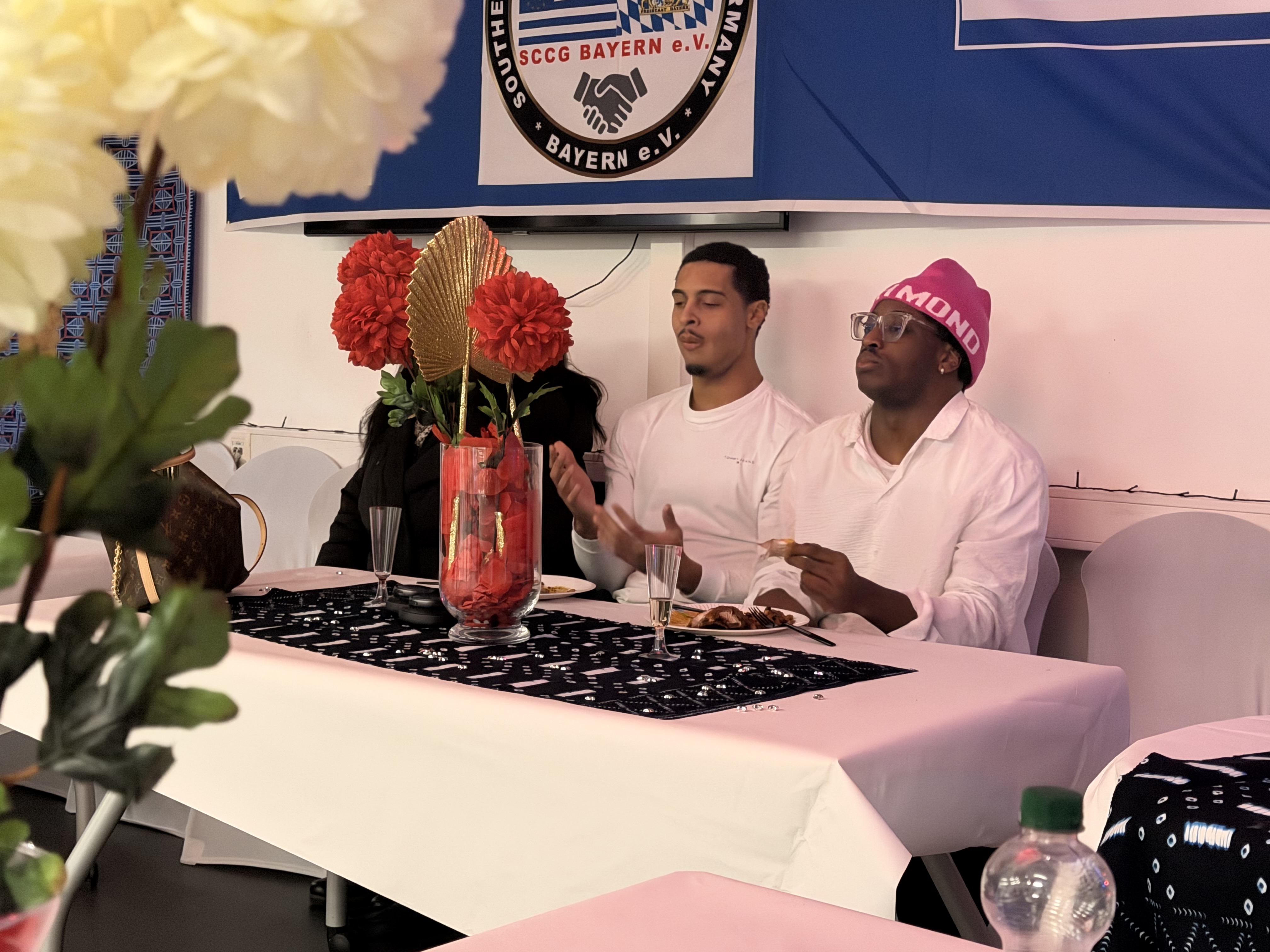
MUNICH, 28 November 2026 | SCCG Bayern marked its eighth anniversary in Munich with an appeal for people displaced by the conflict in Cameroon’s English-speaking regions. The evening also featured Mark Bareta’s book launch. In his address, SCCG Bayern chair Dr David Njibabum said the association’s One Euro Project was based on a simple idea: a contribution of €1 could help provide a day’s meals for one person.
Why SCCG Bayern was formed
Njibabum said the association was registered in Munich in February 2018, as families were being forced from their homes. He recalled reports of military personnel forcing students to swim in mud, an episode he said helped convince members of the diaspora that they could not stand by. As families sought refuge in the bush, elsewhere in Cameroon and across the border in Nigeria, members began raising money for food and mosquito nets.
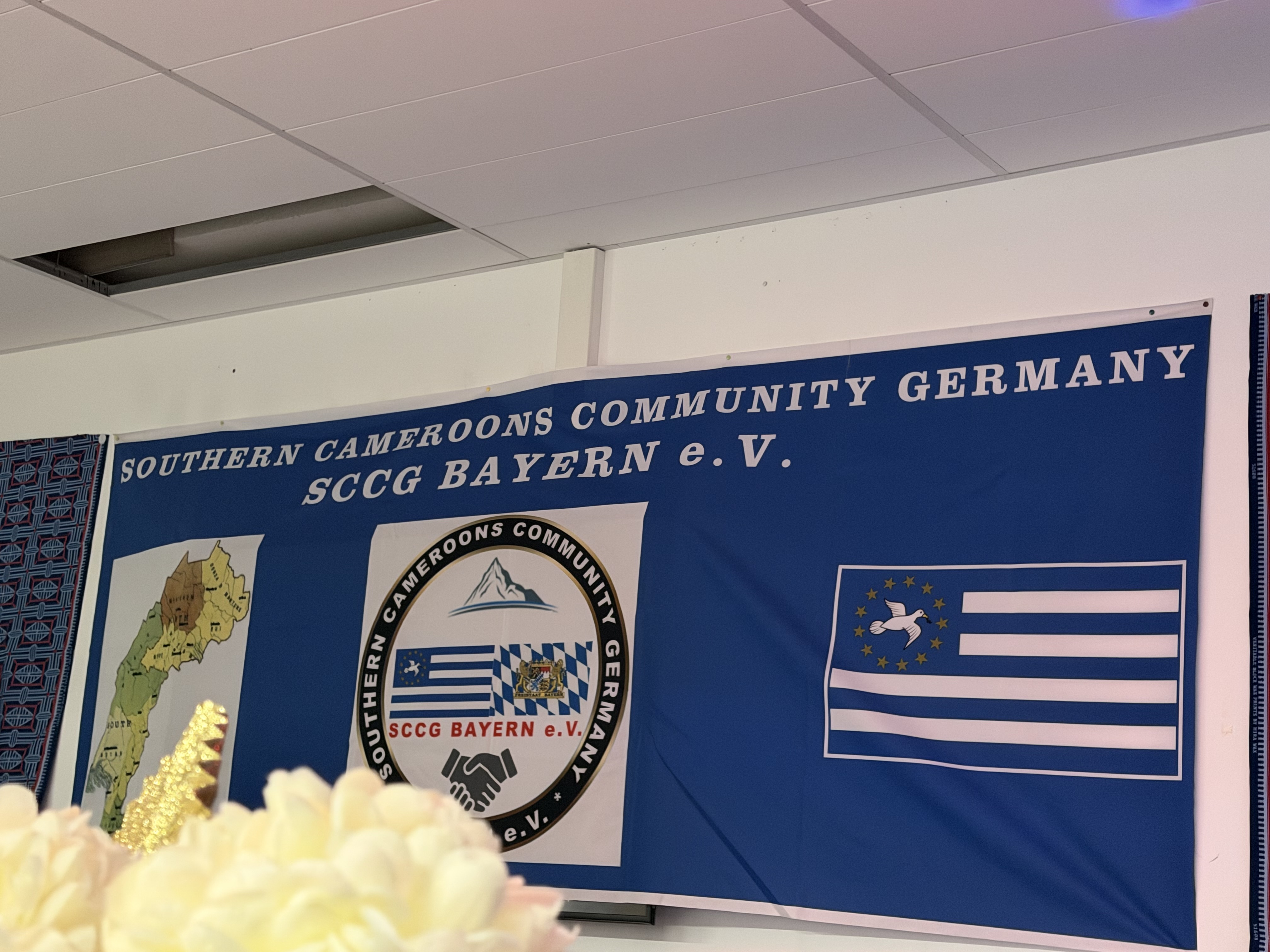
He also described the burden on families of detainees transferred far from home. Relatives were expected to provide food and other essentials, he said, even when visits meant travelling hundreds of kilometres. The association raised money to help meet some of those needs and supported training to help displaced young women earn a living and reduce their exposure to exploitation.
Keeping Southern Cameroons culture visible in Munich
Njibabum said SCCG Bayern also takes part in local festivals, where members share Southern Cameroons culture, speak with visitors about the conflict and raise funds. He credited partner associations in Munich and the wider Southern Cameroons network in Germany with helping sustain that work.
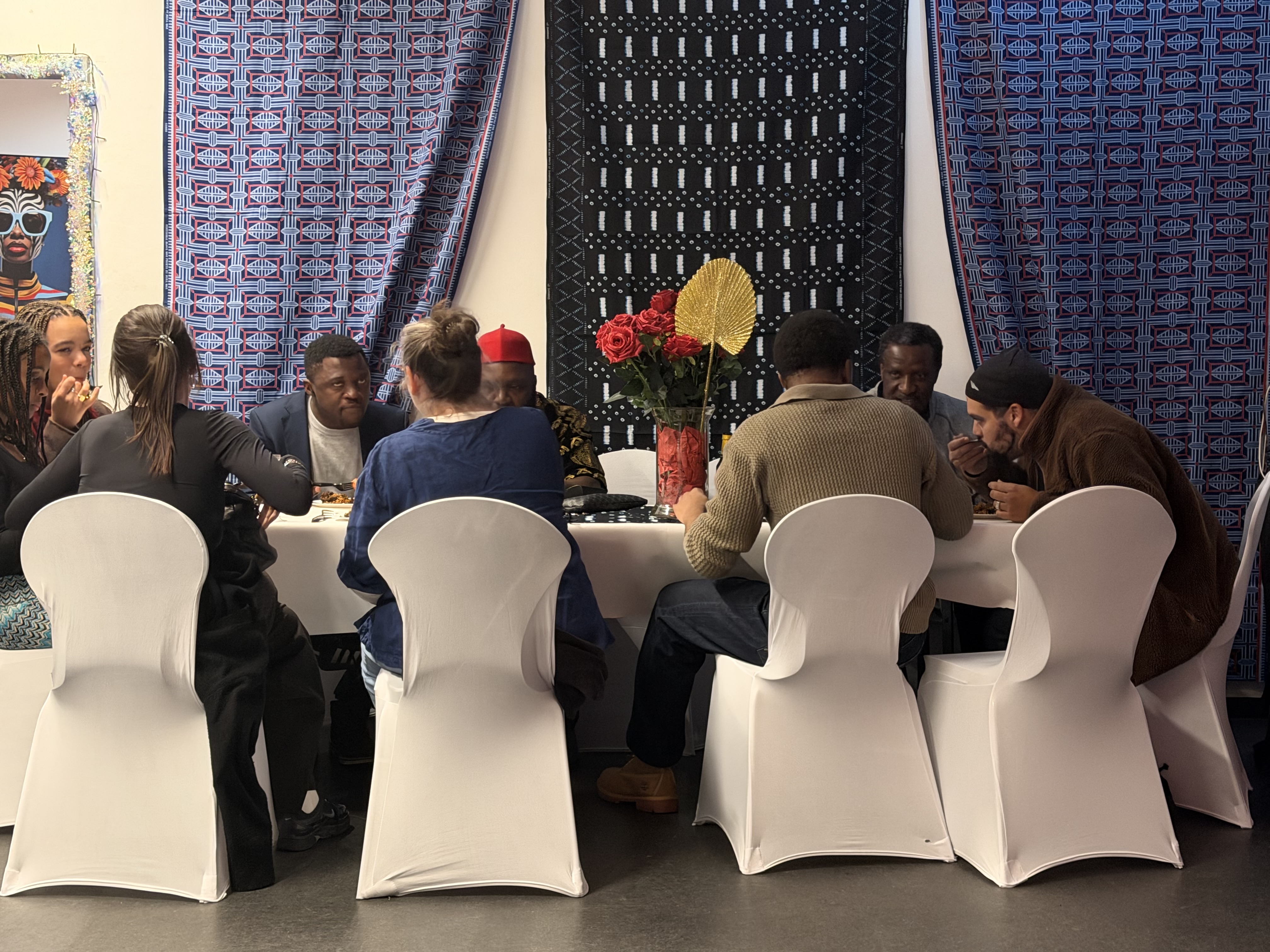
Mark Bareta urges families to pass the story on
Invited to address the gathering, author Mark Bareta explained why he had come to Munich and spoke about the purpose of his book. He encouraged those in attendance to get a copy, if not for themselves, then for their children, so the next generation could read about the history of Southern Cameroons.
A call for Germany to pay closer attention
Njibabum said SCCG Bayern and its partners had petitioned the German government to engage with Cameroon’s authorities. He urged people in Germany to press for greater attention to the conflict. The Norwegian Refugee Council’s 2025 assessment, published in June 2026, ranked Cameroon eighth among the world’s most neglected displacement crises. The assessment covers the country as a whole.
Closing his remarks, Njibabum asked supporters to continue backing the association’s humanitarian work. He presented the One Euro Project as a way for people in Munich and beyond to help meet an immediate need: food for people forced from their homes.