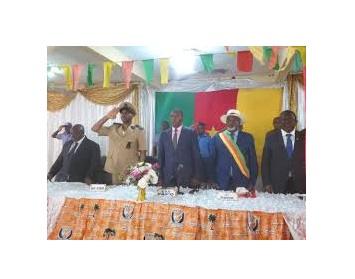

The recent suspension of an extraordinary session of the Tiko Council by the Senior Divisional Officer for Fako, Viang Mekala, has once again exposed a deep and persistent contradiction in Cameroon’s decentralisation system. An appointed administrative authority overruled an elected mayor, stopping a council session lawfully convened to address internal council matters. This single incident is not isolated. It reflects a systemic problem that continues to undermine local democracy nationwide.
In Tiko, Mayor Chief Peter Ikome Mesoso, elected by the people, convened a council session to deliberate on the status of his Second Deputy Mayor. Before councillors could exercise their mandate, the Fako SDO intervened and ordered the suspension of the session. The message was clear. Electoral legitimacy remains subordinate to administrative appointment.
Cameroon’s legal framework, at least on paper, grants autonomy to local authorities. Article 55 of the 1996 Constitution recognises decentralised territorial collectivities and guarantees their administrative and financial autonomy. This autonomy is reaffirmed in Law No. 2004/017 on the orientation of decentralisation and in Law No. 2004/018, which lays down rules applicable to councils. These laws clearly establish councils as legal persons with decision-making powers exercised through elected municipal authorities.
Mayors, under Section 92 of the council law, are the chief executives of municipalities. They implement council decisions, manage municipal staff, and oversee local development. Council sessions, ordinary or extraordinary, are convened by the Mayor, and deliberations are the exclusive preserve of elected councillors. In theory, these powers reflect grassroots democracy in action.
However, the same legal texts introduce a supervisory mechanism that has steadily mutated into control. The Senior Divisional Officer is designated as the supervisory authority over municipal councils. His role, as defined by law, is administrative supervision, not political command. Supervision is meant to ensure legality, not to substitute the will of elected officials with that of the central administration.
For Regional Councils, created under the 2019 General Code of Regional and Local Authorities, the supervisory authority is the Governor. Yet the Regional Council Executive President is legally defined as the head of the region’s executive. Once again, autonomy is proclaimed, but hierarchy is imposed.
This contradiction has serious consequences. Socioeconomic development cannot thrive where elected officials are compelled to take instructions from appointed administrators who are not accountable to local populations. Development projects stall. Local priorities are sidelined. Decisions are filtered through political loyalty rather than community need.
In practice, many supervisory authorities act less as guardians of legality and more as enforcers of central government interests. Mayors and regional presidents find themselves constrained, second-guessed, and occasionally humiliated by officials who neither face elections nor bear responsibility for development outcomes.
This governance culture did not emerge by accident. President Paul Biya has, for decades, used decentralisation as a political mirage. Rather than deepen self-rule, decentralisation has been used to dilute long-standing calls for federalism, which underpinned Ambazonia’s reunification with La République du Cameroun in 1961.
The promise of federation was replaced with centralised unitary rule. Later, decentralisation was presented as a substitute reform, without ever transferring real power. Each reform cycle preserved the supremacy of the central state while projecting an image of inclusiveness.
In 2019, the creation of Regional Councils across all ten regions was marketed internationally as a bold response to the frustrations of Ambazonians. In reality, it was another cosmetic adjustment. Governors, presidential appointees, were retained as supervisory authorities over Regional Council Executives, who are supposed to be the political heads of their regions.
This arrangement renders regional leadership symbolic. Strategic decisions still flow from Yaoundé. Local innovation is stifled. Accountability to citizens is weakened because power does not truly reside where responsibility lies.
The Tiko incident brings this imbalance into sharp focus. When an SDO can suspend a council session at will, the autonomy promised by law becomes meaningless. Democracy is reduced to ritual. Elections lose substance. Local governance becomes theatre.
If Cameroon is serious about development, peace, and national cohesion, it must confront this contradiction honestly. Supervision must return to its legal boundaries. Elected authorities must be allowed to govern. Administrative officials must support legality, not dominate decision-making.
Without genuine autonomy, decentralisation remains a slogan. And without genuine decentralisation, the fractures within the state will continue to widen, to the detriment of the people these institutions claim to serve.
By Lucas Muma